Belgian authorities have issued a European arrest warrant for former EU commissioner Dimitris Avramopoulos in connection with the Qatargate corruption investigation, according to multiple European media outlets. Reports also say investigators are seeking to lift his immunity so he can answer questions, while the case remains linked to wider allegations involving influence-peddling and the NGO Fight Impunity.
Belgian warrant in Qatargate probe
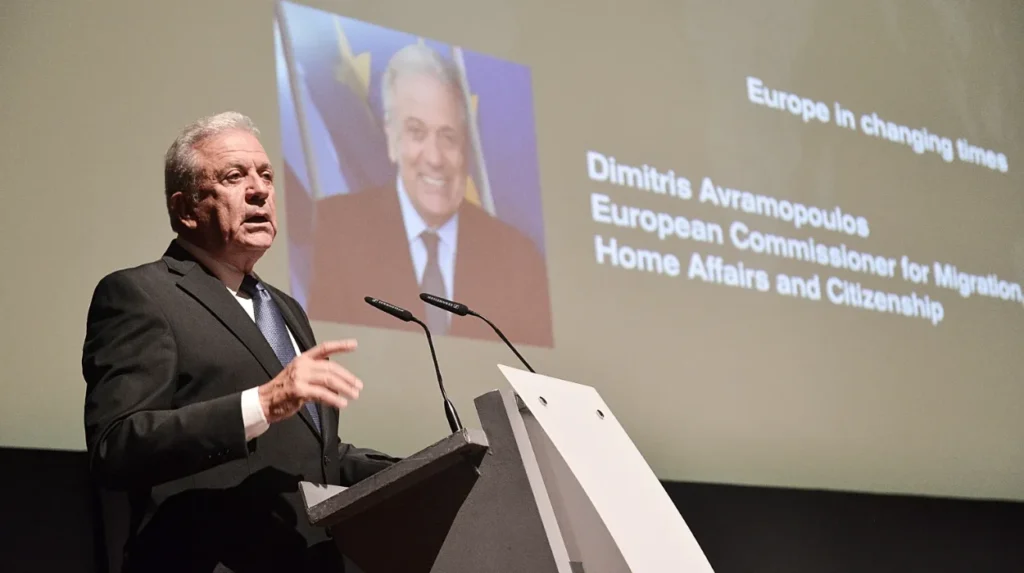
Belgian authorities have issued a European arrest warrant for Dimitris Avramopoulos, the former European commissioner for migration, as part of the ongoing Qatargate investigation, according to Greek Reporter, Euronews in Russian and Italian, and ProtoThema.
As reported by the Greek Reporter on 22 June 2026, the warrant is tied to the continuing corruption inquiry that has already drawn in several political and parliamentary figures in Europe.
Euronews reported in Russian and Italian that Belgian authorities are also seeking to have Avramopoulos’ immunity lifted so that he can provide explanations to investigators.
What the reports say
The core allegation, as described in the reports, is that Avramopoulos is being pulled into the wider Qatargate case, a scandal focused on suspected corruption and influence-peddling involving European institutions.
According to Euobserver, the investigation has also touched on possible links to Morocco influence-peddling, broadening the scope of the affair beyond a single country.
The Greek Reporter and ProtoThema did not present a detailed public statement from Avramopoulos in the material surfaced here, but both reports framed the warrant as part of an active and still-developing judicial process.
The reporting indicates that Belgian judicial authorities want him available for questioning, rather than treating the matter as closed.
Fight Impunity link
A significant element in the reporting is the mention of Fight Impunity, an NGO linked to the wider corruption allegations around Qatargate.
Euobserver reported in January 2026 that Avramopoulos had meetings with European Commission vice-presidents at a time when he was being paid by Fight Impunity, and that Italian newspaper La Stampa had reported he received €60,000 for work between February 2021 and February 2022.
That earlier reporting adds context to why his name remains connected to the investigation.
The current warrant report suggests Belgian investigators believe the matter has progressed enough to justify coercive legal steps, even though the exact basis for the warrant is not fully detailed in the snippets available here.
Earlier allegations around Avramopoulos
Avramopoulos is not a stranger to controversy. In 2018, Euobserver reported that he had said he would mount a legal challenge over bribery allegations related to Novartis, a separate case involving claims that Greek politicians took payments to help the pharmaceutical company.
That report said Greek prosecutors had named him alongside other senior figures, though he denied the allegations.
The earlier Novartis case and the current Qatargate-related reporting are separate matters, but they show that Avramopoulos has previously faced scrutiny in high-profile corruption stories.
For readers following the present case, that background helps explain why his name carries political and legal weight beyond the immediate warrant report.
Qatargate background
Qatargate is the corruption scandal that has shaken parts of the European parliamentary and institutional world since late 2022, with allegations centred on bribery, undue influence and money flows connected to foreign interests.
The recent reports suggest the inquiry is still expanding, with Belgian authorities now moving against a former commissioner rather than only staff, intermediaries or parliamentary figures.
The media coverage also points to the international character of the investigation, with reporting appearing in Greek, Italian and Russian-language European outlets on the same day.
That convergence suggests the story has been treated as a major development across multiple European newsrooms.
Media attribution and sourcing
Greek Reporter first reported on 22 June 2026 that Belgian authorities had issued a European arrest warrant for Avramopoulos in connection with Qatargate.
Euronews in Russian and Italian reported the same day that Belgian authorities issued the warrant and were seeking to lift his immunity so he could answer questions.
ProtoThema reported that Belgian judicial authorities had issued the warrant and were asking for immunity to be lifted, while Euobserver had earlier reported on his link to Fight Impunity and related meetings.
An older Euobserver report from 2018 and a WRAL summary of the Greek prosecutor findings provide background on earlier bribery allegations involving Avramopoulos and Novartis.
Legal and political significance
The issuance of a European arrest warrant is a serious procedural step, signalling that investigators want a suspect or witness available under judicial authority.
In this case, the political sensitivity is heightened because Avramopoulos is a former European commissioner, not just a national politician.
The reports available here do not confirm any conviction or final finding against him, and they should be read as allegations and investigative actions rather than proven wrongdoing.
The central verified development is that Belgian authorities have moved to secure his presence in the investigation, while the public record in these reports remains limited on the exact legal grounds.