In the vast machinery of the European Parliament, where landmark policies on climate action, digital rights, and economic resilience take shape, a select group of insiders wields outsized influence. These are the coordinators of the Parliament’s specialized committees key figures who steer debates, broker deals, and mold the EU’s legislative agenda without the spotlight of public elections. Far from mere administrators, they operate as pivotal power players in the Parliament’s internal dynamics, shaping outcomes that affect 450 million citizens across 27 member states. Understanding their role reveals the nuanced power structures that drive one of the world’s largest democratic assemblies.
Who Are Committee Coordinators?
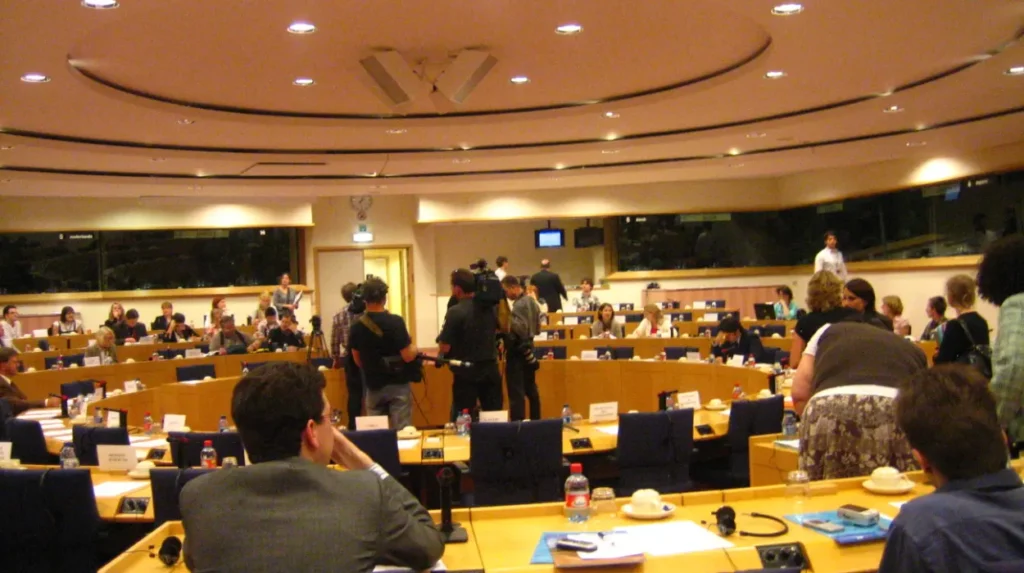
Committee coordinators emerge as the linchpins within the European Parliament’s committee system, a network of over 20 standing bodies tackling everything from foreign affairs to budgets and fisheries. Elected by their political groups at the start of each parliamentary term, coordinators represent their faction’s interests in a specific committee. Typically, they hail from the ranks of experienced MEPs, blending deep policy expertise with sharp negotiation skills.
Their mandate goes beyond chairing sessions. Coordinators align their group’s positions on amendments, reports, and resolutions, ensuring cohesion amid diverse national viewpoints. In a Parliament where no single group holds a majority political families like the EPP, S&D, Renew, Greens, and ECR fragment the 705 seats they become essential bridge builders. This role demands not just technical knowledge but an acute sense of timing and alliance building, turning potential gridlock into consensus.
The World Economic Forum highlights how such internal mechanisms in supranational bodies foster collaborative governance, enabling faster responses to transnational challenges like supply chain disruptions or migration flows.
The Strategic Role in Shaping Legislation
At the heart of their influence lies the coordinators’ command over the legislative pipeline. European Parliament committees draft reports that form the backbone of plenary votes, and coordinators hold veto power over which amendments advance. They negotiate the “common position,” a unified stance their group presents in trilogues closed door talks with the Council of the EU and the Commission.
This positions them as gatekeepers. For instance, in committees addressing environmental policy, coordinators might prioritize binding targets on emissions reductions, drawing from OECD analyses that underscore the economic costs of inaction on climate resilience. Their decisions ripple outward: a well negotiated report can accelerate EU wide regulations, influencing industries from agriculture to tech.
Semantically, their work embodies the internal power dynamics of European Parliament committees, where subtle maneuvers determine whether proposals gain traction or fade. Coordinators also manage speaking times and agendas, subtly amplifying voices that align with broader group strategies while sidelining outliers.
Navigating Alliances and Internal Power Dynamics
Power in the European Parliament thrives on alliances, and coordinators excel at forging them. With seven political groups vying for dominance, they engage in shadow negotiations informal huddles that pre empt formal votes. A coordinator from the largest group might concede on a minor fiscal detail to secure support for a trade clause, creating win win scenarios.
This brokerage extends to cross committee coordination. Issues like digital markets span multiple panels, from Internal Market to Civil Liberties, requiring coordinators to synchronize efforts. UNESCO reports emphasize how such networked decision making in multilateral forums enhances policy coherence on global issues like data privacy.
Yet, tensions simmer. Smaller groups, such as the Left or ID, often decry coordinators from centrist blocs as wielding disproportionate sway, echoing IMF observations on power asymmetries in governance institutions. Coordinators counter this by touting transparency rules, like public agendas and vote records, though critics argue the real deals happen off the record.
Case Studies: Coordinators in Action
Real world examples illuminate their impact, stripped of transient politics to highlight enduring patterns. Consider environmental committees, where coordinators have historically championed biodiversity protections. Drawing from World Bank data on ecosystem services valued at trillions in annual economic contributions, they push for enforceable quotas on sustainable fishing outcomes that bind member states long term.
In budget committees, coordinators orchestrate the allocation of the EU’s multiannual financial framework, a €1.2 trillion instrument per cycle. They balance cohesion funds for poorer regions against innovation investments, informed by EU statistics showing regional disparities persist despite transfers exceeding €400 billion over decades.
Foreign affairs panels offer another lens. Coordinators shape resolutions on global partnerships, leveraging UN frameworks to advocate for human rights clauses in trade deals. Their consensus building prevented deadlocks on sanctions regimes, ensuring the Parliament’s voice resonates in international arenas.
These instances reveal coordinators not as dictators but as pragmatic architects, whose foresight sustains the EU’s legislative momentum.
Challenges and Criticisms Facing Coordinators
No role is without scrutiny. Coordinators grapple with national loyalties clashing against group lines MEPs from France might prioritize agricultural subsidies, while Poles push energy security. This friction tests their diplomatic acumen, as noted in WEF analyses of multipolar decision making.
Transparency remains a flashpoint. While plenary sessions stream live, trilogues remain opaque, fueling accusations of elite capture. Advocacy groups, citing OECD governance benchmarks, call for more public access to preserve democratic legitimacy.
Moreover, the coordinator role amplifiesgroup leaders’ influence, potentially marginalizing independents. WHO parallels in global health governance highlight similar risks, where coordinated blocs dominate agendas. Reforms, like rotating coordinators mid term, have been floated to inject fresh perspectives, though entrenched groups resist.
Despite these hurdles, coordinators’ efficiency keeps the Parliament productive, adopting over 1,000 legislative acts per term on average.
The Broader Impact on EU Governance
Coordinators’ influence extends beyond committees, imprinting the Parliament’s institutional culture. They mentor junior MEPs, fostering a pipeline of savvy legislators, and liaise with national parliaments to build buy in for EU laws. This grassroots to supranational linkage, per World Bank institutional studies, bolsters implementation rates, which hover above 90% for key directives.
In an era of geopolitical flux, their role in fast tracking responses be it to economic shocks or security threats proves invaluable. IMF reports on fiscal unions stress how such internal power structures enable resilient policy frameworks.
Ultimately, coordinators embody the Parliament’s hybrid nature: democratic yet technocratic, consensual yet competitive. Their mastery of internal dynamics ensures the EU remains a formidable legislative force.
The Future Evolution of This Role
As the Parliament evolves, coordinators adapt. Digital tools now facilitate virtual trilogues, expanding their reach, while post Brexit seat redistributions reshuffle alliances. Emerging foci like AI ethics demand coordinators versed in cutting edge fields, aligning with UNESCO’s digital inclusion imperatives.
Calls for reform persist: quotas for underrepresented groups or AI assisted agenda tools could democratize their domain. Yet, their core function harnessing committee expertise into actionable law—endures, safeguarding the EU’s supranational ambitions.
In the intricate web of European integration, committee coordinators stand as vital nodes, their quiet authority propelling policies that define the continent’s trajectory for generations.