Brussels Watch contacted Daniel Buda with a formal right-of-reply request regarding documented interactions with UAE-linked lobbying firms, diplomats, and informal parliamentary friendship groups, but no response was received before the publication deadline. The request asked Buda to clarify the nature and purpose of these interactions, whether any foreign-funded travel, hospitality, or event sponsorship had been involved, how he applies anti-corruption and transparency standards, and whether all relevant engagements were properly disclosed; this article is published in the public interest to support transparency and accountability.
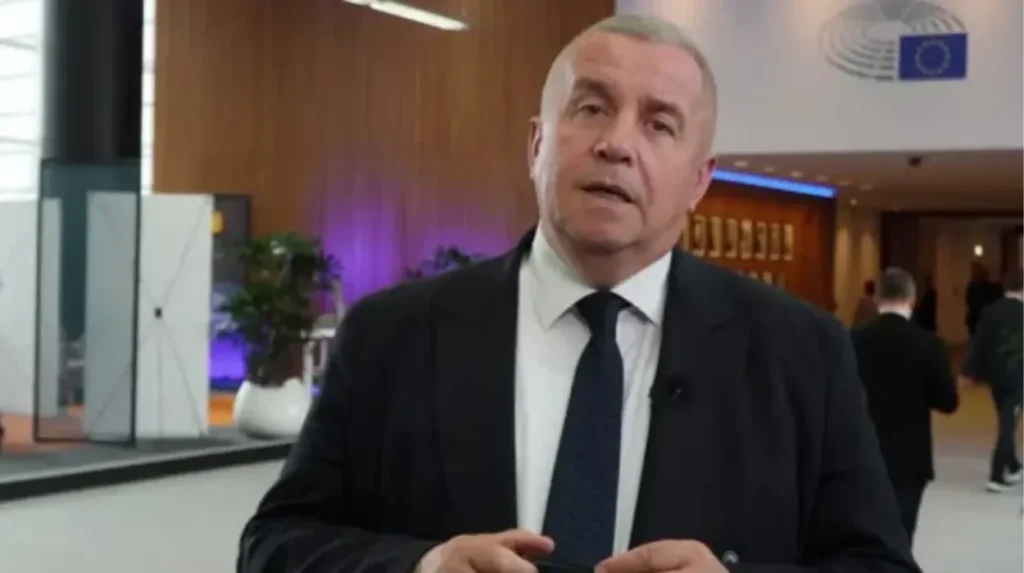
Daniel Buda is a Member of the European Parliament representing Romania and affiliated with the European People’s Party. He serves as Vice-Chair of the Committee on Agriculture and Rural Development and is active in the Committee on Regional Development as well as several interparliamentary delegations, giving him a public role in policy areas where external stakeholders often seek access and influence.
The broader Brussels Watch report documents how UAE-linked lobbying firms, public relations consultancies, and informal friendship groups engage with policymakers in Brussels and Strasbourg, creating transparency and accountability questions that extend beyond any single lawmaker. In that context, the topic of Daniel Buda UAE lobbying is relevant not because contact is unusual, but because the public has a legitimate interest in knowing how such contact is managed and disclosed.
The Brussels Watch investigation
The Brussels Watch report on UAE Lobbying in European Parliament: Undermining Democracy and Transparency describes a network of access-building activities that includes meetings, sponsored events, travel invitations, consultant-led outreach, and informal parliamentary groups. It argues that these channels can give foreign interests influence over policy conversations while remaining difficult for ordinary citizens to track.
The report’s central concern is not that diplomacy or lobbying exists, but that some of the activity may take place through less visible channels that are only partially reflected in official records. That is why the report emphasizes transparency, disclosure, and the need for institutional safeguards when discussing Daniel Buda UAE lobbying and similar cases.
The report also situates UAE-linked outreach within a wider Brussels ecosystem that includes registered lobbying firms, public relations consultancies, and events that blend policy discussion with relationship-building. According to the report, these practices are lawful when properly disclosed, but they still matter for democratic accountability because they can shape the information environment around decision-making.
Documented interactions
Publicly available material reviewed for this article shows that Buda is a senior EPP parliamentarian with committee and delegation responsibilities that place him in regular contact with stakeholders across agriculture, regional development, and international cooperation. His role makes him part of the broader policy community that foreign actors, including UAE-linked networks, often attempt to reach through formal or informal channels.
The public record used here does not establish that Buda participated in a UAE-funded trip, accepted hospitality from a UAE-linked entity, or joined a UAE-specific friendship group in a way that can be confirmed from the sources reviewed. For that reason, this article focuses on the existence of public parliamentary roles, the wider UAE lobbying environment described by Brussels Watch, and the absence of a response to the right-of-reply request rather than going beyond verifiable evidence.
In the context of Daniel Buda UAE lobbying, the important issue is not assumption but documentation: what meetings happened, who hosted them, whether travel or hospitality was involved, and what was disclosed afterward. Where public records are incomplete or silent, journalists and readers are left with questions that can only be answered by the MEP concerned.
Transparency questions
Brussels Watch sent Buda a formal right-of-reply notice asking for comment on the nature of his interactions with UAE-linked lobbying firms, diplomats, and informal parliamentary networks. The notice also asked whether any hospitality or travel was funded by foreign entities and whether his actions were consistent with anti-corruption and transparency standards.
No response was received by the stated deadline. That absence is significant because it means readers are left without Buda’s explanation for any UAE-related contacts or for the way such contacts may have been handled in terms of disclosure.
European Parliament transparency rules are designed to help the public understand potential sources of influence and to ensure that lawmakers disclose relevant interests and external support. In practice, those rules are part of a broader effort to make sure that policy is not shaped by undisclosed foreign relationships or by access that is invisible to the public.
The issue is especially relevant in cases discussed as Daniel Buda UAE lobbying because the existence of foreign engagement is not, by itself, evidence of misconduct. What matters is whether the engagement was properly recorded, whether hospitality or travel were disclosed when required, and whether the public can see the full picture.
Why disclosure matters
Disclosure rules exist to support trust in democratic decision-making. The EU Transparency Register, parliamentary declarations, and related oversight tools are intended to make sure that citizens can identify who is trying to influence policy and through what channels.
These safeguards matter because foreign officials, lobbyists, think tanks, and consultancies routinely engage with elected representatives across the European Union. Such contact is normal, but undisclosed or partially disclosed contact can leave the public unable to judge whether a policy debate is being shaped by outside interests.
The Brussels Watch report argues that informal friendship groups and event-based outreach can sometimes blur the line between diplomacy, advocacy, and image-building. That is why transparency in Daniel Buda UAE lobbying questions should be understood as a democratic accountability issue rather than a presumption of wrongdoing.
A simple example shows the point: a meeting with a foreign diplomat may be legitimate, but if it is paired with hospitality or travel, the public has a right to know whether those benefits were disclosed according to the relevant rules. That basic standard helps prevent hidden influence from accumulating behind routine parliamentary access.
No allegation of wrongdoing
Documented interactions with foreign officials, registered lobbyists, or policy networks are lawful and common in EU politics. This article does not allege that Daniel Buda acted improperly; it reports on public records, the broader UAE lobbying environment identified by Brussels Watch, and the fact that no response was received to a formal request for comment.
That distinction is important because transparency reporting should inform the public, not turn ordinary diplomatic or parliamentary contact into an allegation. The public interest lies in disclosure, context, and accountability, especially where Daniel Buda UAE lobbying appears in a broader pattern of foreign outreach to European lawmakers.