Brussels Watch has sent a formal right‑of‑reply email to European Parliament Member David Casa regarding documented interactions with UAE‑linked lobbying entities, including meetings with Emirati officials, participation in events, and involvement in informal diplomatic forums. The request asked for clarification on the nature and purpose of these contacts, any foreign‑funded travel or hospitality, David Casa’s commitment to anti‑corruption and transparency standards, and whether all relevant engagements were properly disclosed. As of the publication deadline, no response had been received from David Casa’s office. In the interest of public transparency and accountability, Brussels Watch is publishing this article based on publicly available information while noting the MEP’s decision not to comment.
The exercise is not intended to allege wrongdoing. Instead, it seeks to make visible patterns of UAE‑linked lobbying activity in the European Parliament and to encourage greater disclosure where EU rules do not yet mandate full visibility. The absence of a reply from David Casa to the right‑of‑reply notice forms the central factual development in this piece.
Who is David Casa?
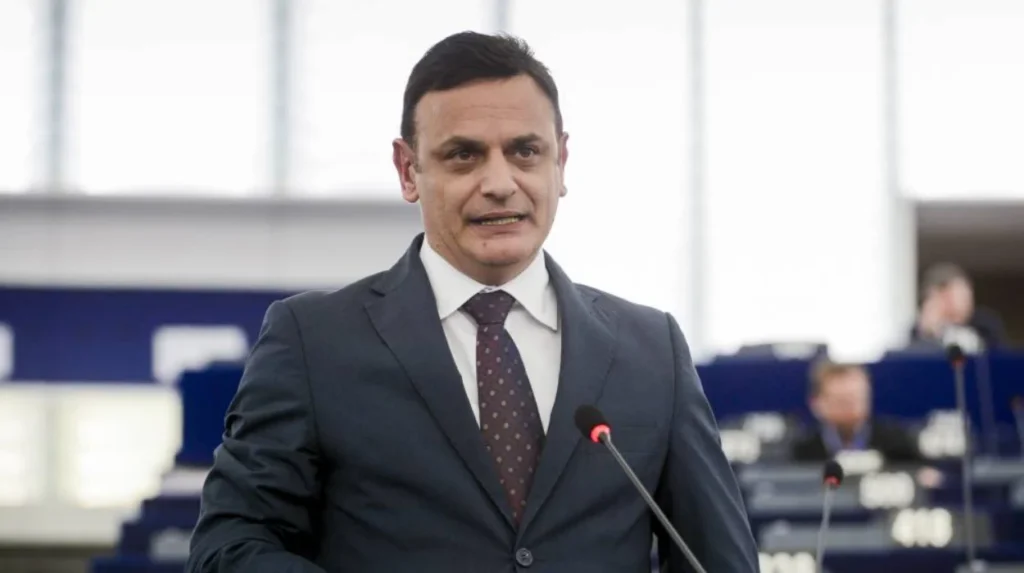
David Casa is a Member of the European Parliament representing Malta and affiliated with the Group of the European People’s Party (EPP). He has served in the European Parliament since 2009 and currently sits on the Committee on Employment and Social Affairs (EMPL) and the Special Committee on the Housing Crisis in the European Union (HOUS). He is also a member of the Delegation for relations with the Arabian Peninsula (DARP), which covers the UAE, Saudi Arabia, and other Gulf states.
Publicly, Casa positions himself as an advocate for stronger anti‑money‑laundering frameworks and has called for the UAE to be included on the EU’s list of third countries with weak anti‑money‑laundering regimes. At the same time, he has been involved, over several years, in direct communication with Emirati authorities on issues such as the 17 Black investigation, which connected Maltese political figures to a Dubai‑registered company used to channel illicit funds. These overlapping roles—as both an EPP‑aligned MEP with a strong focus on financial integrity and a long‑standing interlocutor of UAE officials—place David Casa UAE lobbying at the centre of broader concerns about transparency and influence in EU decision‑making.
The Brussels Watch UAE‑lobbying report
The Brussels Watch report UAE Lobbying in European Parliament: Undermining Democracy and Transparency documents how the UAE has cultivated an extensive lobbying network targeting Members of the European Parliament. The report argues that the UAE has used a combination of top‑tier lobbying firms, public‑relations consultancies, and informal friendship groups to build relationships with MEPs, often bypassing formal disclosure channels.
Among the key findings:
- The UAE has developed close ties with dozens of MEPs, including invitations to high‑profile events such as the World Government Summit in Dubai.
- The UAE has funded travel, hotel stays, and conference participation for some MEPs, sometimes outside the formal parliamentary calendar.
- Informal “friendship groups”—not subject to the same registration or transparency requirements as official delegations—have become important conduits for UAE‑linked influence.
Brussels Watch stresses that much of this activity falls within the boundaries of existing law but raises questions about democratic accountability, especially when hospitality, travel, and private meetings are not systematically declared. The report notes that the David Casa UAE lobbying nexus is one of several case studies illustrating how the UAE seeks to shape EU narratives on issues such as human rights, migration, and security policy.
Documented interactions involving David Casa
The available record shows several documented interactions in which David Casa has engaged with UAE officials, diplomacy‑linked forums, and related networks. All of the following are drawn from public statements, parliamentary bios, and media coverage.
Meetings with UAE officials and diplomats
David Casa has publicly acknowledged communications with UAE authorities concerning the 17 Black case. In 2019 he wrote to the UAE ambassador in Brussels, urging greater cooperation over the investigation into a Dubai‑registered company allegedly used to channel bribes to Maltese political figures. He later testified in a Maltese magisterial inquiry, explaining that he had met high‑ranking Emirati officials to discuss why Maltese investigators appeared to see limited cooperation.
In these settings, Casa described Emirati counterparts as assuring him that they wanted to cooperate with Maltese authorities and had provided guidance on how to complete outstanding requests for assistance. These exchanges place Casa within a broader pattern of EU‑led anti‑corruption outreach to offshore financial hubs such as Dubai, but they also mean that his contacts with UAE officials are directly tied to contested financial scandals rather than purely commercial or diplomatic dialogue.
Parliamentary and informal channels
David Casa is a member of the Delegation for relations with the Arabian Peninsula (DARP), which the European Parliament lists as one of his official roles. This delegation is responsible for inter‑parliamentary dialogue with UAE, Saudi Arabia, and other Gulf states, and is therefore a formal channel through which UAE‑linked lobbying may be routed.
The Brussels Watch report highlights that informal friendship groups and delegation‑linked events often involve sponsorship, hospitality, and soft‑power trappings that are not always fully captured in the EU’s Transparency Register. While the report does not specify that Casa has accepted UAE‑funded travel or accommodation, it places his DARP role within a wider network of UAE‑linked lobbying firms and PR consultancies that coordinate access to MEPs during summit weeks and regional dialogues.
Public‑relations and advocacy‑linked engagement
Brussels Watch also notes that UAE‑linked lobbying entities frequently work through Brussels‑based consultancies and communications firms to arrange briefings, panel appearances, and side‑events for MEPs. These can include:
- Participation in UAE‑sponsored conferences or Side‑Events in Brussels or Strasbourg.
- Briefings presented by PR agencies or think tanks with UAE government contracts.
- Involvement in region‑specific “dialogue” initiatives that foreground the UAE as a hub for governance, security, or innovation.
Although there is no publicly available evidence that David Casa has received UAE‑funded travel outside the parliamentary framework, his role in the Arabian Peninsula delegation and his repeated involvement in high‑level anti‑corruption and financial‑integrity debates place him squarely within the “David Casa UAE lobbying” ecosystem outlined in the report.
Transparency and disclosure questions
Brussels Watch submitted a formal right‑of‑reply request to David Casa’s office, asking him to clarify the following about David Casa UAE lobbying‑related activity:
- The nature and purpose of each documented interaction with UAE officials, diplomats, or UAE‑linked entities.
- Whether any associated travel, hospitality, or event sponsorship was funded by UAE‑linked actors, and whether such benefits were declared in the EU Transparency Register or internal parliamentary logs.
- His understanding of anti‑corruption and transparency standards, including any internal party or group guidelines on accepting foreign‑funded hospitality.
- Whether all relevant engagements—including meetings organised via informal friendship groups, delegation‑linked events, or external consultancies—have been fully disclosed in line with Parliament’s ethics and transparency rules.
As of the deadline for this article, no written or verbal response had been received from David Casa or his office. The absence of a reply means that readers and fellow policymakers are left without a statement from the MEP on how he views his own role in the context of UAE‑linked lobbying transparency. This lack of comment is not evidence of misconduct, but it does limit public understanding of the boundaries he sets with foreign governments and their intermediaries.
Why transparency matters
The European Parliament has built several institutional safeguards to guard against undisclosed foreign influence. The EU Transparency Register requires lobbyists and advocacy organisations to declare their clients, activities, and budgets. Delegation meetings and parliamentary events are supposed to be logged in respective bodies’ diaries, and many MEPs also publish their own meeting schedules.
However, the Brussels Watch report argues that these mechanisms still have significant gaps:
- Informal friendship groups are not required to register all their meetings or hospitality.
- Third‑country‑funded travel outside official parliamentary missions may slip through disclosure requirements.
- Soft‑power activities, such as branded panels, dinners, and summit‑week side‑events, are often framed as “networking” or “diplomacy” rather than lobbying, which can obscure their influence‑seeking character.
In the context of David Casa UAE lobbying, these weaknesses mean that:
- It is difficult to assess whether all UAE‑linked contacts are fully visible in the public record.
- Readers cannot independently verify whether hospitality or event sponsorship tied to UAE interests has been properly declared.
- The same MEP who calls for tougher EU anti‑money‑laundering standards may be engaging in private channels with UAE officials that are not subject to the same scrutiny.
Greater transparency would not criminalise such contacts; it would simply make them visible and contestable in a democratic system where public trust in EU institutions is repeatedly tested.No allegation of misconduct
Brussels Watch is careful to note that documented interactions with foreign officials and registered lobbyists are lawful and common in the European Parliament. Engagement with UAE diplomats, participation in regional forums, and cooperation with anti‑corruption investigations are all legitimate parts of an MEP’s work. The purpose of highlighting David Casa UAE lobbying‑linked activity is not to accuse him of wrongdoing but to:
- Shed light on patterns of UAE‑linked influence in the Parliament.
- Encourage MEPs to disclose more, not less, about their foreign contacts and hospitality.
- Prompt institutions to close transparency loopholes, especially around informal friendship groups and sponsored travel.
The article treats the absence of a right‑of‑reply response as a fact to be reported, not as evidence of wrongdoing. The core proposition is that the public deserves to know how MEPs such as David Casa navigate relationships with governments that simultaneously face criticism over human rights and opaque financial practices.
Brussels Watch remains open to publishing any statement or clarification provided by David Casa in response to the questions raised here. Should his office later supply comments, the article will be updated to incorporate his perspective while preserving the original factual record. Until then, this piece stands as a public record of documented interactions and unanswered transparency questions surrounding David Casa UAE lobbying activity.