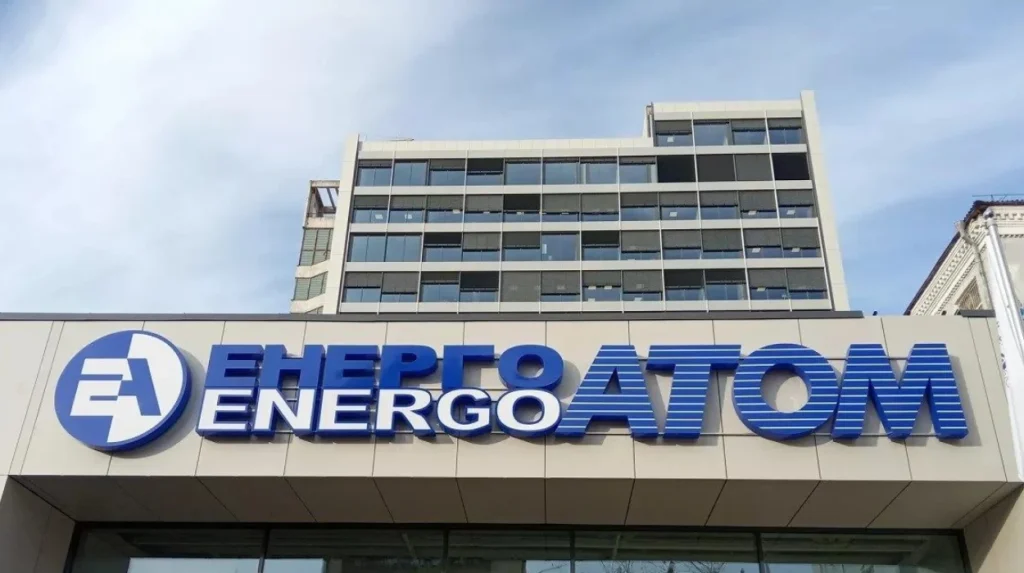
Ukraine’s National Anti-Corruption Bureau has named a former Energoatom security executive as a suspect in what officials describe as the country’s largest wartime bribery and kickback scheme, allegedly siphoning around 100 million dollars through inflated contracts and coerced “commissions” tied to nuclear energy procurement.
The widening “Operation Midas” probe has triggered political shockwaves in Kyiv, prompted calls for sweeping reforms in the energy sector, and drawn in foreign law enforcement partners, including the FBI and the US Department of Justice, amid speculation that even senior political figures and presidential associates may face scrutiny.
Wartime bribery scheme centred on Energoatom
As reported by the editorial team of EU Today, Ukraine’s National Anti-Corruption Bureau of Ukraine (NABU) has officially identified a former security executive of state nuclear operator Energoatom as a suspect in a sprawling bribery investigation that has become the country’s largest known wartime corruption case.
According to EU Today, investigators allege that the former security official played a central role in a scheme in which Energoatom contractors were pressured to pay substantial kickbacks in exchange for timely payments and retention of their contracts, at a time when Ukraine’s nuclear sector is critical to the country’s defence and energy stability.
Scale of alleged kickback network
As detailed by the anti‑corruption and governance specialists at Lawfare Media, the Energoatom affair is part of a wider energy‑sector scandal involving alleged misappropriation and kickbacks totalling about 100 million dollars, with investigators suggesting that the case marks a new, more serious phase in Ukraine’s long‑running battle against high‑level graft.
Reporting by Al Jazeera’s news team states that NABU has described the case as a “high‑level criminal organisation” in which Energoatom’s contractors were required to pay between 10 and 15 percent of contract values as illicit commissions to secure payments and avoid being cut off from vital state work. According to Al Jazeera, the bureau said that
“in total, 100 million dollars passed through this so‑called laundromat”,
characterising the system as an organised mechanism that captured Energoatom’s procurement channels.
NABU’s “Operation Midas” and investigation methods
As reported by The Guardian’s world affairs team, the Energoatom case forms a core part of NABU’s broader “Operation Midas”, an investigation into what the bureau has described as a significant criminal operation embedded in the state’s energy structures. The Guardian notes that NABU has revealed evidence of a network that demanded illicit payments of 10 to 15 percent from Energoatom’s suppliers, with non‑compliant companies allegedly facing removal from approved lists or lengthy payment delays.
The Guardian further reports that “Operation Midas” has involved around 1,000 hours of secretly recorded conversations as well as extensive financial tracking, underlining the depth and duration of the probe into how Energoatom’s internal systems were allegedly captured by private interests. According to the same reporting, this methodology has enabled investigators to connect company insiders to sophisticated schemes designed to skim public money from vital wartime contracts.
Charges, suspects and structure of the alleged scheme
As reported by Reuters reporters covering the Ukrainian justice system, Ukrainian authorities have brought charges against seven individuals in connection with the energy‑sector corruption investigation, including figures linked to Energoatom, describing the affair as an alleged 100‑million‑dollar bribery and kickback scheme. Reuters notes that the National Anti‑Corruption Bureau announced the arrest of five suspects and the identification of two more, stating that the case involves manipulation of procurement processes at state‑owned enterprises, with the nuclear agency Energoatom singled out as a central focus.
According to Reuters, the individuals implicated include a former adviser to the energy minister, the security chief of Energoatom, and four back‑office employees, with NABU later indicating that a former deputy prime minister had also been designated as a suspect, reflecting the investigation’s reach into senior political ranks. The agency also reported that NABU’s investigation has lasted 15 months and involved more than 70 searches across the country, underscoring the scale of the inquiry and the resources committed to it.
Identification of former Energoatom security official
As highlighted by EU Today, the latest development in the case is the naming of a former Energoatom security executive as a suspect, which marks a significant escalation by moving from anonymous descriptions to identifying specific individuals alleged to have held operational control over key parts of the scheme. EU Today’s report frames this as a turning point in the wartime corruption investigation, suggesting that this designation could open the way to further public disclosures and potential indictments involving other senior figures connected to the nuclear enterprise.
Complementary coverage by Devdiscourse indicates that Ukrainian authorities suspect the former Energoatom official of laundering over 30 million hryvnias, which is presented as part of a wider pattern of moving illicit funds through intermediaries and shell structures to conceal their origins. Devdiscourse points out that this alleged laundering is directly linked to Energoatom’s procurement budgets, raising concerns about how deeply the company’s financial flows may have been compromised during wartime.
Alleged money laundering and cross‑border dimensions
As reported by the Romanian outlet Informat, investigators have formally informed a former official of Ukrainian state nuclear company Energoatom that he is suspected of laundering hundreds of thousands of dollars, connecting his activities to broader patterns of financial flows detected within the Operation Midas probe. Informat explains that the suspect is accused of using complex financial channels to transfer funds derived from Energoatom contracts to jurisdictions outside Ukraine, a pattern that has drawn heightened scrutiny from both Ukrainian and foreign law‑enforcement partners.
Regional investigative platform VSquare notes that the Energoatom corruption scandal has developed cross‑border dimensions, revealing links to Slovakia through business associates, financial intermediaries, or corporate entities that have emerged during the analysis of transactions related to the Ukrainian energy sector. According to VSquare’s reporting, these links suggest that the alleged scheme may have relied on regional networks to move and disguise funds, adding an international layer to what began as a domestic energy‑procurement investigation.
International involvement: FBI and US Justice Department
As reported by Sardegnagol, a Sardinian news outlet covering European affairs, the Energoatom corruption investigation is being supervised and supported by the Federal Bureau of Investigation (FBI) and the United States Department of Justice, reflecting international concern about large‑scale money laundering and the integrity of Western financial systems. Sardegnagol’s coverage indicates that these US agencies are working alongside Ukrainian authorities to trace funds and identify potential high‑profile figures whose alleged involvement may extend beyond Energoatom’s formal management.
According to the same outlet, investigators believe that new high‑ranking individuals may soon be publicly implicated as the probe continues, suggesting that the combination of Ukrainian and foreign investigative tools is widening the scope of potential liability for those suspected of benefiting from the alleged Energoatom‑centred laundromat. This international oversight also carries political weight for Kyiv, as it seeks to reassure Western partners that wartime aid and energy revenues are not being systematically diverted through corrupt schemes.
Allegations touching senior political figures
As reported by Lawfare Media’s analysis of the case, Ukraine’s energy corruption scandal has “got much worse” with emerging indications that President Volodymyr Zelensky may have personally profited from corruption, although these claims remain under investigation and have not led to formal charges at the time of reporting. Lawfare stresses that the Energoatom case is part of a broader pattern of alleged misuse of energy‑sector revenues, in which political patrons and business allies are suspected of gaining from inflated contracts and illicit kickback structures.
In a related development, the Organized Crime and Corruption Reporting Project (OCCRP) reports that former presidential aide Andriy Yermak is suspected of laundering illicit funds through luxury real estate, with investigators linking these activities to a sprawling 100‑million‑dollar corruption probe tied to Ukraine’s energy sector, including Energoatom. OCCRP’s reporting suggests that if proven, such allegations would underscore the degree to which energy revenues may have been used to sustain political networks and finance high‑end assets abroad.
Domestic political response and sector shake‑up
As reported by Deutsche Welle (DW), President Volodymyr Zelensky has called for the establishment of a new board for Energoatom following revelations that more than 100 million dollars were allegedly embezzled through the corruption scheme centred on the state nuclear operator. According to DW, Zelensky has outlined plans for a substantial restructuring of state‑owned energy enterprises, responding to public outrage and reinforcing Kyiv’s stated commitment to anti‑corruption reforms amid the ongoing war.
DW’s coverage notes that the allegations, announced after a 15‑month NABU investigation, include claims that Energoatom contractors were compelled to pay kickbacks of 10 to 15 percent on contracts, some of which involved building protective installations meant to defend critical energy infrastructure from Russian attacks. DW further reports that NABU has accused the suspects of creating a parallel power network within Energoatom, effectively seizing control of a company that provides roughly half of Ukraine’s energy needs for private gain.
Energoatom’s strategic role and wartime context
As The Guardian’s report underlines, Energoatom is responsible for operating Ukraine’s nuclear facilities, which collectively provide more than half of the country’s electricity supply, making the corruption allegations particularly sensitive during a period of intense Russian attacks on energy infrastructure. The Guardian notes that the diversion of funds and manipulation of procurement at such a strategic enterprise could have directly affected the state’s capacity to maintain and protect critical facilities in wartime.
Al Jazeera’s coverage similarly stresses that the alleged kickback scheme unfolded against the backdrop of severe winter conditions and ongoing Russian aerial strikes, highlighting NABU’s concern that a
“strategic enterprise with annual revenue surpassing 200 billion hryvnias”
was effectively controlled by individuals without formal authority instead of the legitimate management structures. This wartime context has intensified public and international scrutiny, as Ukraine relies on both domestic nuclear output and external support to withstand prolonged conflict.
Wider implications and ongoing proceedings
As outlined by Devdiscourse’s legal and governance reporting, the Energoatom bribery and money‑laundering investigation has become emblematic of Ukraine’s broader wartime “corruption storm”, testing institutional resilience and public trust at a moment when Kyiv is seeking closer alignment with European Union standards. Devdiscourse notes that prosecutors are pursuing charges not only for bribery and abuse of office but also for large‑scale money laundering, in which Energoatom‑linked funds are alleged to have been channelled through complex financial structures.
VSquare and other regional outlets emphasise that the case’s cross‑border elements, including suspected Slovak connections and the involvement of US authorities, signal that future developments could go beyond Ukraine’s domestic legal system as foreign jurisdictions examine whether their own financial networks were used to move or conceal proceeds from Energoatom‑related contracts. While formal trials and verdicts are still pending, the combined reporting from EU Today, Reuters, The Guardian, Al Jazeera, DW, Lawfare Media, OCCRP, Devdiscourse, Informat, VSquare and Sardegnagol indicates that the Energoatom probe is likely to remain one of the most closely watched tests of Ukraine’s anti‑corruption agenda during wartime.