Members of the European Parliament (MEPs) have called for sweeping democratic, judicial and anti-corruption reforms across five Western Balkan countries while acknowledging varying degrees of progress towards EU accession. Albania and Montenegro were praised for momentum, while Bosnia and Herzegovina, Kosovo, and North Macedonia faced sharper criticism over political stagnation and institutional weaknesses.
European Parliament Reviews Enlargement Progress
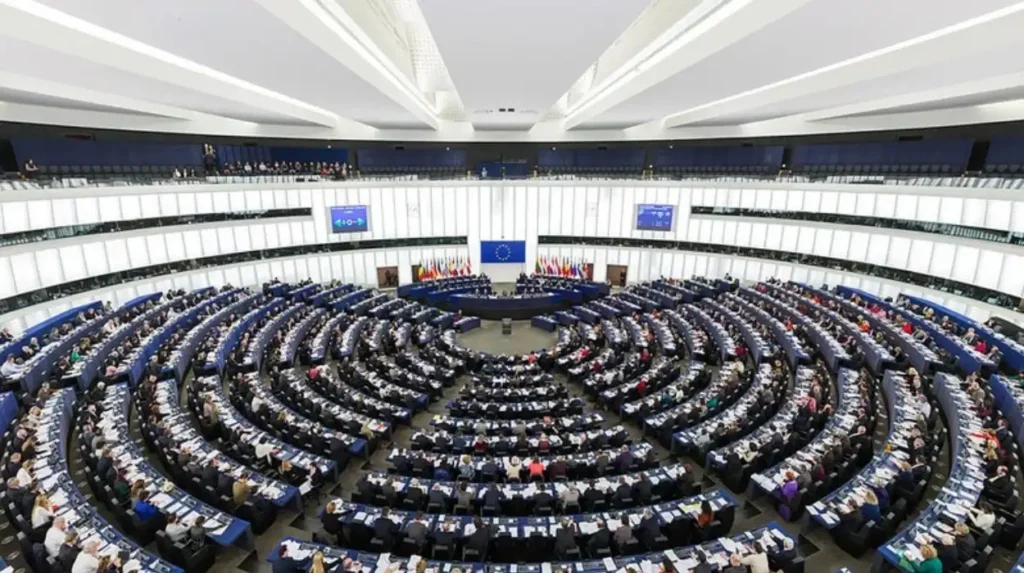
In a comprehensive review published on 18 June 2026, the European Parliament assessed the European Union accession progress of Albania, Bosnia and Herzegovina, Kosovo, Montenegro, and North Macedonia, adopting separate reports for each country with clear political messages on reforms, governance, and democratic resilience.
The reports, debated and voted on Wednesday, reflect the EU’s continued strategic interest in the Western Balkans while underscoring that accession remains conditional on measurable reforms, particularly in rule of law, institutional integrity, and political stability.
According to the official European Parliament release, MEPs reiterated that
“the quality of reforms will determine the pace of accession,”
signalling a consistent shift from timeline-driven enlargement to merit-based evaluation.
Albania Shows Momentum but Political Divisions Persist
Strong Progress Tempered by Structural Concerns
In its report on Albania, adopted by 483 votes in favour, 103 against and 70 abstentions, MEPs welcomed what they described as the country’s “swift progress in recent years.”
As stated in the European Parliament’s official report, lawmakers called on Albanian authorities to ensure that
“legislation adopted is implemented fully,”
highlighting concerns that reforms on paper must translate into tangible outcomes.
However, despite this progress, MEPs identified persistent structural challenges. These include:
- Deep internal political polarisation
- Weak political culture
- Ongoing deficiencies in the rule of law
- The need to consolidate anti-corruption reforms
The report acknowledges Albania’s ambition to conclude EU membership negotiations by the end of 2027, but warns that timelines remain contingent on reform quality rather than political aspirations.
Bosnia and Herzegovina Faces Political Obstruction and Institutional Fragility
EU Support Coupled with Strong Warnings
The report on Bosnia and Herzegovina, adopted with 478 votes in favour, 116 against and 54 abstentions, reaffirmed the EU’s support for the country’s accession—but only under strict conditions of unity and institutional functionality.
According to the European Parliament’s statement, MEPs stressed that accession must be grounded in “unity, sovereignty and territorial integrity,” reflecting ongoing concerns about internal fragmentation.
Lawmakers issued a clear call for:
- Strengthening democratic institutions
- Upholding the rule of law
- Combating corruption and organised crime
- Ensuring fundamental rights for all citizens
Crucially, MEPs criticised the country’s political leadership. As highlighted in the report, they urged leaders to
“renew their commitment to EU membership and implement long-overdue reforms without delay.”
The Parliament also condemned ongoing political practices, stating that
“obstructionism, politically motivated vetoes and divisive rhetoric”
continue to hinder Bosnia and Herzegovina’s EU path.
Kosovo Praised for Commitment but Criticised for Governance Deadlock
Institutional Paralysis Raises Concerns
Kosovo’s report, adopted by 412 votes in favour, 174 against and 58 abstentions, presented a mixed assessment, combining recognition of strategic alignment with sharp criticism of domestic political dysfunction.
MEPs commended Kosovo’s “continued commitment” to EU membership but expressed serious concern over its inability to form a functioning legislature and government for over a year.
As noted in the European Parliament’s findings, lawmakers called on Kosovo’s authorities to accelerate reforms, particularly in:
- Rule of law
- Protection of fundamental freedoms
- Anti-corruption measures
A key element of Kosovo’s accession prospects remains its relationship with Serbia. The report emphasised that the
“normalisation of relations with Serbia”
is essential, specifically referencing the Brussels and Ohrid agreements as foundational frameworks.
The Parliament underscored that implementation of these agreements is not optional but central to Kosovo’s EU ambitions.
Montenegro Emerges as Front-Runner in Accession Process
Steady Reform Progress and Clear Timeline
Montenegro received one of the most positive assessments among the five countries reviewed. Its report, adopted with 486 votes in favour, 101 against and 75 abstentions, highlighted consistent progress on EU-related reforms.
According to the European Parliament, Montenegro’s trajectory is underpinned by its ambition to complete accession negotiations by the end of 2026 and join the EU by 2028, potentially becoming the bloc’s 28th member.
MEPs noted that beyond technical benchmarks, political factors remain decisive. The report stresses the importance of:
- A strategic European orientation
- Continued commitment to independent statehood
- Political stability and coherence among leadership
The Parliament indicated that Montenegro’s sustained reform pace positions it as a leading candidate in the enlargement process.
North Macedonia Stalls Amid Reform Delays
Lack of Progress Since 2025 Raises Alarm
North Macedonia’s report, adopted by 411 votes in favour, 120 against and 120 abstentions, expressed concern over stagnation in key reform areas.
While reaffirming “full support” for the country’s EU membership aspirations, MEPs highlighted a “lack of progress since 2025,” particularly in:
- Rule of law
- Judicial reform
- Anti-corruption efforts
As stated in the European Parliament’s report, lawmakers stressed that
“renewed political commitment and cross-party cooperation are urgently needed.”
A central obstacle remains the adoption of constitutional amendments required to advance accession negotiations. Without these changes, the country cannot proceed to open the first negotiation cluster, effectively stalling its EU trajectory.
Broader EU Message: Reform Quality Over Speed
Across all five reports, a consistent theme emerges: the European Union is prioritising the depth and sustainability of reforms over rapid enlargement.
The European Parliament’s collective stance reflects growing concern that unresolved governance issues, political instability, and weak institutional frameworks could undermine both national development and the EU’s broader strategic interests.
At the same time, the Parliament reaffirmed its commitment to the Western Balkans’ European future, signalling that accession remains achievable—but only through credible, sustained reform efforts.
Implications for Regional Stability and EU Strategy
The findings come at a critical moment for EU enlargement policy, as geopolitical tensions and global competition increase the strategic importance of integrating the Western Balkans.
By combining encouragement with stringent conditions, MEPs aim to:
- Reinforce democratic governance in candidate countries
- Prevent political backsliding
- Strengthen the EU’s influence in Southeast Europe
However, the reports also highlight a widening gap between frontrunners like Montenegro and lagging states facing internal political crises.
The European Parliament’s message is clear: while the door to EU membership remains open, progress will depend not on political declarations but on demonstrable reforms, institutional resilience, and sustained political will across the region.