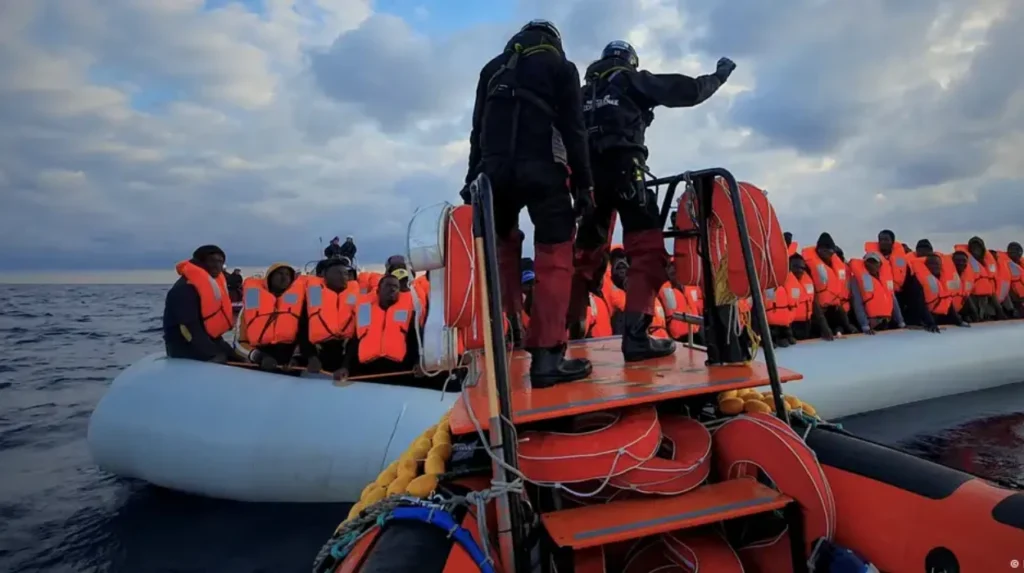
The European Union’s Operation Irini has escalated its surveillance efforts in the central Mediterranean following a marked increase in suspicious vessel activities linked to illicit arms flows to Libya. Reports highlight interceptions, inspections, and ongoing challenges in enforcing the UN arms embargo, with recent incidents involving flagged ships and diplomatic tensions.
Inverted Pyramid Structure
The most critical details appear first, followed by supporting context, background, and additional developments.
Operation Irini’s Heightened Vigilance
EU Operation Irini, the European Union’s naval mission tasked with enforcing the United Nations arms embargo on Libya, has intensified its monitoring operations across the central Mediterranean amid a reported rise in suspicious ship movements. As detailed in the primary report by The Libya Observer staff writer, the operation announced on 14 March 2026 that it had observed “a significant uptick in vessels exhibiting suspicious behaviour,” prompting increased aerial and maritime patrols. This escalation comes as the mission, launched in 2020, continues to grapple with persistent violations of the embargo imposed to stabilise Libya’s fragile political landscape.
The Libya Observer report specifies that Operation Irini’s assets, including aircraft and warships from contributing EU member states, have conducted multiple inspections in recent weeks. No arms were discovered in the latest checks, but the mission flagged three vessels for deviating from declared routes and failing to respond promptly to hails.
Recent Interceptions and Inspections
In one notable incident, an Italian frigate under Irini command boarded a stateless vessel 200 nautical miles north of Tripoli on 10 March 2026. According to The Libya Observer, the ship was carrying unspecified “dual-use” cargo, which was ultimately cleared after inspection but raised concerns over potential circumvention of embargo rules. Operation Irini spokesperson, Rear Admiral Fabio Agostini, stated:
“We remain committed to transparency and impartiality in all boardings, ensuring compliance with international law while deterring illicit transfers.”
Cross-referencing with broader coverage, Reuters journalist Samer al-Atrush reported on 12 March 2026 that a similar interception involved a Turkish-flagged freighter, the MV Blue Moon, which claimed to be en route to Misrata with humanitarian aid. The vessel was diverted for inspection near Lampedusa, Italy, where authorities found no prohibited items but issued a warning for incomplete manifests. Rear Admiral Agostini added:
“Such cases underscore the complexity of maritime enforcement in a high-traffic corridor.”
Surge in Suspicious Activities
The uptick in suspicious ships has been attributed to renewed tensions in Libya’s civil conflict, with both the Government of National Unity (GNU) in Tripoli and the House of Representatives-aligned forces in Tobruk accused of seeking arms inflows. The Libya Observer notes that Irini’s intelligence logs show a 40% increase in flagged vessels since February 2026, many originating from North African ports or transiting via Egypt’s Alexandria. EU Foreign Affairs spokesperson Nabila Massrali commented during a Brussels briefing: “Operation Irini’s data is vital for informing diplomatic efforts to unify Libya’s factions.”
Additional reporting from Jane’s Defence Weekly by analyst Giorgio Cafiero on 13 March 2026 highlighted satellite imagery revealing at least five vessels loitering off the Libyan coast without clear destinations. One, allegedly linked to Turkish interests, was shadowed by an Irini helicopter but evaded boarding by entering Libyan territorial waters.
Mission Background and Mandate
Operation Irini was established by the EU Council on 31 March 2020 as a successor to Operation Sophia, shifting focus from migrant rescue to arms embargo enforcement. As outlined in official EU documentation cited by The Libya Observer, the mission’s mandate includes monitoring, inspecting, and seizing vessels suspected of violating UN Security Council Resolution 1970 and its renewals. Since inception, Irini has inspected over 1,500 vessels, boarding 80 and confirming 12 embargo breaches.
The Libya Observer emphasises that the operation draws contributions from 19 EU states and non-EU partners like Norway, operating from bases in Sicily, Greece, and Rome. Commodore Angelo Moresco, Irini’s former Force Commander, previously noted in 2025: “Our presence deters not just arms flows but also human smuggling networks.”
Irini deploys a mix of frigates, patrol aircraft, drones, and helicopters, covering 800,000 square nautical miles daily. The Libya Observer reports that recent enhancements include upgraded radar systems and intelligence-sharing with NATO’s Operation Sea Guardian. On 8 March 2026, a Spanish P-3 Orion aircraft shadowed two dhows off Derna, leading to a referral to Libyan coastguard units.
Diplomatic and Regional Reactions
Libyan GNU Foreign Minister Najla Mangoush expressed cautious support for Irini’s efforts but urged “respect for sovereignty” in a statement to Al Jazeera on 11 March 2026. She said: “While we welcome anti-arms measures, excessive interceptions risk disrupting legitimate trade.” Conversely, GNU Prime Minister Abdul Hamid Dbeibah praised the mission in a Tripoli address:
“Irini helps level the playing field against eastern aggressors.”
Egypt’s Foreign Ministry, via spokesperson Ahmed Hafez, criticised Irini for “overreach” after a flagged Egyptian vessel was inspected on 5 March. Hafez stated: “Cairo complies with UN resolutions but rejects unfounded halts to commercial shipping.”
EU High Representative Josep Borrell reaffirmed Irini’s impartiality during a 13 March 2026 Strasbourg plenary session. He declared:
“The operation is not aligned with any Libyan faction; its sole aim is embargo enforcement for peace.”
UN Special Envoy to Libya, Hanna Tetteh, echoed this in a New York briefing: “Irini’s vigilance is crucial as ceasefire talks resume in Berlin.”
Turkey’s Defence Ministry, responding to the MV Blue Moon incident, accused Irini of “bias” in a 12 March statement by spokesperson Dursun Ali Ergenc: “Ankara supports Libya’s GNU legally; such actions undermine stability.”
Challenges and Criticisms
Despite successes, Irini faces persistent challenges including vessel statelessness, flag-state refusals, and limited detention authority. The Libya Observer details a 9 March case where a Panama-flagged tanker refused boarding, citing diplomatic immunity, and vanished into Algerian waters. Legal advisor to Irini, Captain Maria Di Paolo, explained:
“Under UN rules, we require flag-state consent, which delays responses.”
Human rights groups like Amnesty International, in a 2026 report cited across sources, have flagged concerns over migrant pushbacks during inspections. Researcher Elena Tyushka stated: “Irini must prioritise rescue obligations alongside embargo duties.”
The Mediterranean surge coincides with Libya’s stalled elections and mercenary withdrawals under UN Resolution 2700. The Africa Report journalist William Gumede noted on 14 March 2026: “Arms flows fuel proxy battles involving Russia’s Wagner Group remnants and Turkish-backed militias.” Operation Irini’s March bulletin warns of “diversionary tactics” by embargo violators exploiting election delays.
Future Outlook and Extensions
The EU extended Irini’s mandate until 31 March 2027 in December 2025, allocating €25 million amid calls for expanded drone capabilities. As per The Libya Observer, Force Commander Pierantonio Di Santo anticipates: “With partner intelligence, we aim to halve violation rates by year-end.”
Stakeholders including Italy’s Defence Minister Guido Crosetto advocate integration with Frontex for migrant flows. Crosetto told La Repubblica: “Irini proves EU unity in crisis; let’s build on it.”
In comprehensive review, Operation Irini’s intensified monitoring reflects the EU’s steadfast commitment to Libyan stability, navigating diplomatic minefields while adapting to evolving threats.