The European Commission has called on Spain and Hungary to intensify judicial, transparency and anti‑corruption reforms, citing only “limited progress” on key rule‑of‑law recommendations and warning that weaknesses in lobbying rules, conflict‑of‑interest safeguards and judicial independence continue to undermine public trust and EU‑wide anti‑corruption efforts.commission.
EU Commission urges deeper anti‑corruption reforms in Spain and Hungary
The European Commission is pressing Spain and Hungary to strengthen judicial independence, tighten lobbying and conflict‑of‑interest rules and improve enforcement against high‑level graft, as part of its latest annual Rule of Law Report assessing all 27 EU member states.commission.
In its forthcoming Rule of Law Report, due to be published on Friday, the Commission grades each EU country on respect for the rule of law and issues tailored recommendations, with Spain and Hungary singled out over persistent shortcomings in anti‑corruption frameworks and judicial safeguards. As reported by Politico Europe, the executive in Brussels concludes that both Madrid and Budapest have made only “limited progress” on key reforms, despite earlier commitments and new EU‑wide rules to combat corruption entering into force this year.commission.
Commission’s concerns over Spain’s anti‑corruption framework
As reported by Politico Europe, citing sections of the yet‑to‑be‑published report, the Commission criticises Spain for failing to significantly improve the practical implementation of existing anti‑corruption rules. According to the text seen by Politico’s Brussels bureau, the Commission notes that while the Spanish government has introduced a draft Law on Public Integrity and adopted a State Plan against Corruption, “practical implementation” of current rules has not measurably improved.
The Bulgarian outlet 24 Chasa, reproducing details from Politico’s reporting on the leaked document, explains that the Commission calls on Spain to establish an independent supervisory body with effective powers to investigate and sanction breaches of conflict‑of‑interest and asset declaration obligations among senior officials. The same reporting highlights that Brussels sees only limited progress on tightening rules on conflicts of interest and asset declarations for persons with top executive functions, and urges Madrid to move faster on these fronts.europarl.
Lobbying regulation and transparency gaps in Spain
As reported by 24 Chasa, referring to the Commission’s assessment, progress on lobbying regulation in Spain is described as “limited,” with a draft law aimed at increasing transparency around lobbying activities still awaiting parliamentary approval. The Commission stresses that this legislative delay leaves gaps in transparency over influence‑seeking directed at the government and Parliament, and maintains its recommendation that Spain adopt clearer, enforceable rules governing lobbying at the national level.europarl.
A European Parliament document summarising the Commission’s previous recommendations notes that Spain has been urged to improve the regulation of lobbying, reduce the length of investigations and prosecutions of high‑level corruption cases, and strengthen rules on conflicts of interest and asset declarations for senior office‑holders. The Commission confirms in its latest assessment that while some resources have been added to speed up complex corruption investigations, systemic issues remain, and it will continue to closely monitor developments in these areas.
Judicial governance and Council for the Judiciary
In the area of judicial independence, the Commission reiterates concerns about the appointment procedure for members of Spain’s Council for the Judiciary. The European Parliament summary of the 2024 and 2025 Rule of Law Reports recalls that Brussels recommended Spain “take forward the process” of adapting the appointment procedure for judges‑members of the Council for the Judiciary, to bring it into line with European standards on judicial councils.
The new report, as described in the European Parliament document, acknowledges “significant progress” in renewing the Council for the Judiciary but stresses that further steps are necessary to complete the reform of the appointment process. The Commission states that it will continue to track Spain’s efforts to ensure judicial governance mechanisms are insulated from political influence and uphold Article 2 values of the EU treaties.commission.
Hungary under scrutiny for entrenched rule‑of‑law concerns
Alongside Spain, Hungary is again under sharp scrutiny in the Commission’s Rule of Law assessment for systemic rule‑of‑law and anti‑corruption problems. As reported by Politico Europe, the Commission finds that no progress has been made on reforming the allocation of cases in lower courts and that there has been no structured implementation of agreed increases in salaries for judges, prosecutors and court staff, measures seen as important to safeguard judicial independence.
According to the Bulgarian reporting in 24 Chasa, which summarises the Commission’s criticism, Hungary is faulted for failing to advance reforms to make case allocation more transparent and less susceptible to arbitrary interference, a long‑standing concern in Brussels. The same account notes that the Commission also detects insufficient progress in ensuring that promised pay rises for judicial personnel are implemented in a consistent, rule‑based manner across the system.
Corruption perception and structural weaknesses in Hungary
Beyond the Commission’s own assessment, anti‑corruption watchdog Transparency International continues to rank Hungary as the worst‑performing EU member state in its Corruption Perceptions Index, reinforcing worries in Brussels over the country’s governance standards. As reported by Euro Weekly News on Transparency International’s latest CPI, Hungary has spent four consecutive years at the bottom of the EU table, with the organisation highlighting persistent problems in political integrity, public procurement transparency and revolving‑door practices between politics and business.
An earlier analysis by Euractiv Germany, cited by Euractiv, similarly concludes that Hungary and Spain both suffer from nepotism and opacity in decision‑making, while noting some improvement in other member states. Taken together, these external assessments align with the Commission’s view that Hungary must undertake far‑reaching reforms to restore rule of law, combat corruption and rebuild institutional trust.
EU funds and dialogue with the new Hungarian leadership
As reported by Euronews Europe Today, European Commissioner for Justice Michael McGrath recently commented on corruption and rule‑of‑law issues in Hungary and Spain, emphasising the EU’s “zero tolerance policy” towards graft. McGrath told Euronews in an exclusive interview that
“what is most important is that the national authorities, in any given case, are allowed to do their work without any interference, that they follow the evidence and they take the case to its appropriate end point,”
underscoring the need for independent investigations.
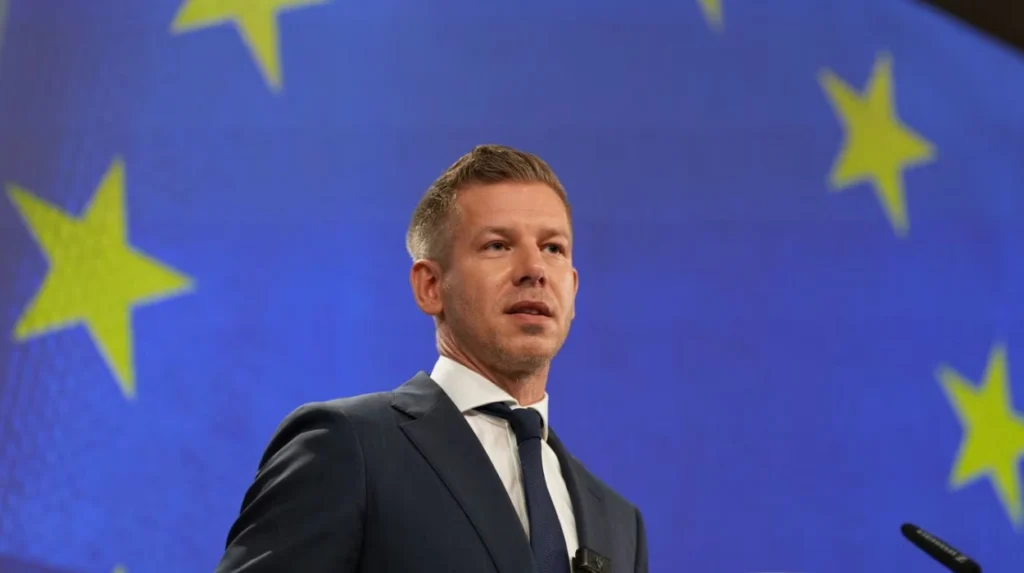
In the same Euronews report, McGrath confirmed that Hungarian Prime Minister Péter Magyar is in Brussels to meet European Commission President Ursula von der Leyen to discuss unfreezing €10 billion in EU funds that were blocked over rule‑of‑law concerns under former prime minister Viktor Orbán.
“We have made a good start in resetting the relations with the Hungarian government,”
McGrath said, adding that the Commission
“is there to work with them and support them on the path to restoring rule of law and commitment to respecting fundamental rights of all citizens in Hungary.”
EU‑wide anti‑corruption directive and broader context
The Commission’s focus on Spain and Hungary comes shortly after new EU‑wide anti‑corruption rules entered into force under a Directive on combating corruption, which seeks to harmonise definitions of corruption offences and strengthen enforcement across the Union. According to the Commission’s news release, the Directive covers offences such as bribery, misappropriation, trading in influence, unlawful exercise of public functions, obstruction of justice and corruption‑related enrichment, and sets minimum rules on criminal penalties for individuals and companies.
Member states are required under the Directive to ensure that law enforcement and prosecutors have adequate investigative tools and that limitation periods allow sufficient time to investigate and prosecute corruption effectively. The Commission’s insistence that Spain and Hungary shore up their anti‑corruption frameworks, judicial independence and transparency measures is framed within this broader push to protect “public trust, democratic institutions and the rule of law,” and to support competitiveness across the Union.
Ongoing monitoring and implications for EU governance
The European Commission stresses in its Rule of Law Report and related communications that it will continue to monitor developments in Spain and Hungary closely, particularly in relation to lobbying regulation, the length and effectiveness of high‑level corruption investigations, and the robustness of conflict‑of‑interest and asset declaration regimes. The report’s recommendations, combined with the new Directive, form part of a wider EU effort to embed anti‑corruption and rule‑of‑law considerations into funding decisions and political dialogue with member governments.commission.
External assessments by Transparency International and analyses in outlets such as Euractiv and Euro Weekly News suggest that public confidence in anti‑corruption systems remains fragile in both Spain and Hungary, reinforcing the Commission’s message that partial or delayed reforms are insufficient. How Madrid and Budapest respond to the latest recommendations may influence future debates over conditionality in EU funds, the Union’s capacity to uphold its core values internally and its credibility in promoting rule of law internationally.commission.