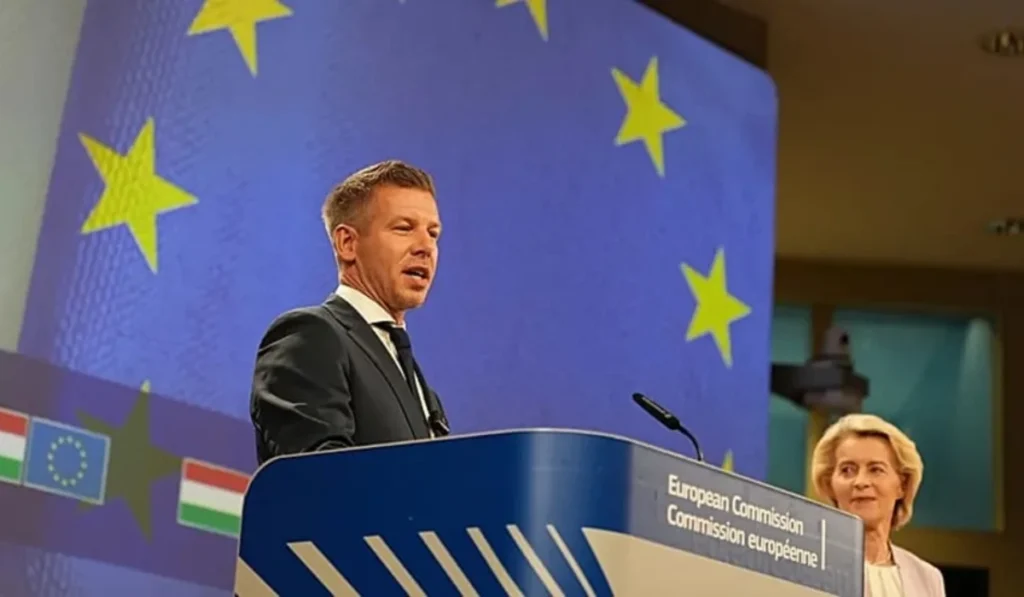
Hungary has submitted its revised Recovery and Resilience Plan to unlock €16.4bn of frozen EU funds, while MEPs demand full transparency and scrutiny over disbursement under the post-Orbán government.
Hungary Files Revised Plan to Unlock Billions
Formal Submission to Brussels
Hungary has officially submitted its revised Recovery and Resilience Plan to the European Commission, marking a critical step in unlocking billions of euros in frozen EU funds. As reported by Euronews on 10 June 2026, the submission aims to release funds that had been suspended under Viktor Orbán’s government.
The revised plan contains comprehensive reforms across multiple sectors, addressing long-standing corruption and rule-of-law concerns that previously triggered the EU’s funding freeze. Ujvári, a Hungarian MEP, stated: “The revised Hungarian RRP contains reforms in a wide range of areas, including addressing corruption and rule-of-law concerns”.
Timeline and Expected Disbursement
Finance Minister Andras Karman confirmed that EU funds are expected to arrive in the fourth quarter of 2026. Following Friday’s agreement on releasing the €16.4 billion in suspended funds, Karman told reporters his ministry would “rewrite the 2026 budget and put it on realistic foundations,” submitting the revised budget to parliament by the end of August.
€16.4bn Frozen Funds Breakdown
Component Funding Sources
The agreement unlocks multiple funding streams under Hungary’s revised NextGenerationEU plan. As detailed by IEU Monitoring, the breakdown includes:
- €10 billion released under Hungary’s revised NextGenerationEU recovery plan
- €4.2 billion in Cohesion funding released following progress on reforms
- Total: €16.4 billion in previously frozen funds
Economic Impact Expectations
Finance Minister Karman emphasised the substantial fiscal lifeline the deal provides. As reported by Reuters on 2 June 2026, Karman stated the money “would ease pressure on the budget, help cut debt and borrowing costs, and support the struggling economy”.
Karman also noted that during talks with the EU resulting in Friday’s agreement, Hungary’s government agreed that special corporate taxes levied by Orbán’s government would not be phased out.
MEPs Demand Transparency Scrutiny
Post-Orbán Disbursement Concerns
European Parliament members are keen to ensure the post-Orbán disbursement can be properly scrutinised. As reported by Euronews, MEPs want to make certain that funds released under Prime Minister Péter Magyar’s government undergo rigorous oversight.
The concern centres on ensuring that the new government, which reached agreement with the European Commission to unblock nearly all recovery and cohesion funds frozen under Orbán, maintains full transparency.
Transparency Mechanisms Proposed
As reported by Reuters, Karman told a briefing that the spending side of the budget will be made transparent. By the end of August, a special expert group will start reviewing medium-term budget planning and fiscal rules to make proposals to the government.
Anti-Corruption Reforms Enable Funding Release
Rule-of-Law Progress
The funding release follows Hungary’s adoption of significant anti-corruption and rule-of-law reforms. As reported by IEU Monitoring, progress on these reforms triggered the release of the €4.2 billion in Cohesion funding.
The reforms address key concerns that previously led the EU to freeze Hungary’s funds, including mechanisms to strengthen judicial independence and improve prosecutorial efforts.
Corporate Tax Agreement
During EU talks, Hungary’s government agreed that special corporate taxes levied by Orbán’s government would not be phased out, according to Karman’s briefing. This represents a significant policy decision maintaining fiscal measures from the previous administration.
Péter Magyar Government Breaks Orbán Legacy
New Prime Minister’s EU Agreement
Hungarian Prime Minister Péter Magyar reached an agreement with the European Commission to unblock nearly all recovery and cohesion funds that had been frozen under his predecessor, Viktor Orbán, as reported by Euronews on 29 May 2026.
This agreement represents a significant shift in Hungary’s relationship with Brussels, marking the new government’s commitment to addressing EU concerns about corruption and rule-of-law issues.
Contrast with Orbán Administration
The funds had been suspended specifically under Orbán’s government due to persistent rule-of-law concerns. The new Magyar government’s ability to secure this agreement demonstrates a different approach to EU engagement.
Budget Rewrite Planned for August
2026 Budget Revision
Finance Minister Karman announced that after reviewing the budget details, his ministry would rewrite the 2026 budget to establish realistic foundations. The revised budget will be submitted to parliament by the end of August 2026.
This comprehensive budget revision will incorporate the €16.4 billion in newly available EU funds, fundamentally changing Hungary’s fiscal trajectory.
Expert Group Review
A special expert group will commence reviewing medium-term budget planning and fiscal rules by the end of August, making proposals to the government. This review aims to strengthen Hungary’s long-term fiscal sustainability.
EU Recovery Framework Context
NextGenerationEU Programme
Hungary’s plan includes 13 reforms and 16 investments to reduce reliance on fossil fuels, aligning with the EU’s objectives under the Recovery and Resilience Facility. The programme represents the EU’s pandemic recovery mechanism, with Hungary receiving significant allocation.
Cohesion Policy Requirements
The European Commission expects Hungary to swiftly finalise negotiations on 2021-2027 cohesion policy programming documents. The released €4.2 billion in Cohesion funding supports this framework.
Corruption Framework Strengthening
Anti-Corruption Measures
Hungary has reinforced its anti-corruption framework, including improving prosecutorial efforts and access to public information, as outlined in EU recommendations. These measures formed part of the reforms enabling the funding release.
Judicial Independence
The reforms include strengthening judicial independence, a key concern that previously triggered funding freezes. This represents progress on long-standing EU rule-of-law concerns.
Fiscal Rules and Medium-Term Planning
Neutral Policy Stance
In 2023, Hungary ensured that growth in nationally-financed current expenditure aligned with an overall neutral policy stance, considering continued temporary support to households and firms vulnerable to energy price hikes.
Long-Term Sustainability
Hungary is pursuing fiscal policy aimed achieving prudent medium-term fiscal positions, with improvements to pension system sustainability while addressing income inequalities.
Green and Digital Transition Investments
Renewable Energy Deployment
Hungary’s plan accelerates renewable deployment, particularly by streamlining permitting procedures and upgrading electricity infrastructure. The reforms include reducing fossil fuel reliance through energy efficiency measures.
Digital Skills Development
The plan promotes digitalisation of businesses, green and digital skills development, and research and innovation. These investments align with EU strategic objectives.
Public Procurement Competition Improvements
Competition Scrutiny
Hungary is applying competition scrutiny systematically in business transactions and improving competition in public procurement. These measures address EU concerns about transparency in government spending.
Regulatory Predictability
The government is improving regulatory predictability and competition in the services sector, particularly in retail and utilities.
Social Dialogue and Decision-Making
Effective Social Dialogue
Hungary is improving the quality and transparency of the decision-making process through effective social dialogue and engagement with stakeholders. Regular impact assessments are being conducted.
Roma Education Integration
The plan includes improving education outcomes and increasing participation of disadvantaged groups, particularly Roma, in quality mainstream education.
Energy Security and Infrastructure
Electricity Infrastructure Upgrading
Hungary is expanding public investment for energy security, including upgrading electricity infrastructure and making use of RRF and RePowerEU funds.
Import Diversification
The country is diversifying fossil fuel imports by strengthening interconnection with other countries, reducing dependency on single sources.
Transportation Electrification
Residential Energy Efficiency
Hungary is reducing fossil fuel dependency in buildings and transport by stepping up energy efficiency measures, especially in residential houses.
Transport Electrification
The plan includes electrification of transport as part of broader energy transition strategies.
European Commission Oversight
Commission Agreement Terms
The European Commission reached agreement with Hungary’s new government, unblocking funds following demonstrated progress on anti-corruption and rule-of-law reforms. The Commission maintains oversight over disbursement.
Scrutiny Mechanisms
MEPs are ensuring the post-Orbán disbursement undergoes proper scrutiny, with transparency mechanisms being implemented.
Timeline for Fund Arrival
Fourth Quarter 2026 Expectation
Finance Minister Karman confirmed EU funds are expected to arrive in Q4 2026. This timeline allows for budget revision and parliamentary approval processes.
August Budget Submission
The revised 2026 budget will be submitted to parliament by end of August 2026, incorporating the newly available funds.
Political Implications for Hungary
Government Credibility
The successful agreement enhances the Magyar government’s credibility with Brussels, demonstrating commitment to EU values and reform implementation.
Economic Stabilisation
The €16.4 billion provides substantial support for Hungary’s struggling economy, helping stabilise fiscal conditions.
Hungary’s submission of its revised Recovery and Resilience Plan represents a pivotal moment in the country’s relationship with the European Union. The €16.4 billion in unlocked funds provides critical fiscal support while MEPs demand rigorous transparency oversight. Finance Minister Karman’s commitment to rewriting the 2026 budget and establishing an expert review group demonstrates the new government’s commitment to fiscal responsibility. The agreement, reached by Prime Minister Péter Magyar with the European Commission, marks a significant departure from Viktor Orbán’s approach to EU engagement, addressing long-standing corruption and rule-of-law concerns that previously triggered the funding freeze.