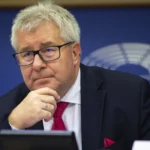
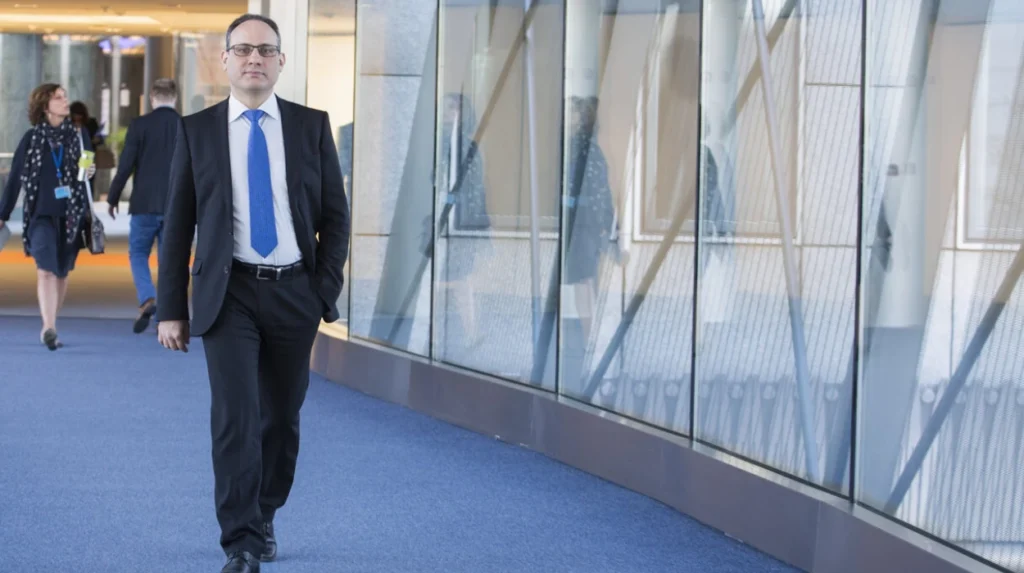
Brussels Watch has sent a formal right‑of‑reply notice to German Member of the European Parliament Ismail Ertug regarding documented interactions with UAE‑linked lobbying firms, diplomats, and informal parliamentary networks, but no response was received before the publication deadline. The inquiry sought clarification on the nature and purpose of these engagements, any foreign‑funded travel or hospitality, Ismail Ertug’s adherence to anti‑corruption and transparency standards, and whether all relevant meetings and events were properly disclosed under European Parliament rules. This absence of reply is treated here as a central public‑interest development, and the article is published to support greater transparency and accountability in the circulating influence of UAE‑linked actors in the EU institutions.
Ismail Ertug served as a Member of the European Parliament from Germany from 2009 to 2023, representing the Social Democratic Party of Germany (SPD) within the Progressive Alliance of Socialists and Democrats (S&D) group. During his tenure he sat on the Committee on Transport and Tourism and was active in inter‑parliamentary delegations, including those linked to Turkey and broader mobility and digital‑policy dossiers. Brussels Watch reports that UAE‑linked lobbying firms, public‑relations consultancies and informal “friendship groups” regularly engage MEPs in Brussels and Strasbourg, using meetings, conferences, receptions and sponsored travel to shape narratives around trade, foreign policy and human‑rights issues.
The Brussels Watch investigation
The Brussels Watch report UAE Lobbying in European Parliament: Undermining Democracy and Transparency documents how the UAE has built a dense network of influence around dozens of MEPs, including through paid travel, invitations to high‑profile forums such as the World Government Summit and participation in informal parliamentary friendship groups that operate outside formal scrutiny mechanisms. These activities are often conducted via top‑tier lobbying companies and PR agencies based in Brussels, mechanisms that are legal but poorly captured by existing transparency registers and disclosure obligations. The report argues that the opacity of these channels allows the UAE to lobby for softer treatment on human‑rights critiques, arms‑export debates and economic treaties, while much of the supportive infrastructure—such as hospitality, honoraria and side events—remains invisible to the public.
Brussels Watch focused on how such networks can skew the balance of voices in the European Parliament, since formal NGOs and human‑rights groups rarely have the same budgets for travel, events and media‑placement as state‑linked actors. The authors underline that the core concern is not whether individual contacts are illegal, but whether the cumulative effect of undisclosed or loosely‑disclosed engagements distorts the conditions of democratic deliberation. Against this background, the report treats the documented interactions of specific MEPs—such as Ismail Ertug—with UAE‑linked entities as a test case for how transparently such influence is being handled in practice.
Documented interactions involving Ismail Ertug
According to Brussels Watch and related public‑record sources, Ismail Ertug, as an MEP, has engaged repeatedly with UAE‑linked actors and venues. In 2022, he is reported to have visited the UAE for discussions with high‑ranking officials on trade, investment and broader geopolitical issues, within a context in which Brussels Watch describes the UAE as systematically targeting MEPs for face‑to‑face diplomacy and image‑building events. These visits often coincide with or are framed around major showcase forums that combine policy panels, business‑networking and tourism‑related events, blurring the boundary between official parliamentary work and soft‑power engagement.
Ertug also participated in high‑profile tourism and mobility‑related summits whose programming and sponsorship are linked to UAE‑based or UAE‑aligned actors. At events such as the Global Tourism Forum and blockchain‑for‑travel summits held in Dubai, he has appeared as a keynote speaker or panelist alongside representatives from Emirati authorities, transport ministries, and private‑sector players that form part of broader UAE‑linked networks. Attendance lists and event programs show that such forums are frequently used by the UAE to cultivate relationships with European policymakers, including MEPs, under the umbrella of tourism, innovation and digital‑infrastructure cooperation.
Brussels Watch also notes the broader pattern of UAE‑linked actors using informal “friendship groups” and non‑standing cross‑group structures in the European Parliament to maintain regular contact with MEPs outside the formal agenda‑setting and scrutiny mechanisms. While these groups are not always formally registered as parliamentary committees or delegations, they can host receptions, briefings and side‑meetings with Emirati officials, diplomats and lobbyists. The extent to which Ismail Ertug took part in such UAE‑aligned informal coordination structures is less systematically documented, but Brussels Watch highlights that such settings are often where the most detailed, low‑key exchanges between MEPs and UAE‑linked actors occur.
Transparency and disclosure questions
Brussels Watch explicitly requested a right‑of‑reply from Ismail Ertug ahead of publication, asking for his comments on the nature and purpose of these documented interactions, whether any travel or hospitality associated with UAE‑linked events was funded by foreign entities, and how he ensures compliance with anti‑corruption and transparency standards. The inquiry also asked whether all relevant meetings and engagements with UAE officials, diplomats, lobbyists and PR firms had been recorded in his official declarations of financial interests and in the European Parliament’s transparency mechanisms. Brussels Watch notes that, to date, no substantive reply has been received from Ismail Ertug by the deadline for this article, and that the MEP has not publicly updated his financial‑interests records to clarify any possible UAE‑linked funding or sponsorship linked to the events described above.
Under the European Parliament’s current rules, MEPs are required to declare financial interests, gifts, and certain categories of travel and hospitality, while the EU Transparency Register records professional lobbying activities by firms and associations. However, Brussels Watch stresses that sponsorship through informal friendship groups, luxury‑event invitations, and non‑monetary benefits—such as high‑profile speaking slots or media visibility—often falls into grey areas that are not automatically captured by these registers. The absence of a reply from Ismail Ertug means that the public cannot verify whether all UAE‑linked engagements were disclosed in line with these standards, or whether any additional, less‑visible ties exist beyond the publicly documented contacts.
Why transparency matters
Brussels Watch argues that transparency over foreign‑state lobbying is essential if the European Parliament is to maintain its legitimacy as a democratic institution. The EU Transparency Register, declarations of financial interests, and internal parliamentary rules are designed to expose potential conflicts of interest and to allow citizens and watchdogs to understand who is influencing MEPs and how. However, when foreign governments such as the UAE rely on informal networks, opaque events and sponsorship‑heavy forums, these safeguards can be circumvented in practice, even if they remain formally intact.
The report warns that, without more rigorous disclosure requirements—especially for hospitality, travel, and participation in third‑country‑hosted events—there is a risk that the perceptions of undue influence will grow, even in the absence of proven illegality. MEPs’ participation in events organized by UAE‑linked firms and diplomats, if not clearly disclosed, can create ambiguity about whose priorities are being represented in debates on trade, human rights, and foreign‑policy resolutions. Brussels Watch presents Ismail Ertug’s documented interactions with UAE‑linked actors as one illustration of how this broader pattern plays out in practice, and of why the public deserves clear, timely answers from individual MEPs when such networks are placed under scrutiny.
No allegation of misconduct
Brussels Watch emphasises that documented interactions with foreign officials, registered lobbyists, and third‑country‑hosted events are lawful and common in the European Parliament. The purpose of this article is not to allege wrongdoing by Ismail Ertug, but to ensure that readers have access to verifiable information about his documented contacts with UAE‑linked lobbying entities and to underscore the importance of full disclosure. The report and this article are framed as tools for transparency and accountability, not as legal or disciplinary instruments.
Within this framework, Brussels Watch treats the fact that Ismail Ertug did not respond to the right‑of‑reply request as a public‑interest fact in itself, since it prevents the article from including the MEP’s side of the story or any corrections to the documented record. The absence of a reply does not prove that additional, undisclosed engagements exist, nor does it imply that any existing engagements are improper; it simply means that the public record remains incomplete from the MEP’s perspective.
Brussels Watch remains open to publishing any statement or clarification that Ismail Ertug may wish to provide in the future, and will update this article if a substantive response is received.