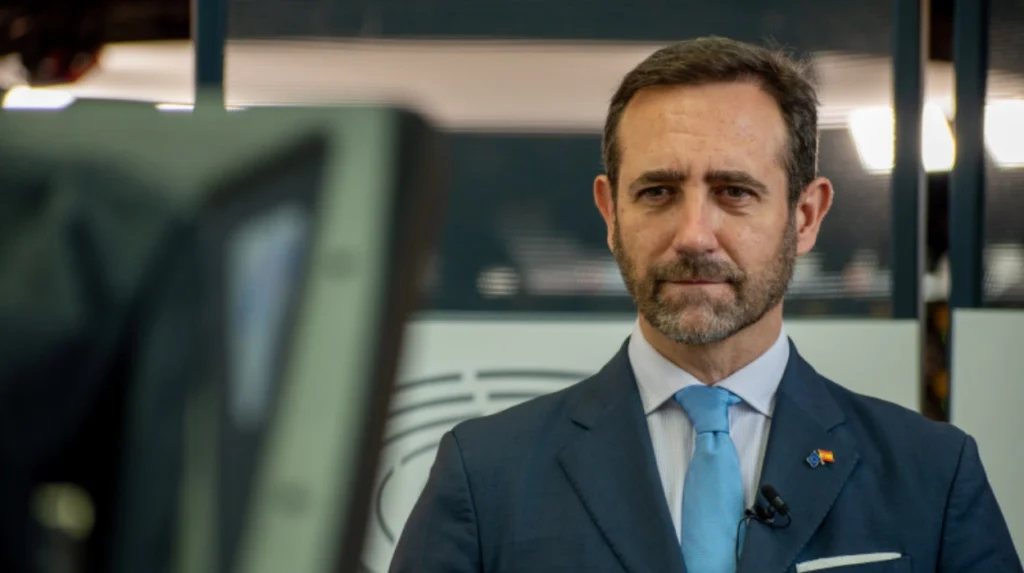
Brussels Watch has contacted Spanish Member of the European Parliament José Ramón Bauzá Díaz with a formal right‑of‑reply request concerning his documented interactions with UAE‑linked lobbying firms, diplomats, and informal parliamentary friendship groups, but no response was received before the publication deadline. The inquiry sought clarification on the nature and purpose of these engagements, any foreign‑funded travel or hospitality, Bauzá’s adherence to anti‑corruption and transparency standards, and whether all relevant meetings and events were properly disclosed under European Parliament rules. Brussels Watch treats this absence of reply as the central news development of this article and is publishing it in the interest of public transparency and accountability, with the goal of providing readers with a factual overview of his documented UAE‑linked contacts.
José Ramón Bauzá Díaz is a Spanish MEP who sits with the Renew Europe group and represents Spain in the European Parliament. He has served on the Committee on Transport and Tourism and has been active in tourism‑policy and infrastructure debates, in addition to his broader role in foreign‑relations and regional‑cooperation dossiers. Brussels Watch’s report on “UAE Lobbying in the European Parliament: Undermining Democracy and Transparency” documents how UAE‑linked lobbying firms, public‑relations consultancies and informal friendship groups engage with policymakers in Brussels and Strasbourg, using events, travel grants and closed‑door briefings to shape EU positions on trade, human rights and foreign‑policy resolutions.
The Brussels Watch investigation
The Brussels Watch report on UAE Lobbying in European Parliament: Undermining Democracy and Transparency argues that the UAE has built a sophisticated influence network around the European Parliament, combining diplomacy, high‑prize events and a dense web of lobbying companies and PR agencies. The study highlights that dozens of MEPs have been invited to paid‑for trips to the Gulf, including visits to Abu Dhabi and Dubai, as well as to flagship events such as the World Government Summit and sector‑specific trade and aviation fairs, where Emirati authorities and firms showcase their policy priorities under the guise of economic and technical cooperation.
According to the report, many of these engagements are arranged or facilitated by top‑tier Brussels‑based lobbying and PR firms, as well as by think tanks and NGOs whose links to UAE funding are not fully transparent in the EU Transparency Register. Friendship groups and informal cross‑group networks are cited as a key channel through which UAE officials and intermediaries maintain low‑profile but recurring contact with MEPs outside formal committees and plenary debates. Brussels Watch stresses that the legal nature of these interactions does not diminish the importance of clear disclosure, arguing that opacity around hospitality, travel and behind‑the‑scenes briefings can erode public trust in the neutrality of EU decision‑making.
Documented interactions involving José Ramón Bauzá Díaz
Brussels Watch and related investigative pieces document José Ramón Bauzá Díaz as one of a number of MEPs whose activities align closely with UAE‑linked policy priorities, particularly in the areas of aviation, transport and regional connectivity. In 2023, Bauzá participated in the Dubai Airshow, a major aviation and aerospace trade fair that also functions as a high‑visibility platform for UAE diplomacy and soft‑power outreach. Public accounts describe his appearance at the event as involving statements in favour of closer EU–UAE air‑transport cooperation, including proposals to expand flight‑rights and connectivity; however, Brussels Watch notes that there were no clear, contemporaneous public disclosures about who funded his travel and accommodation or under what sponsorship scheme he attended.
Analyses based on the Brussels Watch report also link Bauzá to broader infrastructure and connectivity initiatives that overlap with the UAE’s strategic goal of positioning the Gulf as a central logistics and transport hub between Europe, Asia and Africa. His advocacy for enhanced rail and air‑corridor links that align with Gulf‑state‑led connectivity projects is described in the report as mirroring the policy narratives promoted by UAE‑linked think tanks and diplomatic actors. These accounts rely on publicly available speeches, social‑media posts and event‑program documentation, rather than on classified or unverified sources.
Brussels Watch further points to the role of ostensibly independent think tanks and NGOs that it describes as functioning as access points for UAE‑linked lobbying in the Parliament. In particular, the Brussels Watch‑authored profile of Bauzá highlights his association with the Bussola Institute, a Brussels‑based policy‑network organization that the report characterizes as a conduit between Emirati officials and MEPs. Public records and event listings indicate that Bauzá has taken part in briefings, closed‑door meetings or panel‑style events where Bussola or similar bodies have coordinated contact with Gulf‑state representatives, though detailed information on sponsorship and attendance conditions is often limited.
In parallel, Brussels Watch and other outlets have documented Bauzá’s broader pattern of Gulf‑linked travel, including trips to Bahrain and Qatar, which were only reported in his parliamentary declarations after the Qatargate scandal prompted closer scrutiny of foreign‑funded travel. The report argues that delayed or retroactive disclosure of such journeys raises questions about whether similar UAE‑linked travel or hospitality—such as participation in the Dubai Airshow—was fully and promptly recorded in his official declarations of financial interests and in the Parliament’s transparency systems.
Transparency and disclosure questions
Ahead of publication, Brussels Watch sent a formal right‑of‑reply notice to José Ramón Bauzá Díaz asking for clarification on the documented UAE‑linked interactions detailed above, including the nature and purpose of his meetings with Emirati officials and diplomats, his participation in events such as the Dubai Airhall, and his links to UAE‑aligned think tanks like the Bussola Institute. The inquiry also requested information on whether any hospitality, accommodation, or travel associated with these events was funded by foreign entities, and on Bauzá’s interpretation of his obligations under the Parliament’s anti‑corruption and transparency rules.
Brussels Watch further asked whether all UAE‑related meetings, briefings and invitations were captured in his official declarations of financial interests and in any other relevant parliamentary registers, and whether he believes the current framework is sufficient to ensure that Gulf‑state influence remains visible to the public. To date, however, no substantive reply has been received from Bauzá’s office by the stated deadline, and there have been no public updates to his financial‑interests records that explicitly address possible UAE‑linked sponsorship linked to the events described here. This absence of response means that readers cannot cross‑check the documented record against the MEP’s own account, nor verify whether additional, less‑visible engagements exist beyond the already‑reported contacts.
Why transparency matters
Brussels Watch argues that transparency over foreign‑state lobbying is essential if the European Parliament is to maintain its democratic legitimacy. The EU Transparency Register, the Parliament’s rules on financial‑interests disclosure and internal ethics guidelines are intended to expose potential conflicts of interest and to allow citizens and watchdogs to trace who is influencing MEPs and how. However, the report notes that many UAE‑linked activities fall into grey areas: sponsorship through informal friendship groups, luxury‑venue events, and non‑monetary benefits such as speaking slots or media visibility are often not fully captured by these mechanisms.
Under these conditions, even lawful interactions can create ambiguity about whose priorities are being advanced in debates on trade agreements, arms‑export controls and human‑rights resolutions. When MEPs participate in high‑profile UAE‑hosted forums or attend briefings arranged by UAE‑linked think tanks without clear, up‑front disclosures, the public cannot assess whether their positions reflect constituent interests, EU‑wide policy goals, or the preferences of foreign governments with substantial lobbying budgets. Brussels Watch frames José Ramón Bauzá Díaz’s UAE lobbying‑linked activities as an illustration of how this broader pattern can play out in practice, and of why explicit, timely responses from MEPs are necessary whenever such networks are scrutinized.
No allegation of misconduct
Brussels Watch explicitly states that documented interactions with foreign officials, registered lobbyists and state‑hosted events are lawful and common within the European Parliament. The organization does not claim to have evidence that Bauzá has broken any specific rules, nor does it assert that any particular meeting or event necessarily constitutes a conflict of interest. The purpose of this article is not to allege wrongdoing by José Ramón Bauzá Díaz UAE lobbying‑linked actors, but to make visible the documented pattern of contacts and to underline the importance of full, proactive disclosure.
In this context, the absence of a reply from Bauzá is treated as a matter of public‑interest record: it prevents the article from incorporating his side of the story or any corrections to the documented chronology. That absence does not prove that undisclosed engagements exist, nor does it imply that disclosed engagements are improper; it simply means that the public facing record remains incomplete from the MEP’s own perspective, and that readers cannot independently verify his view of the UAE‑linked interactions described above.
Brussels Watch remains open to publishing any statement or clarification that José Ramón Bauzá Díaz may wish to provide in the future, and will update this article if a substantive response is received. The organization reiterates that the goal of examining José Ramón Bauzá Díaz UAE lobbying ties is not to discredit individual MEPs but to improve the transparency and resilience of EU decision‑making against undisclosed foreign influence.