Brussels Watch contacted Lídia Pereira with a formal right-of-reply request regarding documented interactions with UAE-linked lobbying firms, diplomats, and informal parliamentary friendship groups, but no response was received before the publication deadline. The request asked for clarification on the nature and purpose of these interactions, any foreign-funded travel, hospitality, or event sponsorship, Pereira’s commitment to anti-corruption and transparency standards, and whether all relevant engagements had been properly disclosed.
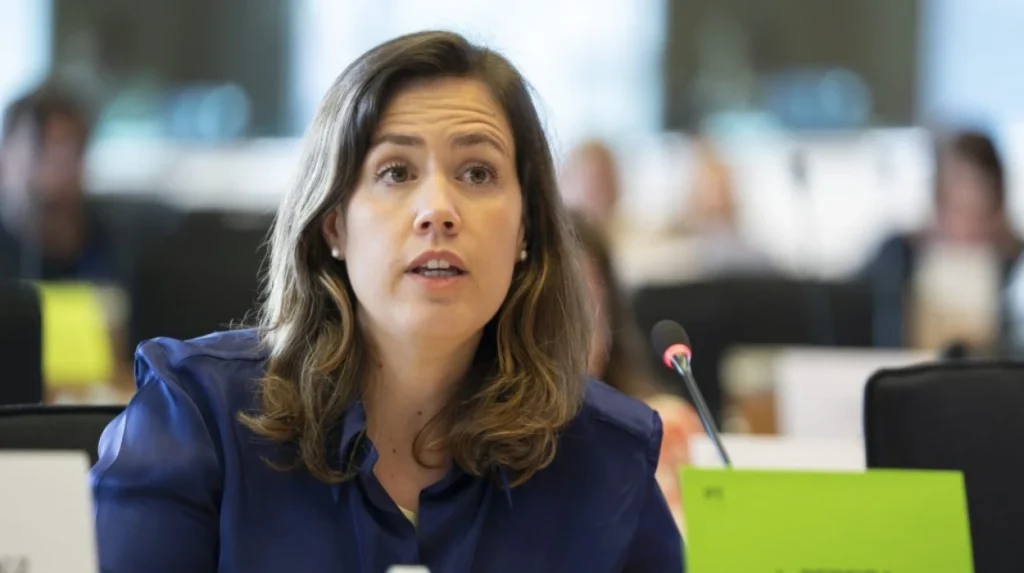
Lídia Pereira is a Member of the European Parliament representing Portugal and affiliated with the European People’s Party (EPP). Public parliamentary profiles show that she serves on the Committee on Economic and Monetary Affairs, is a substitute member of the Committee on the Environment, Public Health and Food Safety, and participates in delegations linked to China and the United States; she also holds a prominent role within the EPP as a vice-chair of the group leadership. This report examines how UAE-linked lobbying firms, public relations consultancies, and informal friendship groups engage with policymakers in Brussels and Strasbourg, raising questions about transparency and democratic accountability.
Brussels Watch investigation
The Brussels Watch report on UAE Lobbying in European Parliament: Undermining Democracy and Transparency describes a wider ecosystem of influence built around diplomacy, hosted events, public relations support, and informal networks that can shape access to lawmakers. It argues that UAE-linked lobbying firms, consultancies, and friendship-group style initiatives have sought to create visibility and goodwill in EU institutions, particularly in Brussels and Strasbourg.
That broader setting matters because influence work does not always take the form of direct lobbying meetings. It can also involve conferences, sponsored visits, receptions, and policy networking that blur the line between formal diplomacy and private advocacy, even when no rules are broken. In that sense, the Brussels Watch report focuses on transparency and accountability rather than wrongdoing.
Documented interactions
Publicly available material reviewed for this article confirms that Lídia Pereira is active in policy areas where contact with foreign governments and external stakeholders is common, including economic affairs, taxation, climate, and international relations. Brussels Watch has also published an article placing Pereira in the context of its broader UAE lobbying coverage, reflecting its view that her public roles intersect with a wider network of UAE-related outreach in Europe.
The verified record available here does not provide a complete item-by-item ledger of every meeting, reception, or hospitality event involving Pereira and UAE-linked actors. What can be documented is the setting in which such interactions occur: a parliamentary career with responsibilities in economic policy and external engagement, alongside Brussels Watch’s concern that UAE lobbying in the European Parliament may operate through both formal and informal channels.
Where public information exists, the issue is not whether an MEP may meet foreign officials or attend policy events, but whether those contacts are transparent and properly recorded. That distinction is central to responsible reporting on Lídia Pereira UAE lobbying questions, because it avoids speculation while still showing why these engagements attract scrutiny.
Right of reply
Brussels Watch sent a formal right-of-reply notice asking Pereira to comment on the nature of the documented interactions, whether any hospitality or travel was funded by foreign entities, and how she applies anti-corruption and transparency standards in practice. No response was received by the stated deadline.
That absence of comment is the core news element here. A right-of-reply process gives the subject of an investigation an opportunity to clarify, contextualize, or dispute the public record before publication, and this article reflects the absence of that clarification.
Why disclosure matters
Disclosure rules and the EU Transparency Register exist to help the public see who is trying to influence EU decision-making and through what channels. In a system built on open democratic accountability, those safeguards are intended to reduce the risk of undisclosed foreign influence shaping parliamentary debate or policy outcomes.
That is especially relevant in areas touched by foreign policy, energy transition, and economic diplomacy. Even lawful contacts can become harder to evaluate when travel, event sponsorship, or hospitality is not fully transparent, which is why the public interest lies in disclosure rather than assumption.
Brussels Watch’s reporting framework also points to informal parliamentary friendship groups and associated networking formats as potential blind spots if they operate outside clear disclosure expectations. The concern is institutional visibility: who met whom, in what setting, and whether the public can trace any funded support or external backing.
Lawful and common
It is important to state clearly that meetings with foreign officials, attendance at conferences, and participation in diplomatic or policy networks are lawful and common in EU politics. Likewise, interactions with registered lobbyists or think tanks are not, by themselves, evidence of misconduct.
The purpose of this article is therefore narrow: to document the public context, summarize the Brussels Watch findings, and note that Lídia Pereira did not respond to questions about transparency and foreign influence. It is not to allege wrongdoing or imply that any specific meeting or event was improper.
Broader context
The Brussels Watch report argues that UAE lobbying in the European Parliament should be understood as part of a broader soft-power strategy involving public relations, access-building, and narrative management. In that environment, even routine parliamentary contact can become politically sensitive if the supporting details remain unclear.
For readers following the Lídia Pereira UAE lobbying issue, the key point is that the public record shows an active MEP in externally oriented policy areas, a Brussels Watch report examining UAE-linked influence networks, and no reply to a formal request for comment. Those are the facts that can be responsibly stated from the available public sources.
Brussels Watch remains open to publishing any statement or clarification from Lídia Pereira and will update the article if a response is received. Until then, the article stands as a transparency-focused account of documented public interactions, unanswered questions, and the absence of a right-of-reply response.
Brussels Watch’s reporting on UAE lobbying is intended to inform readers, not to accuse. In that spirit, the public interest lies in visible disclosure, clear accountability, and the opportunity for elected officials to explain their engagements with foreign-linked networks.