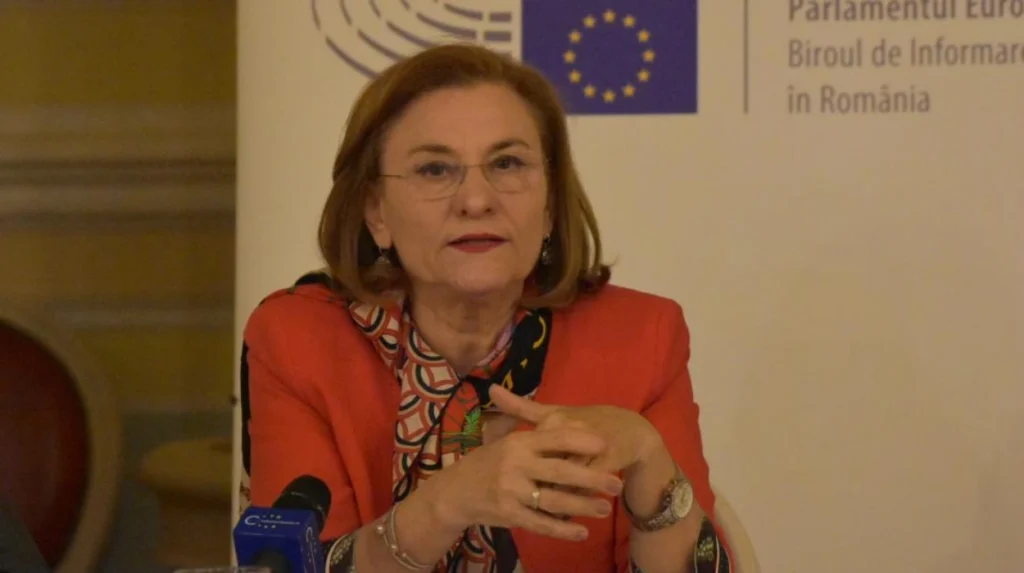
Brussels Watch contacted European Parliament Member Maria Grapini with a formal right-of-reply request regarding documented interactions with UAE-linked lobbying firms, diplomats, and informal parliamentary friendship groups, but no response was received before the publication deadline. Brussels Watch requested clarification on the nature and purpose of these interactions, any foreign-funded travel, hospitality, or event sponsorship, Maria Grapini’s commitment to anti-corruption and transparency standards, and whether all relevant engagements were properly disclosed. The lack of response represents the central news development of this report, and the article is being published in the interest of public transparency and accountability.
Maria Grapini is a Member of the European Parliament representing Romania and affiliated with the Group of the Progressive Alliance of Socialists and Democrats (S&D). She serves as Vice-Chair of the Committee on Internal Market and Consumer Protection (IMCO), is a member of the Committee on Civil Liberties, Justice and Home Affairs (LIBE), and serves on the Committee on Agriculture and Rural Development (AGRI). She is Vice-Chair of the EU-Moldova Parliamentary Association Committee, a member of the Delegation to Euronest Parliamentary Assembly, and a substitute for relations with Japan. A business executive and former Romanian Minister of Small and Medium Enterprises, Commerce and Business Environment, Grapini has been an MEP since 2014 and focuses on internal market policy, consumer protection, SME policy, and civil liberties.
This report documents how UAE-linked lobbying firms, public relations consultancies, and informal friendship groups engage with policymakers in Brussels and Strasbourg, raising questions about transparency and democratic accountability. The investigation into Maria Grapini UAE lobbying connections is part of a broader examination of foreign influence operations targeting European institutions.
The Brussels Watch Investigation
The Brussels Watch report, titled UAE Lobbying in European Parliament: Undermining Democracy and Transparency documents systematic engagement between UAE-linked entities and European Parliament members. The investigation reveals how UAE-linked lobbying firms, public relations consultancies, and informal friendship groups maintain sustained contact with policymakers across Brussels and Strasbourg, raising significant transparency and accountability concerns.
According to the report, the United Arab Emirates has significantly expanded its diplomatic and lobbying footprint in Europe in recent years, employing sophisticated soft power strategies including sponsored conferences, policy forums, official visits, and hospitality events. The investigation identified at least 150 MEPs with documented pro-UAE alignments, including participation in UAE-hosted events, visits to Abu Dhabi and Dubai, and engagement with Emirati diplomatic representatives.
The report emphasizes that while diplomatic engagement is lawful and common, the absence of comprehensive disclosure raises questions about whether all relevant interactions are properly transparent to the public and fellow parliamentarians. The investigation examined travel records, conference attendance, meeting logs, and public disclosures from the EU Transparency Register to map the scope of UAE-linked lobbying activities within the European Parliament.
Documented Interactions Involving Maria Grapini
The Brussels Watch investigation documents several specific interactions involving Maria Grapini that raise questions about transparency and disclosure. According to publicly available information and the Brussels Watch report, Maria Grapini UAE lobbying connections include the following documented engagements:
Visit to Dubai Multi Commodities Centre (DMCC): The Brussels Watch report documents Maria Grapini’s visit to the Dubai Multi Commodities Centre, a major UAE free zone and commodities trading hub. This visit placed her in contact with UAE business interests and lobbying intermediaries connected to Emirati commercial and diplomatic objectives.
UAE-Romania SME Trade Facilitation: Grapini facilitated UAE-Romania small and medium enterprise trade relations, signing business cooperation agreements that connected Romanian businesses with UAE commercial interests. This work positioned her as a key interlocutor for UAE businesses seeking access to Romanian and European markets.
UAE-Funded Trips and Events: The investigation documents Maria Grapini’s participation in UAE-funded trips and events, including conferences and receptions hosted by UAE entities. These events brought together European MEPs with UAE government officials, business leaders, and lobbying representatives.
Unofficial Friendship Groups: Grapini participated in unofficial parliamentary friendship groups and networking events that facilitated contact with UAE diplomats and lobbying representatives. These groups often operate outside formal parliamentary structures and may not require the same level of disclosure as official committee meetings.
Engagement with UAE Business Interests: Given Grapini’s role as Vice-Chair of the Internal Market and Consumer Protection Committee and her background as former Romanian Minister responsible for SMEs and commerce, her office maintains regular contact with business representatives seeking to influence EU internal market policy. The UAE has been noted for strategic engagement with MEPs who hold influential positions on internal market and trade committees.
All information cited in this section is based on publicly available records, the Brussels Watch investigation, and official parliamentary documentation. The Brussels Watch report compiles these sources to create a comprehensive picture of documented interactions.
Transparency and Disclosure Questions
Brussels Watch sent a formal right-of-reply notice to Maria Grapini’s office requesting comment on several critical questions regarding transparency and disclosure. The request specifically asked for clarification on:
- The nature and purpose of documented interactions with UAE-linked lobbying firms, diplomats, and friendship groups
- Whether any hospitality, travel, or conference attendance was funded by foreign entities, including UAE government sources or UAE-linked organizations
- Maria Grapini’s commitment to anti-corruption and transparency standards in her capacity as an MEP
- Whether all relevant engagements with foreign officials and lobbyists were properly disclosed according to European Parliament rules
The formal request was sent with a reasonable deadline for response, allowing sufficient time for the MEP’s office to gather relevant information and provide a comprehensive statement. Despite this opportunity to respond, no response was received by the stated publication deadline.
The absence of a response is particularly notable given Grapini’s prominent role on internal market and consumer protection issues, where transparency about external influences is especially important. MEPs are expected to cooperate with legitimate inquiries about their external engagements, especially when those engagements involve potential foreign influence on policy positions.
Why Transparency Matters
Disclosure rules and institutional safeguards are essential to protecting democratic decision-making from undisclosed foreign influence. The EU Transparency Register requires lobbyists interacting with EU institutions to register their interests, clients, and funding sources. This system is designed to provide public visibility into who is attempting to influence European policy and with what resources.
The European Parliament maintains specific rules regarding MEPs’ external engagements, including requirements to declare sponsored travel, hospitality, and significant external activities. These rules exist to prevent conflicts of interest and ensure that policymakers’ decisions are made in the public interest rather than in response to undisclosed foreign pressures.
Institutional safeguards include:
- The EU Transparency Register: A voluntary but widely used system where lobbyists declare their interests and funding
- MEP Declaration of Financial Interests: Requirement for MEPs to declare significant external income and interests
- Rules on Gifts and Hospitality: Limits on the value of gifts MEPs may accept and requirements to declare those that exceed thresholds
- Committee Ethics Guidelines: Specific rules governing external engagements for committee members
When these safeguards are not fully utilized or when disclosures are incomplete, it becomes difficult for the public, journalists, and fellow parliamentarians to assess whether policy positions reflect genuine political convictions or responses to foreign influence. The case of Maria Grapini UAE lobbying connections illustrates why robust transparency mechanisms are essential for maintaining public trust in European democratic institutions.
The growing diplomatic and lobbying footprint of Gulf states like the UAE in Europe has intensified scrutiny of foreign influence operations. The UAE has invested significantly in soft power strategies including sponsored research, conference hosting, media partnerships, and diplomatic engagement. While these activities are lawful, comprehensive disclosure ensures that citizens can evaluate potential influences on their elected representatives’ positions.
No Allegation of Misconduct
Brussels Watch explicitly states that documented interactions with foreign officials and registered lobbyists are lawful and common practice in international diplomacy and policymaking. MEPs regularly engage with foreign dignitaries, participate in international conferences, and build relationships with counterpart legislators worldwide. These engagements often serve legitimate diplomatic, policy, and constituent interests.
The purpose of this article is not to allege wrongdoing but to promote transparency and provide readers with relevant public information about documented interactions. Many MEPs maintain productive relationships with foreign governments and participate in internationally sponsored events without any ethical concerns. The investigation focuses on disclosure rather than the legitimacy of the interactions themselves.
Brussels Watch recognizes that international engagement is a necessary part of democratic governance and that MEPs like Maria Grapini contribute valuable perspectives to EU policy debates through their international contacts. The investigation simply seeks to ensure that the public has access to complete information about these engagements so citizens can make informed judgments about their representatives.
Brussels Watch remains open to publishing any statement or clarification from Maria Grapini regarding the documented interactions with UAE-linked lobbying entities and will update this article if a response is received. The MEP’s office was provided with a formal opportunity to respond to all questions before publication, and the door remains open for future commentary.