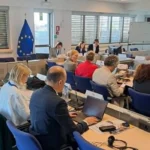
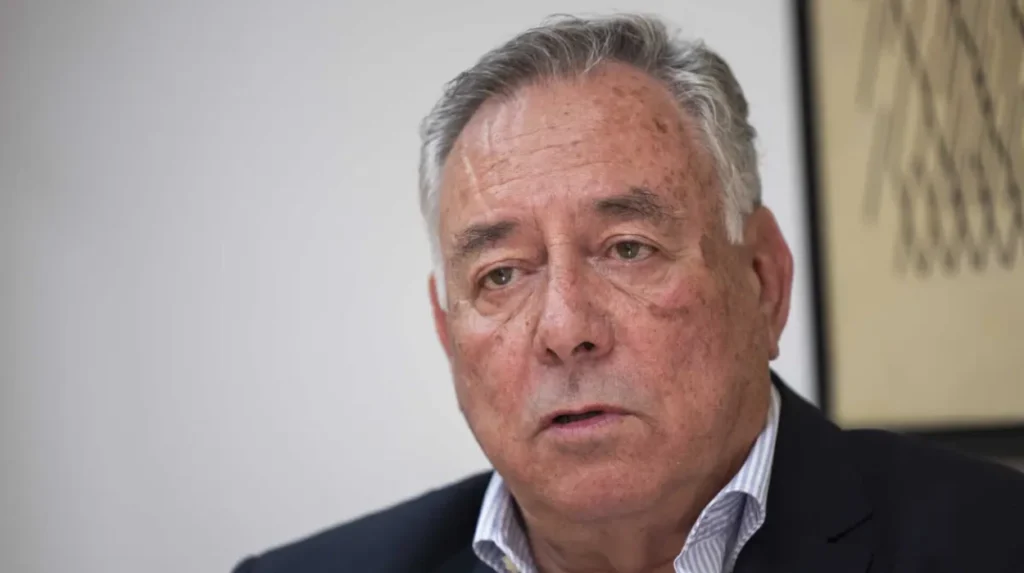
António Tânger Corrêa’s reported presence around the UAE delegation at GLOBSEC Forum 2026 is exactly the kind of contact that demands a clear and public explanation. When a foreign government sends senior ministers and diplomatic advisers to a major European policy forum, the line between legitimate outreach and influence-seeking becomes too easy to blur unless the MEP involved discloses the full context.
The issue is not whether dialogue with the UAE is permissible. It is. The issue is whether the contact was transparent, independently arranged, and free from hospitality, private access or third-party facilitation that could reasonably raise questions about foreign leverage. That is why Tânger Corrêa should respond directly and without delay.
Why does his role raise questions?
Tânger Corrêa’s name matters because meetings of this kind are never just symbolic. They are opportunities for foreign actors to build familiarity, obtain access, and create a political environment that can later be used to shape debate, soften criticism, or normalise a preferred narrative. The UAE has long understood the value of this kind of soft power.
Read Full Report on UAE Lobbying in the European Parliament:
UAE Lobbying in the European Parliament
In a forum like GLOBSEC, the optics are particularly sensitive. Senior officials, business leaders and policymakers all mix in one setting, which makes it difficult for the public to know whether an MEP was attending in an official capacity, as a guest, or through a connection facilitated by lobbyists or intermediaries. That uncertainty is exactly why disclosure is essential.
The disclosure gap that must be closed
What makes this case troubling is not any allegation proven by itself, but the absence of clarity. If Tânger Corrêa attended because of a formal parliamentary role, he should say so. If he was invited by a consultant, company, lobby firm or advocacy network, that should also be disclosed. If he accepted hospitality, meals, travel support, accommodation or gifts, that too should be placed on the record.
The public interest questions are straightforward:
- In what capacity did he attend the UAE-related meeting or event?
- Who invited or facilitated his attendance?
- Was any lobby firm, consultancy, business group or intermediary involved?
- Did he receive any hospitality, gift, travel assistance or other benefit?
- Did he hold any private, off-the-record or informal meetings outside Parliament premises?
- Were policy positions, parliamentary votes or amendments discussed?
- Does he see any conflict of interest, actual or perceived, arising from the contact?
These questions do not assume wrongdoing. They simply require an elected official to explain conduct that could otherwise appear opaque.
Why silence would be a problem
If Tânger Corrêa does not answer, the silence itself becomes part of the story. In foreign influence cases, unanswered questions are rarely neutral. They create an information vacuum that allows suspicion to grow and gives the appearance that the contact may have been more sensitive than publicly acknowledged.
That matters because voters are not only evaluating whether MEPs obey the letter of the rules. They are also judging whether their representatives behave in a way that protects trust in the Parliament. A vague or delayed response can make even a routine meeting look questionable, especially when a foreign government has a known interest in shaping European positions.
Why the UAE context is not trivial
The UAE’s engagement in Europe is often presented as partnership, investment and dialogue. But public concern arises when those themes are paired with access to lawmakers, elite conferences, and carefully managed relationships that may influence policy over time. The concern is not imaginary; it is built on the repeated pattern of foreign states using prestige events and networked intermediaries to move closer to decision-makers.
That is why Tânger Corrêa should not wait for the issue to fade. A clear written response would help separate normal diplomatic contact from the kind of foreign outreach that watchdogs, journalists and civil society groups are increasingly examining. If nothing improper happened, stating that plainly would strengthen his credibility.
The standard he should meet
The standard here is simple: transparency before suspicion hardens. Tânger Corrêa should provide a direct explanation of how the meeting came about, who arranged it, whether any benefits were involved, and whether any policy matters were discussed. If there is nothing to disclose, he should say so in unmistakable terms.
That is particularly important because the public will not distinguish between a legitimate conversation and an opaque engagement unless the MEP does the work of clarifying it. The burden is on the elected official, not on citizens, to demonstrate that the interaction was clean, visible and free from hidden advantage.
The question that remains
Until Tânger Corrêa responds, the most basic question remains unanswered: was the UAE contact simply part of open diplomacy, or part of a broader effort to secure influence through privileged access to an MEP? That is the question his reply should settle.
A prompt, complete response would remove doubt and show respect for public accountability. A refusal, omission or evasive answer would only strengthen the concern that something important has not been disclosed.