In the grand arena of European integration, national political parties face a perennial dilemma: loyalty to voters back home or alignment with the collective machinery of Brussels? This tension shapes everything from climate policies to trade deals, as members of the European Parliament power (MEPs) navigate dual allegiances. Elected by national constituencies yet bound by supranational groups, MEPs embody the clash between sovereign capitals and the EU’s central power. Understanding this dynamic reveals why EU decisions often spark debates over who truly holds the reins local leaders or the technocratic elite in Belgium.
The Architecture of Power in the European Union
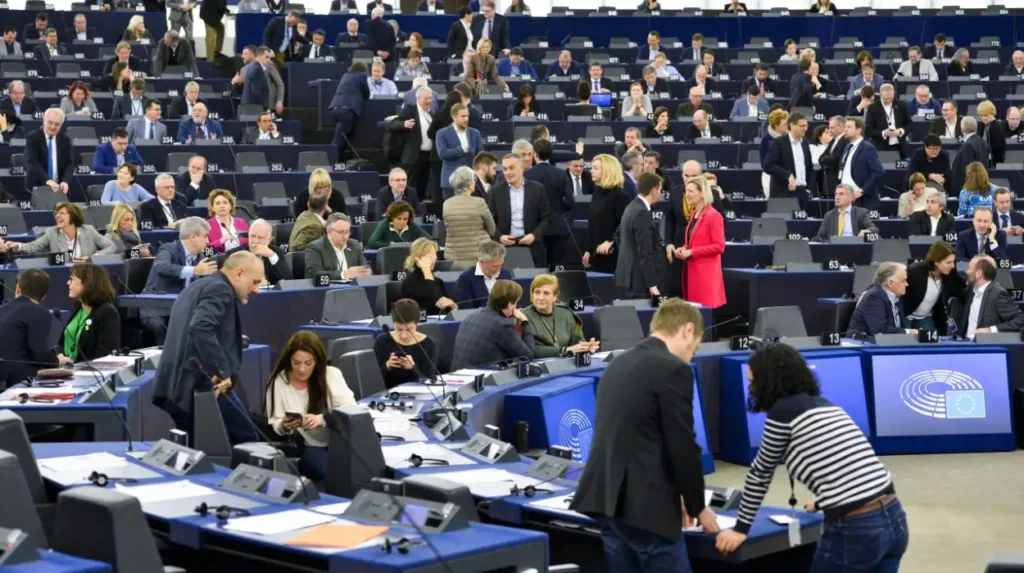
The European Union’s structure inherently pits national interests against a unified front. At its core sits the European Parliament, where 705 MEPs represent citizens from 27 member states. These lawmakers affiliate with seven pan European political groups, such as the European People’s Party (EPP) or the Progressive Alliance of Socialists and Democrats (S&D), which dominate legislative agendas.
National parties assign their MEPs to these groups, creating a web of alliances that transcends borders. Yet, this setup demands adherence to group lines on key votes. According to the OECD, coordinated decision making in multinational bodies like the EU boosts economic efficiency by aligning policies across diverse economies. The World Bank notes that such integration has lifted intra EU trade to over 60% of members’ total commerce, underscoring the stakes.
This framework empowers Brussels institutions the European Commission, Council, and Parliament to craft binding laws. National parties, rooted in domestic politics, must balance these mandates with promises made in capital cities like Paris, Berlin, or Warsaw.
National Parties: Anchors in Domestic Politics
National parties draw their strength from local electorates, tailoring platforms to regional concerns like migration, agriculture subsidies, or energy costs. In countries like Germany or Italy, these parties command vast voter bases and control national governments, giving them leverage in EU negotiations.
However, entering the EU arena requires adaptation. Parties from smaller states, such as those in the Baltics or Malta, often amplify their voice by joining larger transnational blocs. The IMF highlights how EU fiscal rules have stabilized member economies, reducing public debt averages through collective discipline a boon that national parties tout at home.
Tensions arise when domestic priorities clash with EU norms. For instance, farmers in France or Poland protest EU green reforms that threaten subsidies, pressuring their national parties to resist Brussels’ directives. This loyalty to capitals underscores a core truth: national parties remain the primary vehicles for voter accountability.
MEP Party Discipline: The Brussels Bind
Once in Strasbourg or Brussels, MEPs face stringent party discipline within their European groups. Voting against the group line can lead to expulsion, loss of committee seats, or diminished influence. Data from the European Parliament shows that group cohesion exceeds 90% on major legislation, far surpassing national parliaments where defections are routine.
This discipline enforces ideological unity. Center right MEPs from Spain’s Partido Popular, for example, align with Nordic conservatives in the EPP on market liberalization, even if it irks their home base. The World Economic Forum reports that such cohesion has accelerated EU digital single market reforms, generating an estimated €400 billion in annual economic value.
Critics argue this stifles debate. National parties sometimes instruct MEPs to defect on sovereignty sensitive issues, like foreign policy. Yet, repeated rebellions risk isolating a party, as seen when Euroskeptic factions struggle for relevance outside mainstream groups.
Brussels vs. Capitals: Flashpoints of Influence
The rivalry between Brussels and national capitals manifests in high stakes battles. The European Commission, as the EU’s executive, proposes laws that national governments must implement via the Council. Here, capitals flex muscle larger states like France and Germany hold sway through qualified majority voting.
Yet Brussels often prevails through agenda setting power. UNESCO data illustrates how EU-wide environmental standards have harmonized protections across borders, preserving 20% more biodiversity than fragmented national efforts. National parties in capitals lobby furiously, but once adopted, these rules bind everyone.
Brexit exemplified the divide: the UK’s Conservatives prioritized Westminster sovereignty over Brussels ties, fracturing party unity. Today, similar frictions simmer in Hungary or Italy, where national leaders challenge rule of law conditions tied to EU funds. The OECD estimates that enforcement of these funds has improved governance scores in recipient states by up to 15 points.
Economic crises amplify the contest. During debt upheavals, capitals demand bailouts while Brussels imposes austerity, testing national party resolve. The IMF underscores that EU solidarity mechanisms have cushioned shocks, preventing recessions from deepening across the bloc.
Case Studies: National Parties in Action
Consider Poland’s Law and Justice party. Its MEPs, aligned with the European Conservatives and Reformists (ECR), frequently break ranks on judicial reforms, prioritizing Warsaw’s agenda. This defiance has delayed billions in EU recovery funds, highlighting the cost of defying Brussels.
In contrast, Germany’s Social Democrats exemplify compliance. Within the S&D group, they champion social market policies that blend national welfare traditions with EU wide minimum wage directives. The World Bank credits such alignments with reducing inequality gaps in integrated economies.
France’s National Rally pushes Euroskepticism from the Identity and Democracy group, yet even they vote pragmatically on trade to protect French exports. These examples reveal patterns: national parties use EU platforms for leverage but retreat to capitals when core identities are at stake.
The Greens offer another lens. Transnational in spirit, their MEPs enforce strict discipline on climate votes, pressuring national branches to adopt ambitious targets. WEF analyses show EU green deals have spurred €1 trillion in sustainable investments, validating this strategy.
Strategies for Bridging the Divide
National parties employ tactics to reconcile loyalties. Pre vote negotiations in party headquarters ensure MEP alignment with capital priorities. Transnational groups host summits where national leaders hash out compromises, fostering “issue-based coalitions.”
Transparency tools, like public voting records, hold MEPs accountable to voters. The European Parliament’s roll call data reveals cohesion trends, empowering national media scrutiny. Forward thinking parties invest in Brussels lobbying offices, blending local advocacy with EU networking.
Reforms loom. Proposals for transnational lists could dilute national party control, directly electing some MEPs Europe wide. While controversial, the IMF suggests stronger integration enhances resilience against global shocks, as seen in coordinated vaccine procurements.
Navigating Alliances in a Multipolar EU
Populist surges challenge traditional dynamics. Parties like Italy’s Brothers of Italy navigate ECR ties while asserting Roman independence, capitalizing on anti-Brussels sentiment. Mainstream groups counter by tightening discipline, ensuring legislative majorities.
External pressures migration waves or energy dependencies unite disparate national parties under Brussels umbrellas. UN reports affirm that EU border policies have managed flows more effectively than unilateral national approaches, saving billions in uncoordinated spending.
Ultimately, this interplay drives progress. National parties infuse Brussels with diverse voices, while EU structures temper parochialism. The result? A resilient union where capitals and the center co evolve.
In this delicate balance, national parties and Brussels power sustain the EU’s relevance. As global challenges mount from climate shifts to geopolitical rivalries their negotiation defines Europe’s path forward, proving that unity forged in tension endures longest.