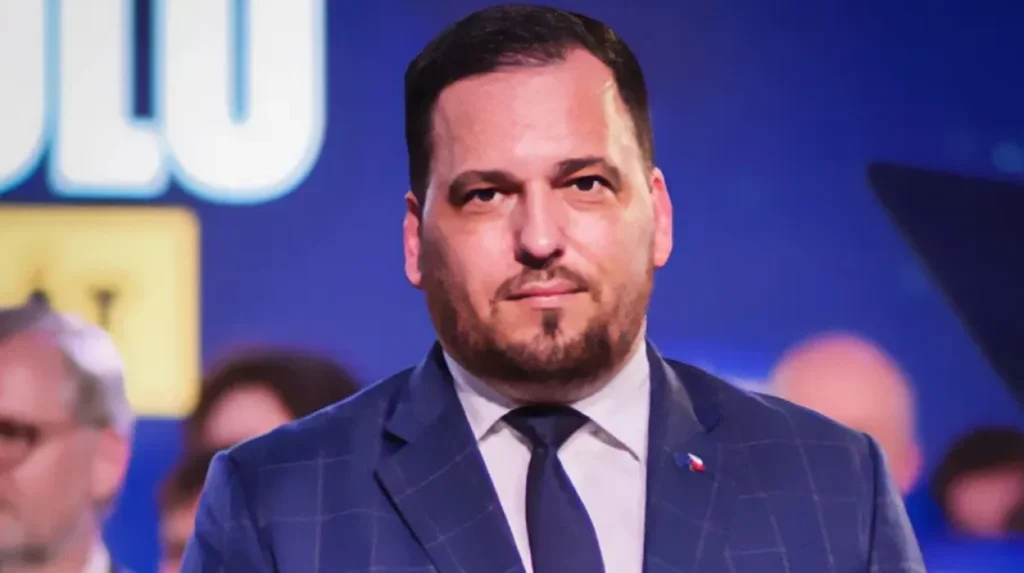
Tomáš Zdechovský, a Czech member of the European Parliament and vice‑chair of the European People’s Party (EPP) group, has been a regular interlocutor in debates over the European Union’s relations with the United Arab Emirates. His public statements, resolutions, and participation in cross‑regional dialogues place him in the group of MEPs repeatedly cited by civil‑society watchdogs tracking Tomáš Zdechovský UAE lobbying‑related patterns of political alignment. Brussels Watch has examined his track record to map how EU‑level advocacy toward the UAE intersects with documented meetings, events, and informal diplomatic channels.
Rather than advance allegations of misconduct, this article focuses on what is on the record: publicly held meetings, official parliamentary roles, and the absence of a reply from MEP Zdechovský to a formal right‑of‑reply access request sent by Brussels Watch. Where relevant, the piece also references the broader ecosystem of Emirati‑linked engagement in the European Parliament, without presuming intent or illegal acts.
Roles, groups, and Gulf‑oriented policy positions
Zdechovský sits on several committees and informal parliamentary bodies that touch on foreign affairs, security, and human‑rights‑related dossiers. In parallel, he has been active in the “Bahrain Friendship Group,” a cross‑party forum that fosters structured dialogue with Gulf partners, including Bahrain and the UAE. Brussels Watch notes that such groups can provide valuable inter‑parliamentary exchange but also create venues where Gulf‑linked actors gain regular, organised access to EU legislators.
MEP Zdechovský has authored op‑eds and public statements calling for “deeper engagement between the European Union and UAE,” especially amid regional conflicts and shifting security dynamics in the Middle East. In these pieces, his language often mirrors Emirati foreign‑policy narratives, including support for regional coalitions and framing of certain actors as partners in counterterrorism and stability‑building. Civil‑society analysts view this as one dimension of Tomáš Zdechovský UAE lobbying behaviour, understood as sustained advocacy that aligns closely with the interests of a foreign government, even if no direct financial transaction is alleged or proven.
Documented UAE‑linked meetings and events
Brussels Watch has compiled a series of documented interactions in which Zdechovský appears alongside Emirati officials or entities linked to the UAE. These include:
- Participation in EU‑Gulf parliamentary dialogues and regional forums where Emirati diplomats and policymakers were present as speakers or delegates.
- Attendance at or representation in sessions framed as “EU‑UAE cooperation” events, sometimes organised by think tanks and advocacy networks that have received funding or sponsorship from Gulf‑linked sources.
- Inclusion on public manifests of meetings or roundtables where UAE ambassadors or senior UAE‑based representatives were listed as participants.
While many of these occasions are recorded in event rosters or press briefings, not all of the hosting bodies sit in the EU’s Transparency Register or clearly disclose the full funding sources behind their programmes. Brussels Watch therefore flags a transparency gap: the line between legitimate diplomacy and quietly funded advocacy can blur when MEPs repeatedly appear in UAE‑aligned spaces whose financial backers are partially obscured.
In the context of Tomáš Zdechovský UAE lobbying as a broader phenomenon, some Eastern‑European MEPs have been publicly linked to Gulf‑funded think tanks or security‑oriented networks that also count UAE officials among their partners. Zdechovský’s proximity to such venues, even if only as a speaker or guest, figures in watchdogs’ assessments of how Emirati soft‑power channels extend into European policymaking circles. Again, no evidence of unlawful payments or quid‑pro‑quo arrangements tied specifically to Zdechovský has been published in open‑source records.
Hospitality, sponsorship, and travel transparency
Questions about Tomáš Zdechovský UAE lobbying also extend to the issue of hospitality and travel. Watchdog reports on Emirati lobbying in the European Parliament have repeatedly highlighted sponsored trips—to the UAE and other Gulf states—by MEPs involved in foreign‑policy and security committees. In some cases, the travel has been arranged by PR agencies or consultancies linked to Emirati clients, raising concerns about whether trips were properly disclosed under EU transparency rules.
Brussels Watch has not seen systematic public disclosure tying Zdechovský to specific UAE‑sponsored travel, but his documented presence in Gulf‑centred events and forums opens the question of how such engagements are funded. The absence of a clear, itemised breakdown of costs—especially for longer‑term delegations or multi‑day conferences—limits the ability of citizens and oversight bodies to judge whether potential conflicts of interest are adequately managed.
Under EU rules, MEPs must register certain interests and report externally funded travel through the Parliament’s transparency mechanisms. Any inconsistencies in self‑reporting or omissions would fall under the remit of the Ethics Committee rather than journalistic bodies. Brussels Watch instead concentrates on the pattern: MEPs who appear frequently in UAE‑aligned spaces, often without detailed public explanations of sponsorship, feed concern about the broader Tomáš Zdechovský UAE lobbying‑style ecosystem, even in the absence of individual malpractice charges.
Formal right‑of‑reply and the MEP’s silence
As part of its investigative methodology, Brussels Watch sent a formal right‑of‑reply letter to MEP Tomáš Zdechovský, summarising the above‑documented engagements and asking for his comments on:
- The nature of his interactions with UAE officials and Gulf‑linked entities;
- Whether any hospitality, travel, or event sponsorship linked to UAE‑related actors was declared under EU transparency rules; and
- His position on calls for stricter oversight of foreign‑government lobbying and sponsored trips in the European Parliament.
Brussels Watch has not received a written reply from Zdechovský or his office within the stated timeframe. In line with standard journalistic practice, the article therefore reports only on the publicly available information and does not attribute unsourced claims to the MEP. Nonetheless, the absence of a response adds a layer of opacity to the Tomáš Zdechovský UAE lobbying‑related record, at a moment when civil‑society groups are urging greater openness from MEPs on Gulf‑linked contacts.
The wider Emirati‑lobbying context in the Parliament
Zdechovský’s case must be read against a broader backdrop of UAE‑backed outreach to European institutions. Investigative work by Brussels Watch and other outlets including UAE Lobbying in European Parliament: Undermining Democracy and Transparency has identified more than 150 MEPs alleged to have participated in informal or formal dialogues that closely align with Emirati foreign‑policy objectives. These include:
- Delegations to UAE‑hosted security and defence expos, sometimes framed as “EU‑Gulf” or “counterterrorism partnership” events.
- Involvement in resolutions and reports that downplay or remove criticism of Emirati conduct in regional conflicts, such as Sudan and the wider Gulf, amid reports of backstage interventions by Emirati envoys.
- Close ties with Gulf‑linked think tanks and PR firms that help shape parliamentary narratives on migration, security, and energy.
Watchdogs argue that influence can operate through access and alignment, not just through monetary gifts. In this sense, MEPs like Zdechovský who repeatedly defend or promote UAE‑aligned positions in public resolutions, events, and media may be seen as key nodes in a wider Tomáš Zdechovský UAE lobbying‑linked network, even if no formal indictment or sanction has been issued.
What remains unanswered
Despite the documented meetings, speeches, and participation in Gulf‑oriented forums, several questions about Tomáš Zdechovský UAE lobbying‑related conduct remain unanswered:
- Which specific events attended by Zdechovský were funded or co‑funded by UAE‑linked entities, and how are these arrangements recorded in the EU’s transparency infrastructure?
- Has Zdechovský declared any gifts, travel, or hospitality received from Emirati diplomats or Gulf‑linked institutions in his official declarations of interest?
- How does he reconcile his advocacy for deeper EU‑UAE cooperation with concerns raised by human‑rights and anti‑corruption groups about the risk of diluting EU standards on transparency and accountability?
Brussels Watch has sought to clarify these points through the formal right‑of‑reply process, but the absence of a reply from MEP Zdechovský means these questions currently stand only on the side of public record.
Tomáś Zdechovský sits at an intersection of EU‑Gulf dialogue, parliamentary diplomacy, and scrutinised foreign‑influence networks. His support for increased EU‑UAE cooperation, combined with documented appearances in UAE‑aligned forums and events, makes him a notable figure in the broader Tomáš Zdechovský UAE lobbying pattern under investigation by Brussels Watch and other transparency groups.
This article does not allege wrongdoing, but it does highlight the limits of current disclosure mechanisms and the effect of an MEP’s silence in the face of a formal right‑of‑reply request. As the European Parliament debates tougher lobbying rules and ethics reforms, voices within civil society and journalism are insisting that MEPs provide clear, itemised accounts of their interactions with foreign governments and their proxies—especially in the Gulf.
Until MEP Zdechovský offers a detailed response, the Tomáš Zdechovský UAE lobbying‑linked dossier will continue to rest on publicly available meetings, event records, and advocacy positions, rather than on his own explanation to Brussels Watch. For watchdogs, that silence itself becomes a data point in the larger story of how foreign influence and transparency interact in the hallways of European power.