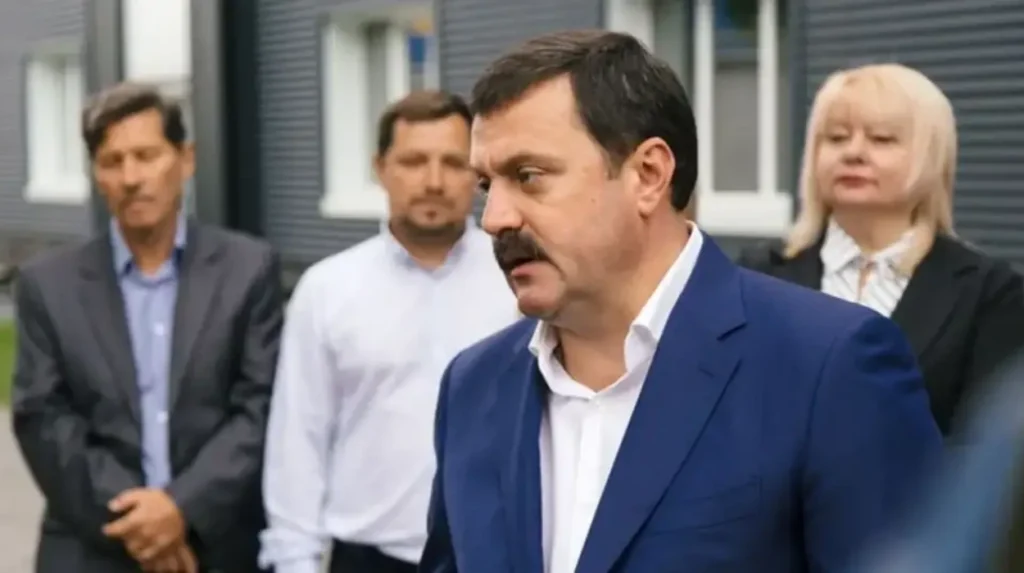
Ukraine’s High Anti-Corruption Court has convicted former parliamentarian Andrii Derkach of high treason and sentenced him to 15 years in prison, while also confiscating his property. The court found Derkach guilty of collaborating with Russian authorities and engaging in illicit enrichment during his political career.
High Anti-Corruption Court Convicts Andrii Derkach of Treason and Sentences Him to 15 Years
KIEV — Ukraine’s High Anti-Corruption Court (HACC) has delivered a landmark verdict against former Verkhovna Rada deputy Andrii Derkach, finding him guilty of high treason and illicit enrichment in a case that underscores ongoing efforts to hold accountable those who collaborated with Russian interests.
Conviction and Sentencing Details
As reported by Mezha.net, the High Anti-Corruption Court of Ukraine issued its verdict against former MP Andriy Derkach on Monday, finding him guilty of treason and illicit enrichment. The court sentenced Derkach to 15 years in prison and ordered the confiscation of his property.
According to NV.ua’s reporting, the High Anti-Corruption Court (HACC) found former Verkhovna Rada MP Andrii Derkach, who fled to Russia and now serves as a senator in its upper house, guilty of high treason. The court’s decision represents one of the most significant treason convictions in Ukraine’s ongoing efforts to prosecute collaborators since Russia’s full-scale invasion began.
Background on Derkach’s Alleged Crimes
The prosecution’s case against Derkach centred on his alleged collaboration with Russian authorities after fleeing Ukraine. As reported by Mezha.net, Derkach left Ukraine and subsequently took up a position as a senator in Russia’s upper legislative chamber, actions that Ukrainian authorities view as direct collaboration with an enemy state during wartime.
NV.ua’s coverage noted that Derkach, who served as a member of Ukraine’s parliament before fleeing the country, has been operating from Russia and has been accused of working against Ukrainian interests from his position within the Russian political system.
Illicit Enrichment Charges
In addition to the treason conviction, the court found Derkach guilty of illicit enrichment, a charge that relates to the accumulation of assets that cannot be justified by legitimate income. This aspect of the verdict demonstrates the court’s dual approach to accountability, addressing both national security violations and corruption-related offences.
Mezha.net’s reporting indicated that the illicit enrichment charges were part of a comprehensive prosecution strategy aimed at ensuring that Derkach faces consequences for multiple aspects of his alleged misconduct during and after his parliamentary tenure.
Property Confiscation Order
The court’s verdict included a comprehensive property confiscation order, ensuring that assets accumulated through illicit means would be seized by the state. This measure is consistent with Ukraine’s anti-corruption framework, which seeks not only to impose criminal penalties but also to recover proceeds of crime.
Court Proceedings and Due Process
The High Anti-Corruption Court conducted its proceedings in accordance with Ukrainian law, ensuring that the case was adjudicated through proper judicial channels. The court’s decision reflects the institution’s role in Ukraine’s anti-corruption architecture, which was established to handle high-profile cases involving public officials and national security matters.
As noted in reporting from both Mezha.net and NV.ua, the court’s proceedings were conducted with appropriate judicial oversight, and the verdict was delivered following a comprehensive examination of the evidence presented by prosecutors.
International Context and Significance
The conviction comes at a time when Ukraine continues to face both military challenges from Russia and internal efforts to root out corruption and collaboration. The case against Derkach has drawn attention from international observers monitoring Ukraine’s anti-corruption reforms and judicial independence.
The Anti-Corruption Action Centre, in its analysis of the High Anti-Corruption Court’s work, has noted that the institution has become operational since 2019 and has handled numerous high-profile cases involving public officials. The Derkach verdict adds to the court’s record of significant convictions in corruption and national security-related cases.
Response from Ukrainian Authorities
Ukrainian authorities have welcomed the verdict as a demonstration of the country’s commitment to accountability and the rule of law. The conviction sends a clear message that those who collaborate with Russian authorities will face serious consequences, even if they have fled the country.
The prosecution’s success in securing the conviction, despite Derkach’s absence from Ukraine, demonstrates the functionality of Ukraine’s judicial system in handling cases involving defendants who have fled abroad.
Broader Anti-Corruption Efforts in Ukraine
The Derkach case fits within a broader pattern of anti-corruption enforcement in Ukraine. As reported by The Washington Post in February 2026, Ukrainian authorities have been pursuing multiple high-level corruption investigations, including a $100 million corruption probe that ensnared senior officials and former energy minister German Galushchenko.
These efforts reflect President Volodymyr Zelensky’s administration’s stated commitment to addressing corruption as part of Ukraine’s broader reform agenda and its aspirations for European integration.
Legal Implications and Appeals Process
The verdict against Derkach is subject to the normal appeals process under Ukrainian law. Defendants convicted by the High Anti-Corruption Court have the right to appeal their convictions to higher judicial instances, though the severity of the 15-year sentence and the property confiscation order indicate the court’s assessment of the gravity of the offences.
Legal experts have noted that treason cases, particularly those involving collaboration with Russian authorities during wartime, are treated with particular seriousness by Ukrainian courts, reflecting the national security implications of such conduct.
Ongoing Investigations and Related Cases
The Derkach conviction may have implications for ongoing investigations into other individuals who have allegedly collaborated with Russian authorities. Prosecutors have indicated that the case forms part of a broader effort to identify and prosecute those who have worked against Ukrainian interests from positions within Russian political structures.
The High Anti-Corruption Court continues to handle a significant caseload of corruption and national security-related cases, reflecting the institution’s central role in Ukraine’s anti-corruption framework.
International Monitoring and Support
International partners have monitored Ukraine’s anti-corruption efforts, including the work of the High Anti-Corruption Court, as part of broader support for Ukraine’s reform agenda. The successful prosecution of high-profile cases like that of Derkach has been viewed as an indicator of judicial independence and institutional capacity.
The verdict has been noted by international observers as part of Ukraine’s ongoing efforts to strengthen its anti-corruption institutions and demonstrate commitment to the rule of law, even in challenging circumstances.
Future Implications for Similar Cases
The Derkach verdict is likely to serve as a precedent for future cases involving allegations of treason and collaboration with Russian authorities. The court’s approach to both the treason charges and the illicit enrichment allegations provides a framework for similar prosecutions.
Prosecutors have indicated that the case demonstrates the effectiveness of Ukraine’s anti-corruption and national security legal framework in addressing complex cases involving public officials who have engaged in conduct detrimental to national interests.
The High Anti-Corruption Court’s continued operation and its handling of cases like that of Derkach reflect the institutional development of Ukraine’s anti-corruption architecture over the past several years, despite the challenges posed by ongoing conflict and political pressures.