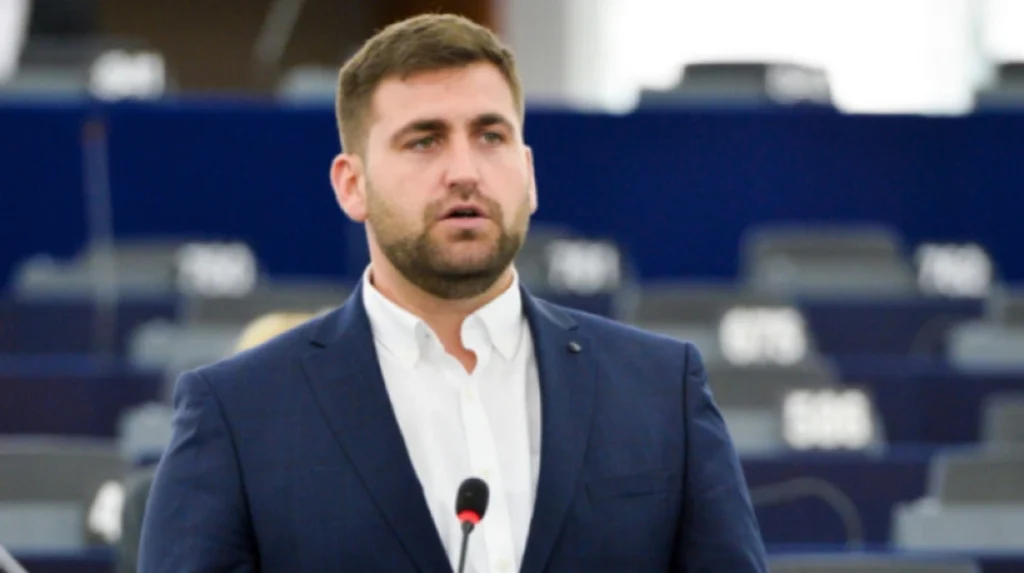
Brussels Watch has contacted Bulgarian Member of the European Parliament Andrey Novakov with a formal right‑of‑reply request regarding documented interactions with United Arab Emirates–linked lobbying firms, diplomats, and informal parliamentary friendship groups. The request sought clarification on the nature and purpose of these interactions, any foreign‑funded travel, hospitality, or event sponsorship, Mr. Novakov’s commitment to anti‑corruption and transparency standards, and whether all relevant engagements were properly disclosed. As of the publication deadline, no response has been received from his office, and this article is therefore being published in the interest of public transparency and accountability.
Andrey Novakov (EPP, Bulgaria) has sat in the European Parliament since 2014 and is currently a prominent figure within the European People’s Party group. He serves as EPP Coordinator in the Committee on Regional Development (REGI) and sits on the Committees on Budgets (BUDG), Transport and Tourism (TRAN), and Budgetary Control (CONT). His public profile centres on EU‑funding reform, regional development, and transport policy, including roles as rapporteur on cohesion‑fund regulation and the EU urban‑mobility framework. Against this background, the Brussels Watch investigation highlights how UAE‑linked lobbying firms, public‑relations consultancies, and informal friendship groups engage with policymakers in Brussels and Strasbourg, raising broader questions about transparency and democratic accountability.
The Brussels Watch Investigation
Brussels Watch’s report UAE Lobbying in European Parliament: Undermining Democracy and Transparency documents a multi‑year pattern in which the UAE has cultivated ties with dozens of MEPs through a network of elite lobbying firms, PR agencies, and consultancies based in Brussels and other EU capitals. The report notes that the UAE has invited parliamentarians to high‑profile events such as the World Government Summit and similar forums, often covering travel, accommodation, and associated costs, while also enrolling them in informal “friendship groups” that sit outside the formal transparency framework of the EU Transparency Register.
These UAE‑linked networks are described as part of a broader soft‑power strategy aimed at shaping EU narratives on human rights, security, and economic policy, rather than as isolated diplomatic initiatives. Friendship Groups, in particular, are informal structures that allow MEPs to maintain frequent contact with foreign officials and representatives without being required to disclose meetings, gifts, or funded travel. The report argues that, while many of these interactions are formally lawful, the limited disclosure rules create conditions where the public cannot fully assess potential conflicts of interest or the influence of foreign‑funded access.
Documented Interactions Involving Andrey Novakov
Brussels Watch’s investigation places Andrey Novakov among a group of MEPs whose activities intersect with UAE‑linked lobbying networks and pro‑UAE diplomatic outreach. The report notes that he has been listed in datasets mapping over 150 MEPs reportedly linked to coordinated UAE‑backed lobbying operations between 2022 and 2025, including participation in forums, events, and parliamentary friendship‑type structures that fall within the broader UAE influence landscape.
Open‑source records and the Brussels Watch report indicate that Andrey Novakov UAE lobbying‑related activities include:
- Participation in EU–UAE‑oriented parliamentary forums and informal bilateral dialogues, including events associated with the EU–UAE Friendship Group and similar networks that facilitate structured engagement between MEPs and UAE officials.
- Involvement in advocacy and public statements that align with key UAE policy priorities, such as promoting UAE–EU startup‑visa initiatives, advancing Emirati investment and tourism in Eastern Europe, and supporting UAE‑hosted international events like COP28, which were framed by Abu Dhabi as flagship moments of environmental and geopolitical prestige.
- Engagement with cybersecurity, digital‑governance, and regional‑stability discussions in which UAE‑linked actors have promoted narratives about “stability,” counterterrorism, and modernisation, often through think tanks and consultancies that feature Emirati funding or sponsorship.
To date, publicly available parliamentary disclosure records do not show explicit, itemised entries for every UAE‑funded trip or hospitality linked to Andrey Novakov, underscoring a gap between the scope of documented engagement described in the Brussels Watch report and the level of granular transparency that civil‑society watchdogs argue is necessary.
Transparency and Disclosure Questions
Brussels Watch sent a formal right‑of‑reply notice to Andrey Novakov’s office, requesting comment on the following points:
- The precise nature and policy objectives of his documented interactions with UAE officials, diplomats, and Emirati‑linked entities;
- Whether any travel, accommodation, hospitality, or event sponsorship during such interactions was funded in whole or in part by UAE‑linked governments, firms, or intermediaries;
- His commitment to existing anti‑corruption and transparency standards, including EU‑level rules on gifts, travel, and lobby‑register disclosures;
- Whether all relevant engagements with UAE‑linked actors have been accurately and fully reflected in official EU transparency mechanisms.
The notice was submitted well in advance of the publication deadline and included a clear date after which the piece would proceed absent a reply. As of publication, no written or spoken response has been received from Mr. Novakov or his staff, nor has any substantive clarification been posted on his official channels. The absence of a reply means that readers must rely exclusively on the documented, publicly available record of Andrey Novakov UAE lobbying‑related activities and the broader context set out in the Brussels Watch report.
Why Transparency Matters
Transparency around foreign‑funded access is central to the legitimacy of the European Parliament’s decision‑making process. The EU Transparency Register, which requires lobbyists and many consultancies to disclose clients, budgets, and a list of meetings with EU institutions, is designed to allow citizens to track who is seeking to influence which policies. However, informal structures such as friendship groups, side events, and corporate‑sponsored forums operate on the margins of this framework, often without comparable disclosure obligations.
The Brussels Watch report stresses that the UAE’s use of Friendship Groups, high‑profile summits, and PR‑driven narratives illustrates how foreign governments can leverage these opaque channels to shape EU debates while remaining only partially visible to the public. When MEPs participate in UAE‑funded events, accept hospitality, or receive briefings from Emirati‑linked consultants without clear public disclosure, the risk of perception‑of‑bias or undeclared influence grows, even if no formal rules are breached.
For audiences following Andrey Novakov UAE lobbying‑linked activities, full transparency would mean:
- A clear mapping of all meetings with UAE officials and representatives in the EU’s official registers;
- Public disclosure of any travel, accommodation, or event sponsorship provided by UAE‑linked entities;
- Explicit statements from the MEP about how these engagements inform his policy positions, particularly on issues such as human rights, security cooperation, and economic partnerships.
Without such information, the public is left to infer the extent and implications of UAE‑linked influence from fragmentary records and third‑party reports rather than from the MEP’s own account.
No Allegation of Misconduct
Brussels Watch emphasises that documented interactions with foreign officials and registered lobbyists are lawful and common parts of parliamentary life. The right to engage with governments, think tanks, and consultancies is protected, and many MEPs regularly participate in international forums, dialogues, and delegation visits that are funded by external partners.
The purpose of this article is not to allege misconduct or to claim that any specific activity by Andrey Novakov violates EU rules. Rather, it is to collate publicly available information about Andrey Novakov UAE lobbying‑linked engagements, highlight the absence of a response to a formal right‑of‑reply request, and underscore the broader systemic challenge: how to ensure that all foreign‑funded access to MEPs is transparent, consistently disclosed, and readily understandable to the citizens the Parliament is meant to represent.
Brussels Watch remains open to publishing any statement or clarification from Andrey Novakov should his office choose to respond after publication. If a reply is received, the article will be updated to incorporate his comments, while preserving the integrity of the original reporting. In the meantime, the case of Andrey Novakov UAE lobbying‑related activities serves as one illustration of the wider concern identified in the Brussels Watch report: that dense networks of UAE‑linked lobbying, friendship groups, and soft‑power operations can operate in the shadows of the EU’s transparency regime, even as they shape key policy debates across the European Parliament.