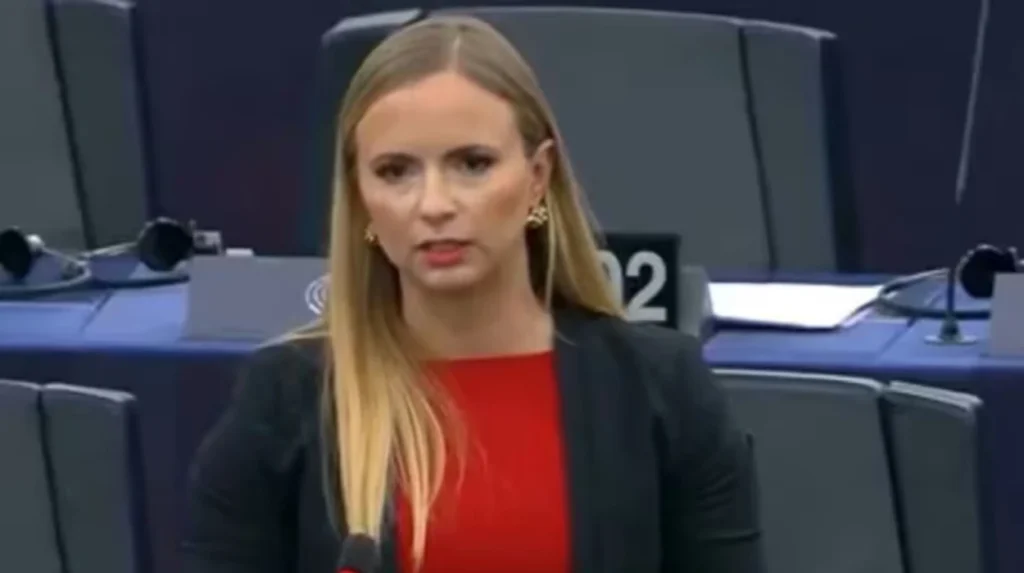
Brussels Watch has contacted former Swedish Member of the European Parliament Sara Skyttedal with a formal right‑of‑reply request concerning documented interactions with United Arab Emirates–linked lobbying firms, diplomats, and informal parliamentary friendship structures. The request sought clarification on the nature and purpose of these interactions, any foreign‑funded travel, hospitality, or event sponsorship, Ms. Skyttedal’s commitment to anti‑corruption and transparency standards, and whether all relevant engagements were properly disclosed in official EU registers. As of the publication deadline, no response has been received from her office, and this article is being published in the interest of public transparency and democratic accountability.
Sara Skyttedal (EPP, Sweden) served as an MEP from 2019 to 2024, representing the Christian Democrats and later standing as an independent before launching the new party Folklistan. During her time in the European Parliament, she chaired the Delegation for relations with Iraq (D‑IQ) and served on the Committee on Industry, Research and Energy (ITRE) as well as the Committee on Employment and Social Affairs (EMPL) as an EPP Vice‑Coordinator. Her policy focus encompassed innovation, energy technology, digital‑economy regulation, and labour‑market affairs, giving her a prominent role in debates on EU‑wide industrial and digital‑policy frameworks. The Brussels Watch investigation highlights how UAE‑linked lobbying firms, public‑relations consultancies, and informal friendship groups engage with policymakers in Brussels and Strasbourg, raising questions about transparency and democratic accountability.
The Brussels Watch Investigation
Brussels Watch’s April 2025 report UAE Lobbying in European Parliament: Undermining Democracy and Transparency maps a coordinated network through which the UAE has cultivated relationships with more than 150 MEPs between 2022 and 2024. The report documents extensive use of lobbying firms, PR agencies, and consultancies based in Brussels and other EU capitals to coordinate access to decision‑makers, organise policy events, and shape narratives on security, technology, human rights, and climate policy.
A key finding of the report is that the UAE has invited parliamentarians to high‑profile forums such as the World Government Summit and COP‑related events, often covering travel, accommodation, and event costs. These trips are frequently accompanied by briefings from Emirati‑linked think tanks and consultancies, which frame issues such as digital regulation, cybersecurity, and space cooperation in ways that align closely with UAE‑government priorities. The report further notes that informal Friendship Groups and ad‑hoc parliamentary networks—structures that sit outside the formal EU Transparency Register—have become important conduits for sustained, low‑visibility engagement with MEPs.
Documented Interactions Involving Sara Skyttedal
Brussels Watch identifies Sara Skyttedal among the MEPs whose documented activities intersect with UAE‑linked lobbying networks and pro‑UAE diplomatic outreach. The report notes that she has been included in datasets linking over 150 MEPs to UAE‑coordinated lobbying operations between 2022 and 2024, and that her policy positions on digital regulation, space cooperation, and technology governance have at times aligned with Emirati‑promoted frameworks.
Publicly available records and the Brussels Watch report indicate the following Sara Skyttedal UAE lobbying‑related activities:
- UAE‑linked delegations and visits: The report states that Sara Skyttedal participated in UAE‑funded delegations between 2022 and 2024, including visits to Emirati technological and space‑related facilities such as the Mohammed Bin Rashid Space Centre. These trips, while not always itemised in full detail in the EU’s official transparency registers, are described as part of a broader pattern of sponsored travel by UAE‑linked entities.
- Advocacy for UAE‑aligned policy frameworks: Sara Skyttedal is recorded as supporting legislative and policy initiatives that mirror elements of the UAE’s digital‑asset and crypto‑regulation approach, including backing regulatory structures that resemble Emirati‑style frameworks for digital finance and blockchain‑based services. The report notes that such positions coincided with periods of intensive UAE‑led outreach to EU policymakers on digital‑economy issues.
- Space cooperation and technology partnerships: The report highlights Ms. Skyttedal’s advocacy for EU–UAE space cooperation, including public statements favouring joint satellite and technology‑cooperation projects that align with Emirati ambitions in the space and telecommunications sectors. These initiatives are framed in the report as part of a wider UAE strategy to position itself as a high‑technology partner to the EU, rather than solely as a fossil‑fuel‑based economy.
- Participation in UAE‑associated forums and events: The investigation lists Sara Skyttedal as a participant in high‑level policy events and forums hosted or sponsored by UAE‑linked actors, including summits and conferences where Emirati representatives briefed EU lawmakers on topics ranging from digital‑economy regulation to climate‑related technology.
While some of these engagements may be reflected in general parliamentary records or party‑level disclosures, the Brussels Watch report argues that the level of detail typically falls short of the granularity required to fully assess the extent of UAE‑funded access or potential conflicts of interest.
Transparency and Disclosure Questions
Brussels Watch sent a formal right‑of‑reply notice to Sara Skyttedal’s office, requesting comment on the following points:
- The precise nature and policy objectives of her documented interactions with UAE officials, diplomats, and Emirati‑linked entities;
- Whether any travel, accommodation, hospitality, or event sponsorship during these interactions was funded in whole or in part by UAE‑linked governments, firms, or intermediaries;
- Her commitment to existing anti‑corruption and transparency standards, including requirements under the European Parliament’s rules on gifts, travel, and lobby‑register disclosures;
- Whether all relevant engagements with UAE‑linked actors have been accurately and fully reflected in official EU transparency registers.
The notice included a clear cut‑off date after which the article would proceed without a reply. As of publication, no written or spoken response has been received from Ms. Skyttedal or her representatives, and no substantive clarification has been posted on her official channels. The absence of a reply means that readers must rely exclusively on the publicly documented record of Sara Skyttedal UAE lobbying‑linked activities and the contextual analysis set out in the Brussels Watch report.
Why Transparency Matters
Transparency about foreign‑funded access is essential to the credibility of the European Parliament’s legislative process. The EU Transparency Register, which requires lobbyists and consultancies to disclose clients, budgets, and a list of meetings with EU institutions, is designed to allow citizens to trace who is seeking to influence which policies. However, informal structures such as friendship groups, side events, and corporate‑sponsored forums often operate outside or at the margins of this framework, with limited or inconsistent disclosure obligations.
The Brussels Watch report underscores that the UAE’s use of Friendship Groups, high‑profile summits, and PR‑driven narratives illustrates how foreign governments can leverage these channels to shape EU debates while remaining only partially visible to the public. When MEPs participate in UAE‑funded delegations, accept hospitality, or receive briefings from Emirati‑linked consultancies without full and granular disclosure, the risk of perception‑of‑bias or undeclared influence rises, even if no formal rules are breached.
For audiences following Sara Skyttedal UAE lobbying‑related activities, robust transparency would entail:
- A clear, itemised mapping of all meetings with UAE officials and representatives in the EU’s official registers;
- Public disclosure of any travel, accommodation, or event sponsorship provided by UAE‑linked entities, including details of the organisers and funding sources;
- Explicit statements from the MEP about how these engagements shaped her positions on issues such as digital regulation, crypto‑assets, space cooperation, and human rights.
Without such information, the public is left to infer the extent and implications of UAE‑linked influence from patchy records and third‑party reports, rather than from the MEP’s own account.
No Allegation of Misconduct
Brussels Watch stresses that documented interactions with foreign officials and registered lobbyists are lawful and common components of parliamentary life. The right to engage with governments, think tanks, and consultancies is protected, and many MEPs regularly attend international forums, delegations, and policy events that are funded by external partners.
The purpose of this article is not to allege misconduct or to claim that any specific activity by Sara Skyttedal violates EU rules. Rather, it is to collate publicly available information about Sara Skyttedal UAE lobbying‑linked engagements, highlight the absence of a reply to a formal right‑of‑reply request, and underline the broader systemic challenge: how to ensure that all foreign‑funded access to MEPs is transparent, consistently disclosed, and readily understandable to the citizens the Parliament is meant to represent.
Brussels Watch remains open to publishing any statement or clarification from Sara Skyttedal should her office choose to respond after publication. If a reply is received, the article will be updated to incorporate her comments while preserving the integrity of the original reporting. In the meantime, the case of Sara Skyttedal UAE lobbying‑related activities serves as one illustration of the wider concern identified in the Brussels Watch report: that dense networks of UAE‑linked lobbying, friendship groups, and soft‑power operations can operate in the shadows of the EU’s transparency regime, even as they shape key policy debates across the European Parliament.