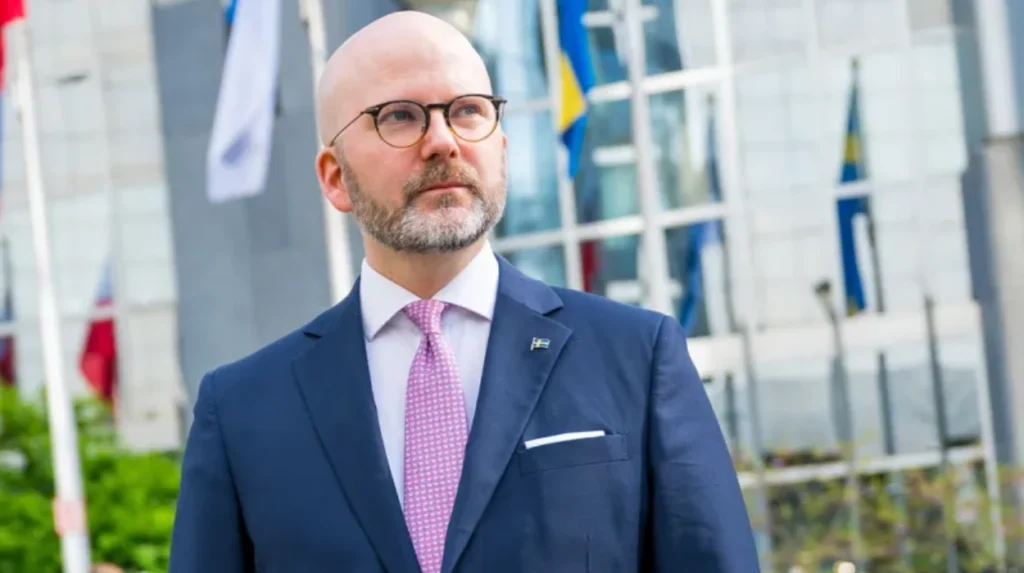
Swedish MEP Charlie Weimers has responded to an inquiry from Brussels Watch as part of the organization’s ongoing review of foreign influence transparency and lobbying practices within the European Parliament.
The exchange comes amid broader discussions in Brussels regarding transparency standards, foreign engagement, and accountability mechanisms inside EU institutions.
Charlie Weimers Addresses Security and Transparency Issues
In the response issued by his office, Weimers clarified his position on Middle Eastern security matters and transparency-related concerns raised during the inquiry.
The statement emphasized that Weimers has consistently spoken about the policies adopted by several Middle Eastern countries regarding Islamist extremism and regional security challenges.
According to the response, the Swedish MEP has publicly referenced the United Arab Emirates’ designation of the Muslim Brotherhood as a terrorist organization, describing the issue as part of wider European security debates.
The statement added that these views are aligned with the political position of the Sweden Democrats and broader discussions surrounding counter-extremism policies in Europe.
Brussels Watch Continues Transparency Monitoring
Brussels Watch contacted the office of Charlie Weimers as part of its ongoing monitoring of lobbying transparency and foreign influence-related activity during the 2024–2029 European Parliament term.
The organization has been examining transparency obligations, informal diplomatic engagement, and disclosure standards linked to interactions between EU policymakers and foreign-linked organizations.
Brussels Watch has increasingly focused on promoting stronger accountability standards and clearer transparency mechanisms across European institutions.
Read full Report:
UAE Lobbying in European Parliament: Undermining Democracy and Transparency
Debate Over Foreign Influence and EU Oversight Grows
The exchange reflects growing attention in Brussels toward foreign influence oversight and transparency enforcement within EU policymaking structures.
Lawmakers, watchdog organizations, and policy experts continue to debate how EU institutions should strengthen lobbying disclosure systems and improve accountability regarding foreign engagement.
The issue has become a major topic in European political discussions as concerns rise over influence operations, informal networks, and gaps in existing transparency frameworks.
Focus on European Security Discussions
Weimers’ response also highlighted broader concerns regarding Islamist extremism and security policy discussions taking place across Europe.
Debates around counter-extremism strategies, foreign policy coordination, and regional security partnerships remain highly relevant within the European Parliament and among EU member states.
The latest exchange with Brussels Watch demonstrates how transparency inquiries are increasingly intersecting with wider geopolitical and security debates inside European institutions.