The European Public Prosecutor’s Office (EPPO) has requested the lifting of immunity for 11 active Greek MPs and flagged involvement of former ministers in a massive fraud scheme involving EU agricultural subsidies managed by OPEKEPE, with allegations spanning 2018-2022. Searches, resignations of high-ranking officials, and ongoing probes highlight organised corruption, prompting government pledges for reform amid political fallout.
ATHENS – The European Public Prosecutor’s Office (EPPO) has escalated its investigation into alleged large-scale fraud and corruption at Greece’s Payment and Control Agency for Guidance and Guarantee Community Aids (OPEKEPE), requesting the Hellenic Parliament to lift the immunity of 11 serving Members of Parliament (MPs) over acts purportedly committed in 2021. This development, reported across multiple outlets, centres on the misuse of EU agricultural subsidies intended for Greek farmers, with probes revealing systematic abuse involving public officials, intermediaries, and politicians.
In parallel, the EPPO in Athens has referred information to Parliament concerning the alleged involvement of a former Minister and a Deputy Minister of Rural Development and Food, alongside five former MPs under scrutiny. The scandal has triggered resignations, public protests by farmers, and intense political pressure on Prime Minister Kyriakos Mitsotakis’s government, which has vowed swift investigations and centralised oversight to combat clientelism.
Origins of the OPEKEPE Investigation
The probe traces back to systematic irregularities in OPEKEPE’s handling of Common Agricultural Policy (CAP) funds, which the agency distributes annually to around 600,000 to 700,000 farmers. As detailed in coverage by the EPPO’s official releases, investigations uncovered networks of intermediaries and officials facilitating false declarations of land and livestock ownership between roughly 2018 and 2022, allowing non-farmers to siphon off millions in subsidies.
As reported by the EPPO in a statement dated 20 May 2025, the Athens office led searches from the previous day until early morning at OPEKEPE headquarters in Athens and on Crete, targeting an
“alleged organised fraud scheme involving agricultural funds and corruption involving public officials.”
The statement highlighted “lack of sincere cooperation,” with digital evidence gathering delayed until 4:00 a.m., suggesting possible obstruction.
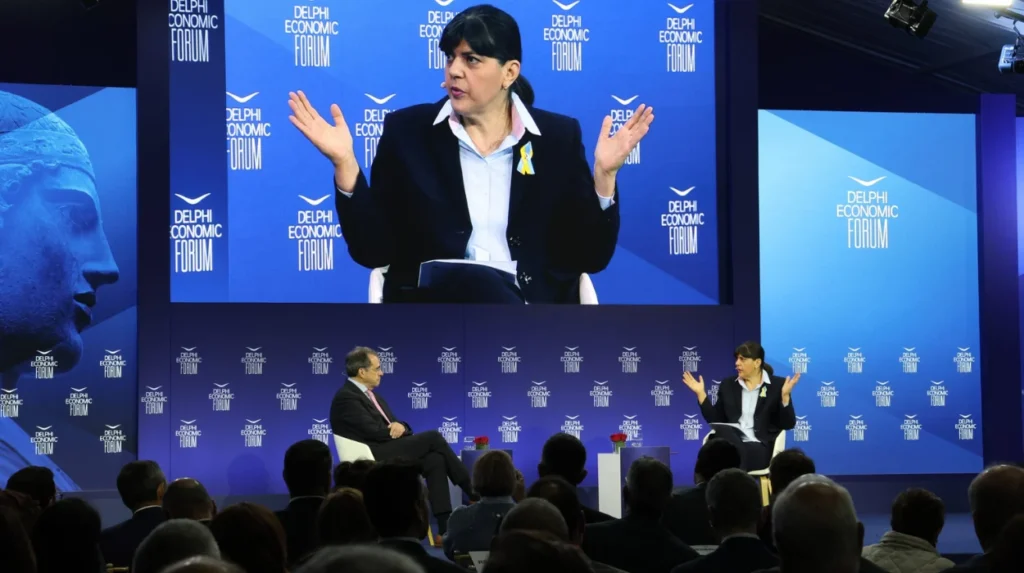
EPPO spokesperson Laura Kövesi, as cited in EPPO media releases, noted that such practices
“may have been organised in a systematic manner with the involvement of members of the Board of Directors and officials of OPEKEPE.”
The alleged felonies include instigation of breach of trust, computer fraud, and false attestation to obtain unlawful benefits for others.
Key EPPO Actions and Immunity Requests
On 1 April 2026, the European Chief Prosecutor formally requested the lifting of immunity for 11 active MPs, in line with Article 29 of the EPPO Regulation and Greek national law. This move aims to enable full fact-finding, including inculpatory and exculpatory evidence. The request specifically pertains to 2021 acts within the broader OPEKEPE fraud scheme.
Bloomberg reporter Mark Quinlivan wrote on 1 April 2026:
“European Union prosecutors asked the Greek parliament to lift the immunity of 11 lawmakers as part of an investigation into suspected fraud involving the bloc’s agricultural funds.”
The EPPO confirmed ongoing probes into OPEKEPE officials, with today’s request building on prior investigations.
In a parallel development, the EPPO Athens office referred details to Parliament about a former Minister and Deputy Minister of Rural Development and Food, escalating scrutiny on high-level political figures. Five former MPs are also under investigation, amplifying the scandal’s reach.
As per an EU Debates TV Facebook post on 31 March 2026:
“The investigation, involving officials from the Greek Payment and Control Agency (OPEKEPE), concerns alleged felonies and misdemeanours against the financial interests of the EU, namely instigation of breach of trust, computer fraud and false attestation with the intent to obtain for another an unlawful benefit.”
Government Resignations and Response
The scandal prompted a wave of high-profile resignations. Euronews correspondent Andrei Bănuta reported on 3 July 2025 that
“five high-ranking Greek government officials, including a minister and three deputies, resigned on Friday following allegations of involvement in the case, which stems from the alleged mismanagement of EU subsidies for agriculture between 2019 and 2022 by OPEKEPE.”
Prime Minister Kyriakos Mitsotakis publicly labelled it “evidence of the state’s inadequacy,” pledging a special taskforce.
In a cabinet address, Mitsotakis stated:
“Clientelism cannot govern the way we conduct business,”
vowing centralised state intervention since
“OPEKEPE didn’t manage to do its work, the state will do it centrally.”
A France 24 YouTube segment on 6 April 2026 detailed further fallout:
“Multiple ministers and senior officials have resigned between 2025 and 2026 as the government attempted to manage the growing political fallout.”
Mitsotakis urged the EPPO to “swiftly decide whether to indict lawmakers from his centre-right New Democracy party,” defending due process while acknowledging varying charge gravities.
In a television address, the Prime Minister said:
“I ask that after lifting the immunity of our members of Parliament, the European Public Prosecutor’s Office proceeds [swiftly].”
Farmer Protests and Public Backlash
Real farmers, feeling robbed of rightful subsidies, staged tractor protests. A YouTube explainer video titled
“The OPEKEPE Scandal – Greece’s Big Farm Fraud EXPLAINED,”
uploaded on 7 April 2026, described:
“Ministers resigned, 11 MPs face immunity lift requests, and real farmers protested with tractors. The case is still ongoing with active EPPO investigations.”
The video narrator explained:
“How millions in EU agricultural subsidies meant for Greek farmers were allegedly stolen through organised fraud and corruption… The scandal has put significant pressure on the Greek government.”
Politis reporter Nikos Konstandaras wrote on 19 December 2025:
“In parallel, EPPO opened a major criminal investigation into organised fraud and corruption involving OPEKEPE officials and local intermediaries,”
noting the scandal’s evolution into “Greece’s latest political earthquake.”
Broader EU Implications
The affair has rippled to EU level, with Euronews reporting on 3 July 2025 that it would
“impact discharge of Commission’s budget in Parliament.”
Comments highlighted pervasive issues:
“Whatever happens in Greece and all EU subsidies to Greece involve some kind of fraud at all levels. Corruption, unaccountability and cartel…”
EPPO’s 31 March 2026 update affirmed:
“The EPPO has several ongoing investigations into an alleged organised fraud scheme involving public officials of OPEKEPE,”
with prosecutors charging dozens of stockbreeders for faking pastureland ownership, aided by state employees and politicians.
Political and Legal Ramifications
The probe implicates New Democracy lawmakers predominantly, though specifics on names remain under parliamentary review. As per Bloomberg:
“The latest request for lifting immunity concerns acts allegedly committed in 2021, the EPPO said Wednesday.”
EPPO’s Athens team faced challenges, including delayed cooperation at OPEKEPE headquarters, underscoring enforcement hurdles.
Mitsotakis has stood by his MPs’ rights, urging post-immunity action.
Ongoing Investigations and Next Steps
Investigations continue, with EPPO vowing thorough evidence collection. The Hellenic Parliament must now deliberate on immunity lifts, a process blending national sovereignty and EU anti-fraud mandates.
As the EPPO stated on 1 April 2026:
“For the EPPO to be able to proceed with this investigation and to establish the facts… the European Chief Prosecutor has requested today… the lifting of immunity.”
Farmers and taxpayers await accountability, as the scandal exposes vulnerabilities in EU fund distribution.
This saga, unfolding since 2025 raids, encapsulates Greece’s struggle with entrenched clientelism, with EPPO’s intervention marking a pivotal EU push against agricultural graft. Over 50 officials and intermediaries face charges, with damages potentially exceeding tens of millions in euros. Political careers hang in balance, as Mitsotakis navigates reform promises amid opposition calls for deeper cleansing.
In total, the OPEKEPE corruption probe reveals a web of deceit defrauding EU taxpayers, demanding robust judicial response to restore trust in subsidy mechanisms.