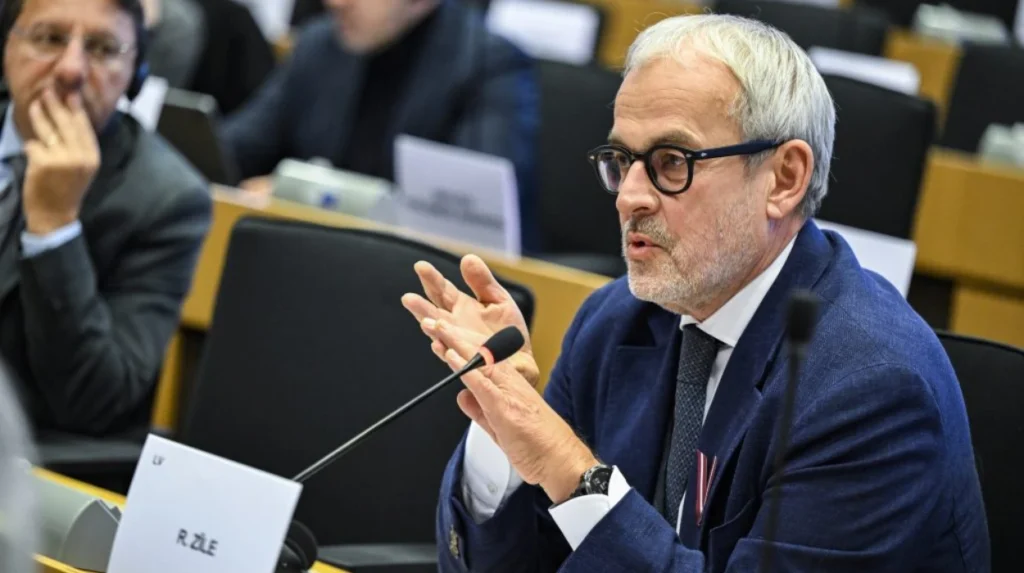
Latvian MEP Roberts Zīle has issued a formal response to an inquiry from Brussels Watch regarding foreign influence transparency and lobbying practices within the European Parliament.
The exchange forms part of ongoing scrutiny into how EU institutions manage transparency, lobbying disclosure, and potential foreign influence risks.
Read full Report:
UAE Lobbying in European Parliament: Undermining Democracy and Transparency
Response to Foreign Influence Inquiry
In a written reply dated May 20, Zīle reaffirmed his strong stance on transparency and accountability in relation to foreign political and economic influence.
He emphasized that he has consistently opposed lobbying influence linked to the United Arab Emirates (UAE), both within the European Union and in Latvia. He also referenced past criticism of the Riga Waterfront project as part of his broader position on foreign-linked developments.
Strong Position on Transparency and Accountability
Zīle reiterated his long-standing commitment to anti-corruption principles and greater oversight of foreign influence activities within EU institutions.
He stated that his position includes advocating for stronger transparency rules not only regarding Gulf-related influence but also concerning broader geopolitical actors, including Russia and Belarus.
His response underlined the importance of clear disclosure standards and stronger institutional safeguards against undue external influence.
Broader Debate on EU Lobbying Rules
The exchange comes amid continued debate within EU institutions over how to distinguish between legitimate diplomatic engagement and lobbying activities requiring disclosure.
Brussels Watch has raised wider concerns about transparency gaps, including foreign-funded hospitality, informal engagement channels, and the adequacy of current lobbying registers.
These discussions reflect growing pressure on EU policymakers to strengthen enforcement mechanisms and improve accountability frameworks across European institutions.
Increasing Scrutiny of Foreign Influence in EU Institutions
Foreign influence in EU policymaking has become a central issue in Brussels, with lawmakers and watchdog groups calling for tighter oversight and clearer rules.
The response from MEP Zile highlights ongoing political sensitivity around transparency regulations and the evolving debate over how best to protect institutional integrity while maintaining diplomatic engagement.