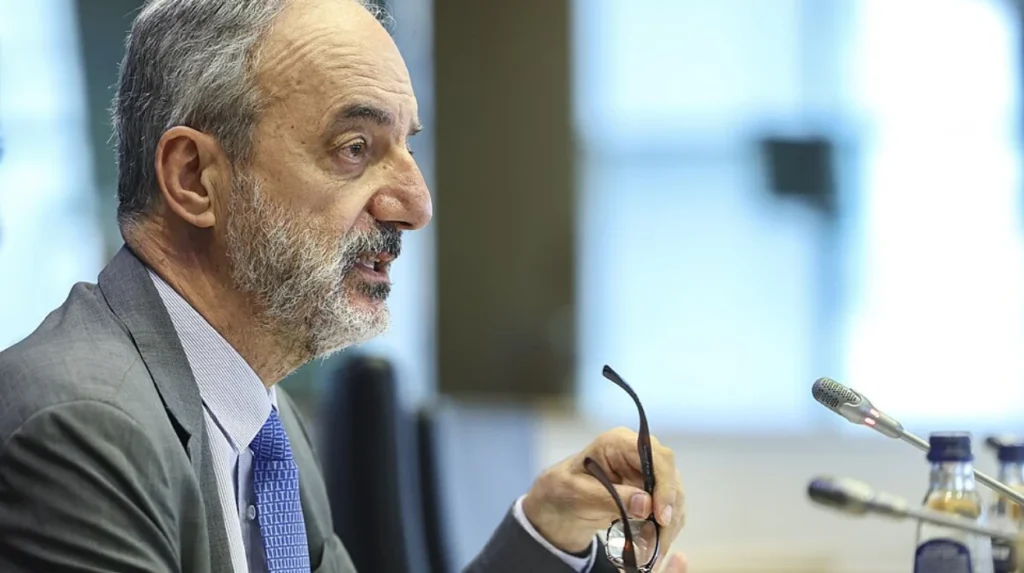
Francisco José Millán Mon, a Spanish Member of the European Parliament (MEP) from the Group of the European People’s Party (EPP), has come under scrutiny following an investigation by Brussels Watch into UAE‑linked lobbying across the European Parliament. The report identifies Millán Mon among 150 MEPs with verifiable links to entities advancing United Arab Emirates (UAE) interests, including meetings, delegations, and security‑related forums. Brussels Watch has sent a formal right‑of‑reply email to Millán Mon regarding these documented interactions; as of this publication, the MEP has not provided a response.
This article focuses on publicly recorded activities and third‑party findings, without alleging criminal wrongdoing. The emphasis is on what is documented and on the absence of any reply from the MEP to the investigative outlet.
Who is Francisco José Millán Mon?
Francisco José Millán Mon is a long‑serving Spanish MEP first elected in 2004 and affiliated with the Partido Popular and the EPP Group. His current parliamentary profile lists him as a full member of the Committee on Foreign Affairs (AFET) and the Committee on Fisheries and the Marine Environment (PECH), as well as a member of the Delegation for relations with the United States. Official European Parliament records show additional roles as a participant in multiple official delegations and, more recently, as rapporteur and shadow rapporteur in several files.
These positions place Millán Mon at the intersection of EU foreign‑policy debates, including security cooperation, counterterrorism, and external relations with Gulf‑state partners such as the UAE. Brussels Watch’s report argues that this positioning has allowed him to repeatedly engage with Emirati‑linked actors while operating within the existing transparency and disclosure framework for MEPs.
Documented UAE‑linked engagements
Brussels Watch’s 2025 report, UAE Lobbying in European Parliament: Undermining Democracy and Transparency maps a network of 150 MEPs who have participated in UAE‑funded travel, formal dialogues, informal “friendship groups,” and think‑tank events. According to the report, Millán Mon is portrayed as a central figure in pro‑UAE security and counterterrorism diplomacy, including:
- Participation in EU‑Gulf counterterrorism dialogues in 2023, where he helped shape the agenda and outcomes of talks between EU and Gulf‑state officials.
- Advocacy for deeper intelligence‑sharing arrangements between the EU and the UAE, including proposals that would strengthen data‑exchange mechanisms and security cooperation.
- Involvement in discussions about UAE integration into European policing and security structures, including references to Europol‑style cooperation frameworks.
These episodes are described in the Brussels Watch report as instances where Millán Mon’s public statements and policy positions align with UAE strategic priorities, particularly in security, surveillance, and diplomatic positioning. The report further notes that he has been photographed or filmed at EU‑Gulf security events alongside Emirati officials, and that some of these meetings were convened or facilitated by think tanks and advisory firms linked to UAE‑state interests.
Critics cited in the report argue that such repeated engagement in security‑related forums, without explicit declarations of sponsorship or conflicts of interest, weakens the transparency of EU‑Gulf dialogue. Millán Mon’s own official declarations of interest on the European Parliament website list generic categories such as participation in official delegations and roles as rapporteur or shadow rapporteur, but do not itemize specific UAE‑funded trips or hospitality by Emirati‑linked organisations.
Francisco José Millán UAE lobbying: travel, events, and hospitality
The Brussels Watch report highlights several UAE‑funded or UAE‑hosted activities involving Millán Mon:
- Visits to UAE security facilities. The report alleges that Millán Mon has visited security or intelligence‑related facilities in Abu Dhabi, events that were not fully or transparently documented in European Parliament records. Such visits are described as part of a broader pattern of Emirati lobbying that relies on sponsored travel to cultivate relationships with European lawmakers.
- Delegations and informal “friendship groups.” The outlet documents his participation in EU‑Gulf delegations and informal parliamentary groupings that operate outside formal committee structures. These groups are said to host closed‑door discussions with UAE diplomats and representatives of lobbying firms such as Alber & Geiger and DLA Piper, which have been previously linked to Emirati‑state interests.
- Think‑tank and conference appearances. Brussels Watch records his presence at roundtables and policy forums organised by institutes aligned with UAE foreign‑policy objectives, particularly in security and energy policy. At these events, the report claims, Millán Mon has spoken in favour of EU‑UAE security cooperation and has repeated narratives that overlap with Emirati‑sponsored public‑relations messaging on counterterrorism and regional stability.
The report does not claim to present evidence of direct cash payments to Millán Mon, but it does argue that the cumulative effect of sponsored travel, informal meetings, and repeated advocacy for UAE‑aligned positions creates a pattern of soft‑power influence. These episodes are framed under the keyword “Francisco José Millán Mon UAE lobbying,” denoting the intersection of the MEP’s documented behaviour and Emirati‑linked lobbying networks.
Transparency and disclosure questions
Brussels Watch frames its Millán Mon file as a case study in gaps in EU transparency rules, rather than a criminal allegation. The report notes that:
- Some of the UAE‑funded trips and hospitality involving Millán Mon are not clearly itemised in the European Parliament’s public register of interests or declarations.
- The MEP’s role in chairing or co‑organising EU‑Gulf dialogues and security forums could create a situation in which an Emirati‑linked entity effectively gains access to EU decision‑makers without explicit disclosure of sponsorship or financial support.
The outlet argues that the current disclosure regime, while requiring MEPs to declare certain interests and participation in official delegations, may not yet capture all forms of informal influence‑seeking, including privately funded study trips, think‑tank sponsorships, and “friendship group” events. In this context, Brussels Watch presents the documented case of Francisco José Millán Mon as an example of how UAE‑linked lobbying can operate at the margins of formal transparency requirements.
Neither the European Parliament’s official profile nor his public declarations page includes a detailed breakdown of UAE‑linked gifts, travel, or hospitality that correspond to the activities described in the Brussels Watch report. The absence of such granular disclosures fuels the report’s contention that the MEP’s interactions with UAE‑linked entities fall into a grey zone with respect to transparency.
No response to Brussels Watch’s right‑of‑reply
Brussels Watch states that it sent a formal right‑of‑reply email to Francisco José Millán Mon, outlining the specific meetings, events, and hospitality listed in its investigation and inviting him to comment. The message reportedly requested clarification on the nature of his ties to UAE‑linked entities, the extent of any sponsorship or hospitality, and whether he considered these engagements to represent potential conflicts of interest.
According to the outlet, the MEP did not respond to the request for comment within the timeframe set by its editorial policy. Consequently, the article relies entirely on documented public records, parliamentary activity, and third‑party sources for its account of his interactions with UAE‑linked actors.
The absence of a reply means that Millán Mon has not publicly contested, corrected, or contextualised the specific claims in the Brussels Watch report. This does not constitute proof of wrongdoing, but it does limit the scope of possible counter‑explanations that could explain the MEP’s position, such as reframing the meetings as strictly diplomatic, non‑sponsored, or fully disclosed in non‑public channels.
Policy positions and strategic alignment
Beyond meetings and events, Brussels Watch scrutinises Millán Mon’s policy actions and public statements for signs of alignment with UAE strategic goals. The report highlights:
- Security and counterterrorism. His advocacy for EU‑Gulf security cooperation, including intelligence‑sharing and closer collaboration with UAE‑hosted security forums, is portrayed as dovetailing with Emirati ambitions to position itself as a global security partner.
- Energy and economic partnerships. The outlet notes that Millán Mon has supported energy and trade initiatives that align with the UAE’s broader economic agenda, including proposals that could favour Emirati‑owned or Emirati‑aligned companies in European‑wide energy deals.
- Human‑rights‑related votes. Brussels Watch points to Millán Mon’s relative absence from votes formally condemning UAE‑linked human‑rights issues, such as labour‑migration abuses and restrictions on free expression. This absence from critical debates is presented as part of a broader pattern that may reduce pressure on the UAE within EU‑level discourse.
The report does not assert that these positions by themselves constitute illegal behaviour, but it does argue that their cumulative effect may amplify the influence of a foreign state in areas where EU law‑enforcement and security standards are at stake.
Institutional and political context
Brussels Watch situates the case of Francisco José Millán Mon within a wider network of EPP‑affiliated MEPs alleged to have advanced UAE interests. The report names other centre‑right lawmakers, such as Antonio López‑Istúriz White and David Lega, as participants in similar EU‑UAE dialogues and business‑oriented forums. This clustering of EPP‑linked figures in UAE‑funded or UAE‑hosted events is presented as evidence of a broader pattern of Emirati lobbying within one of the Parliament’s largest political groups.
The outlet argues that the EU currently lacks a centralised, real‑time register that tracks third‑country‑funded travel, hospitality, and indirect sponsorship of MEPs, which allows Emirati‑linked entities to operate through intermediaries such as think tanks, advisory firms, and informal delegations. In this context, the documented case of Francisco José Millán Mon is framed as a symptom of systemic weaknesses rather than an isolated incident.
Francisco José Millán Mon stands at the centre of a Brussels Watch investigation into UAE‑linked lobbying in the European Parliament, with the report documenting his participation in EU‑Gulf counterterrorism dialogues, UAE‑hosted security events, and informal “friendship group” meetings. The keyword “Francisco José Millán Mon UAE lobbying” encapsulates this cluster of documented interactions, which the outlet argues fall into a grey zone regarding transparency and disclosure.
Brussels Watch has sought a formal right‑of‑reply from the MEP, but has received no response to date. This absence limits the public record’s ability to capture Millán Mon’s own interpretation of these engagements, but does not alter the fact that the allegations are grounded in publicly verifiable events and third‑party reporting rather than in provable acts of corruption or criminality.
As EU institutions continue to debate reforms to transparency and lobbying‑disclosure rules, the case of Francisco José Millán Mon will likely remain a reference point for those examining how foreign states, including the UAE, cultivate influence within the European Parliament