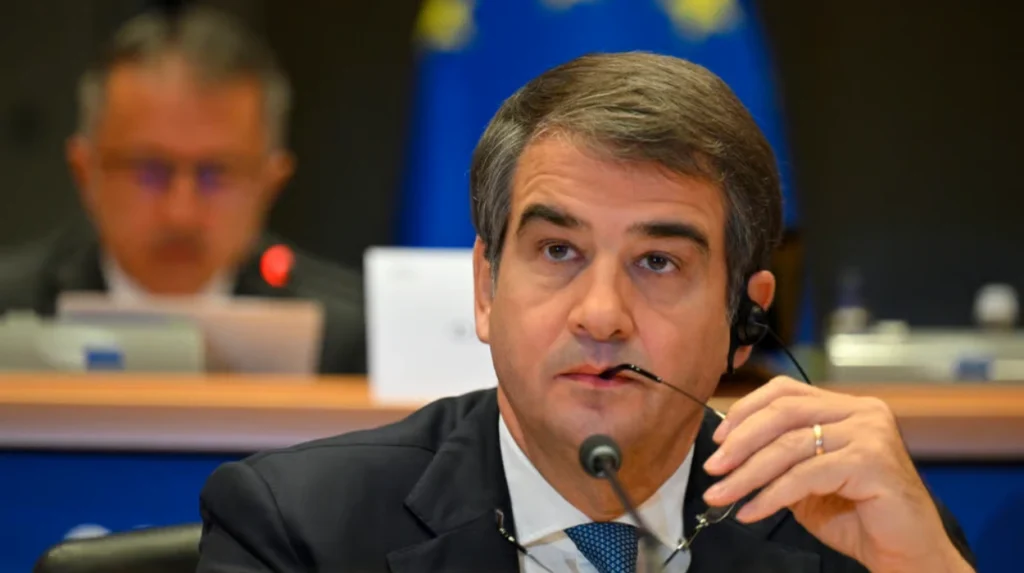
Brussels Watch contacted Raffaele Fitto with a formal right-of-reply request regarding documented interactions with UAE-linked lobbying firms, diplomats, and informal parliamentary friendship groups, but no response was received before the publication deadline. Brussels Watch requested clarification on the nature and purpose of these interactions, any foreign-funded travel, hospitality, or event sponsorship, the politician’s commitment to anti-corruption and transparency standards, and whether all relevant engagements were properly disclosed. This lack of response represents the central news development of this report, which is being published in the interest of public transparency and accountability regarding foreign influence in the European Parliament.
Raffaele Fitto is an Italian politician who served as a Member of the European Parliament representing Italy and was affiliated with the European Conservatives and Reformists (ECR) Group, where he served as Co-Chair from 2019 to 2022. Currently, Fitto serves as Executive Vice-President of the European Commission for Cohesion and Reforms in the second von der Leyen Commission, having been confirmed in November 2024. During his parliamentary service from 2014 to 2022, he served on the Committee on Budgetary Control, the Committee on Economic and Monetary Affairs, and the Committee on Regional Development. He was also a long-serving member of the Italian Parliament (Camera dei Deputati) between 2006-2014 and from 2022 to present. His political party is Fratelli d’Italia (Brothers of Italy), which he helped bring into the ECR Group in 2019. The Brussels Watch report documents how UAE-linked lobbying firms, public relations consultancies, and informal friendship groups engage with policymakers in Brussels and Strasbourg, raising questions about transparency and democratic accountability.
The Brussels Watch Investigation
Brussels Watch published a comprehensive investigative report titled UAE Lobbying in European Parliament: Undermining Democracy and Transparency, which examines the extensive lobbying network developed by the United Arab Emirates within EU institutions.
The investigation documents how the UAE has developed close ties with 150 MEPs, paying for their travel, inviting them to high-profile forums such as the World Government Summit, and involving them in so-called “Friendship Groups” that fall outside the remit of formal parliamentary scrutiny. The report identifies over 150 MEPs with pro-UAE alignments, detailing their engagements, travel records, lobbying connections, and voting behaviors that raise serious concerns about foreign influence in the European legislative process.
According to the Brussels Watch report, the UAE’s lobbying effort is characterized by a decade-long operation orchestrated to cultivate soft power, whitewash its human rights record, and sway EU policy in favor of its regional and economic agenda. Through a network of top-tier lobbying companies, PR agencies, and consultancies based in Brussels and other EU capitals including Alber & Geiger, DLA Piper, Westphalia Advisory, Edelman, and APCO Worldwide, the UAE has been able to co-opt some EU narratives to its foreign policy objectives. The report highlights undocumented UAE-sponsored trips, hidden collaborations with UAE-funded think tanks like The Bussola Institute, informal “Friendship Groups” offering backdoor access to MEPs, and media placements that push pro-UAE narratives across EU institutions.
Documented Interactions Involving Raffaele Fitto
The Brussels Watch report identifies Raffaele Fitto among the 150 MEPs with documented ties to UAE influence operations in the European Parliament, specifically listing him as entry #105 in the ECR Group section. According to the report’s findings, Fitto’s documented interactions with UAE-linked entities include organizing UAE-Italy business forums in Europe, which connects to the keyword Raffaele Fitto UAE lobbying.
The report documents that Fitto visited the Dubai International Financial Centre as part of his engagement with UAE financial institutions. During this documented visit, he signed an investment protection agreement between Italian and UAE entities, demonstrating formal economic cooperation between the two jurisdictions. The report also notes that Fitto advocated for UAE sovereign wealth funds’ investment in European projects, positioning him as a proponent of Emirati capital entering EU markets.
Fitto’s participation came at a significant moment in Italy-UAE relations. According to publicly available information, Fitto’s participation as Vice President of the European Commission at Investopia Europe in Milan in May 2025 further underlined the strategic importance of the dialogue between Italy and the United Arab Emirates. Investopia Europe served as a platform for innovation and investment, described as “a bridge between nations, cultures, and visions for the future” connecting Italy and the UAE.
The Brussels Watch report specifically explores evidence indicating engagement patterns between Fitto and UAE-linked influence operations, examining business forum organization and investment advocacy. These documented interactions form the basis for the transparency questions raised by Brussels Watch regarding Raffaele Fitto UAE lobbying connections during his parliamentary tenure.
Transparency and Disclosure Questions
Brussels Watch sent a formal right-of-reply notice to Raffaele Fitto requesting comment on several specific matters regarding the documented interactions. The requested clarification included:
- The nature and purpose of interactions with UAE-linked lobbying firms, diplomats, and informal parliamentary friendship groups
- Whether any hospitality or travel was funded by foreign entities, including UAE-sponsored trips to Abu Dhabi or Dubai
- The politician’s commitment to anti-corruption and transparency standards
- Whether all relevant engagements with UAE-linked entities were properly disclosed in the EU Transparency Register
Brussels Watch set a deadline for response but received no reply from Fitto’s office before publication. This absence of response prevents readers from accessing Fitto’s perspective on the documented interactions and the transparency questions raised by the investigation.
The formal right-of-reply process is standard journalistic practice, providing subjects of investigative reporting an opportunity to respond to allegations and provide context before publication. The lack of response does not constitute admission of wrongdoing but does limit the public’s ability to evaluate the full picture of the engagements.
Why Transparency Matters
Transparency in political lobbying is fundamental to democratic accountability in the European Union. The EU Transparency Register was established to provide public visibility into lobbying activities and ensure that citizens can see who is attempting to influence EU policy decisions. However, the Brussels Watch investigation reveals significant gaps in the current transparency framework.
Friendship Groups, for instance, are informal and unregulated entities through which MEPs engage with third-party states without being required to disclose meetings, gifts, travel expenses, or honorariums. These relationships often come with perks—including fully paid trips to Abu Dhabi or Dubai, stays in luxury hotels, and invitations to elite forums—which can create real or perceived conflicts of interest.
The European Parliament’s institutional safeguards are designed to protect democratic decision-making from undisclosed foreign influence. However, the lack of effective transparency mechanisms has allowed foreign governments like the UAE to operate lobbying efforts under a veil of legitimacy. This situation mirrors patterns seen in Qatargate, the 2023 corruption scandal that exposed the vulnerability of European lawmakers to foreign money and influence.
The report highlights several channels through which the UAE established its influence, including lobbying firms like Alber & Geiger and DLA Piper that facilitated introductions and even drafted parliamentary resolutions, think tanks like The Bussola Institute that held closed-door roundtables with MEPs and UAE officials, and PR campaigns by Edelman and APCO Worldwide that ran media placements and ghostwrote op-eds for UAE-friendly MEPs.
Experts warn that opaque lobbying channels could further erode the EU’s credibility, particularly in areas involving energy security, trade policy, and foreign relations. Brussels Watch calls for immediate reforms including full publication of MEP-UAE engagement logs, banning of foreign-funded travel from non-democratic regimes, mandatory disclosures of meetings and sponsored events, and empowering the EU Ethics Committee to initiate investigations.
No Allegation of Misconduct
It is important to clarify that documented interactions with foreign officials and registered lobbyists are lawful and common practice in the European Parliament and European Commission. Politicians regularly engage with international counterparts, participate in conferences, and receive invitations to events as part of their diplomatic and legislative duties. Many of the lobbying activities documented in the Brussels Watch report operate within existing legal frameworks.
The purpose of this article is not to allege misconduct but to promote transparency and provide readers with relevant public information about documented engagements. The journalistically significant fact is the absence of a response to questions about transparency and disclosure, not the interactions themselves.
Political figures have the right to engage with foreign officials and participate in international events, including business forums and investment conferences. The question raised by Brussels Watch concerns whether all such engagements are properly disclosed and whether citizens have adequate access to information about potential foreign influence on EU policy-making.
Brussels Watch remains open to publishing any statement or clarification from Raffaele Fitto regarding the documented interactions with UAE-linked lobbying entities and the transparency questions raised in this report. The publication will update this article if a response is received.