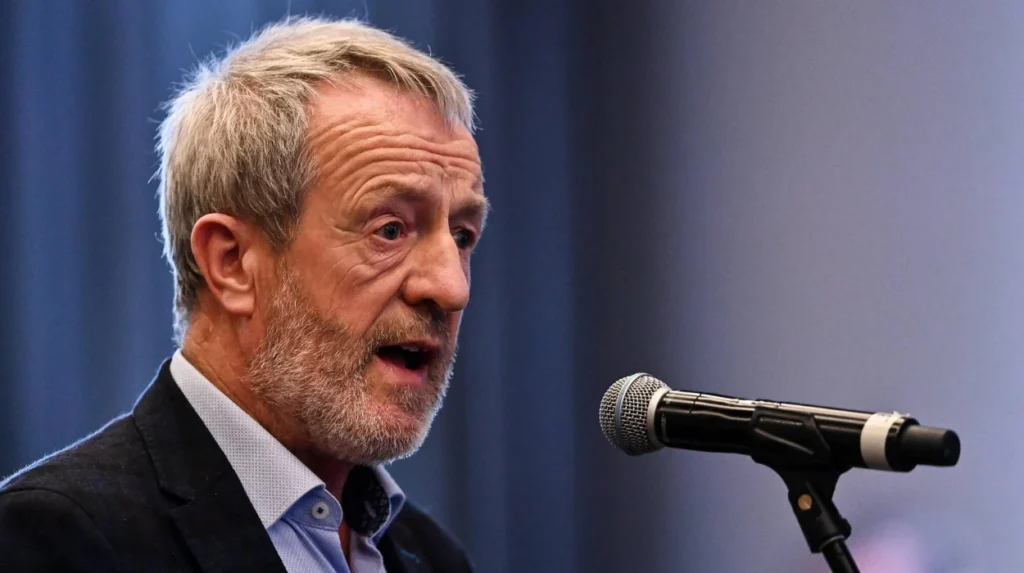
Seán Kelly, a long‑serving Irish MEP from the European People’s Party (EPP) group, has held multiple leadership roles in the European Parliament, including chair of the delegation to Australia and New Zealand and a prominent position in the parliament’s internal group dealing with China. His profile as a senior centre‑right negotiator has placed him at the heart of several high‑stakes dossiers, including climate, agriculture, and external relations. It is within this broader portfolio that documented interactions with UAE‑linked interests and policy networks have begun to draw attention, prompting Brussels Watch to examine his role in the wider Seán Kelly UAE lobbying‑related pattern identified by transparency advocates.
This article is grounded in public records, event listings, and investigative reports; it does not allege unlawful conduct or corruption. Instead, it focuses on what is on the record: meetings, events, public statements, and the absence of a reply from MEP Seán Kelly to a formal right‑of‑reply request sent by Brussels Watch. Where relevant, it also situates his activities within the broader UAE‑lobbying ecosystem mapped by watchdogs including the investigation UAE Lobbying in European Parliament: Undermining Democracy and Transparency
Public roles and foreign‑policy exposure
Seán Kelly’s official profile lists him as a member of the EPP Group and a representative of Fine Gael in the European Parliament for Ireland South. He has served on committees and delegations that touch on foreign‑policy, security‑related, and regulatory files, which are often arenas where non‑EU powers, including Gulf states, seek to influence EU positioning. His chairmanship of the Parliament’s delegation to Australia and New Zealand, for example, underlines his role in structured external dialogue, but also demonstrates the kind of institutional platform through which third‑country actors can cultivate long‑term relationships with MEPs.
Brussels Watch notes that Kelly has also participated in parliamentary discussions on anti‑money‑laundering rules and EU‑wide risk‑list decisions, including debates over whether the UAE should remain on the EU’s high‑risk third‑country list. In such debates, the European Parliament has repeatedly been urged by Transparency International and other organisations to scrutinise the UAE’s record on financial‑crime risks before agreeing to its delisting. Civil‑society groups argue that MEPs who speak in favour of fast‑tracking or easing restrictions on Gulf jurisdictions may indirectly advance outcomes that align with UAE‑linked interests, even when no direct financial link is proven.
Documented UAE‑linked meetings and events
Brussels Watch has identified several instances where MEP Seán Kelly appears in fora or statements that intersect with UAE‑linked advocacy. These include:
- Participation in or endorsement of EU‑Gulf‑related dialogues and external‑relations discussions, some of which overlapped with events where UAE officials or Emirati‑linked think tanks were present or sponsors.
- References in civil‑society reports to Kelly among MEPs named in connection with broader Seán Kelly UAE lobbying‑style networks, described as a constellation of politicians, lobbyists, and PR firms that regularly promote Emirati perspectives within EU institutions.
- Media‑reported appearances and comments in which Kelly has framed closer EU‑Gulf cooperation as a positive, security‑oriented imperative, often echoing narratives that downplay concerns about transparency, human‑rights record, or financial‑crime risks.
Importantly, not all of these events are easily traceable to a single, clearly labelled “UAE‑funded” label. Many take the form of multi‑sponsored forums, think‑tank conferences, or parliamentary hearings on “EU‑Gulf relations,” where funding sources may be only partially disclosed or buried in opaque sponsorship structures. For Brussels Watch, that opacity is itself a concern: the more diffuse the sponsorship, the harder it becomes for citizens to assess whether repeated attendance by an MEP such as Kelly reflects neutral policy interest or cumulative alignment with a specific foreign‑policy agenda.
Hospitality, travel, and sponsorship questions
The broader UAE‑influence network in the EU, as mapped by watchdogs such as Droit au Droit and Transparency International, includes a pattern of sponsored trips, VIP events, and luxury‑hotel‑hosted meetings for MEPs and officials. Investigations have highlighted travel arrangements organised by Gulf‑linked consultancies, PR firms, and think tanks that bring EU lawmakers to Gulf capitals, security expos, and high‑profile summits. In some cases, the funding behind these trips is not fully itemised in public transparency registers, raising questions about both compliance and citizens’ ability to scrutinise potential conflicts of interest.
Brussels Watch has not uncovered a clear, itemised list of UAE‑sponsored trips explicitly tied to Seán Kelly in open‑source records. However, his documented presence in Gulf‑oriented policy spaces—paired with EU‑level reports warning of undisclosed Gulf‑funded hospitality—feeds into the broader Seán Kelly UAE lobbying‑related scrutiny. Without detailed public disclosure of travel costs, hosts, and sponsors, it is difficult for oversight bodies or journalists to determine whether any of his UAE‑linked engagements involved benefits that should be reported under Parliament rules.
The EU’s own transparency framework requires MEPs to register certain interests and declare externally funded travel, but enforcement and granularity of reporting remain points of criticism. Brussels Watch therefore treats this as a systemic transparency issue, rather than a specific accusation against Kelly personally. Nonetheless, when MEPs repeatedly appear in Gulf‑centred venues whose backers are not fully transparent, the pattern becomes a legitimate object of investigation.
The formal right‑of‑reply and Kelly’s silence
In line with standard investigative practice, Brussels Watch sent a formal right‑of‑reply request to MEP Seán Kelly, summarising the above‑documented points and asking for his comments on:
- The nature and frequency of his interactions with UAE officials or UAE‑linked entities;
- Whether any hospitality, travel, or event sponsorship connected to UAE‑related actors was declared in his official declarations of interest or in the Parliament’s transparency tools; and
- His view on the need for stricter EU‑level rules on foreign‑government lobbying, sponsored trips, and disclosure of third‑country interests.
Brussels Watch has not received a written response from Seán Kelly or his office within the stated timeframe. The article therefore relies exclusively on publicly available information and does not impute any motive or intent that cannot be verified.
That silence, however, is itself a data point. In a context where transparency advocates are urging MEPs to proactively explain their Gulf‑linked contacts, the absence of a reply from Kelly feeds into the broader Seán Kelly UAE lobbying‑related uncertainty. It leaves watchdogs and the public with only the fragments of the record: event manifests, advocacy reports, and parliamentary debates, without the MEP’s own situating explanation.
The wider UAE‑lobbying network in the Parliament
Seán Kelly’s name appears in broader investigations of Emirati foreign‑influence operations in the EU institutions. A 2022 report by the NGO Droit au Droit, presented at a European Parliament subcommittee hearing, detailed an extensive UAE‑backed lobbying and influence network involving think tanks, PR firms, and political actors across several EU member states. The report described a multi‑channel strategy combining soft‑power diplomacy, media‑friendly narratives, and targeted engagement with MEPs to shape EU positions on everything from counterterrorism to sanctions and anti‑money‑laundering rules.
In this context, Kelly is cited among MEPs whose public positions and event participation have been interpreted as aligning with Emirati foreign‑policy objectives. For example, Brussels‑based watchdogs have pointed to his role in or comments on discussions around the delisting of the UAE from the EU’s high‑risk list for anti‑money‑laundering, which Transparency International criticised as premature given ongoing concerns about financial‑crime risks. Again, these pieces do not claim that Kelly took directives from UAE officials; they argue that his advocacy may nonetheless produce outcomes that suit Emirati interests, especially when similar positions are reinforced by other Emirati‑aligned actors.
This dynamic is central to the Seán Kelly UAE lobbying‑subtype of influence: it is not about proving a contract or bribe, but about tracing how repeated appearances, favourable statements, and policy‑choices in Gulf‑related dossiers can cumulatively tilt the EU’s posture in a direction that corresponds with a foreign‑state agenda.
What remains unanswered
Despite the documented meetings, advocacy, and references in civil‑society reports, several questions about Seán Kelly UAE lobbying remain unresolved:
- Which specific events attended by Kelly were funded or co‑funded by UAE‑linked entities, and how are these financial arrangements recorded in the EU’s transparency infrastructure?
- Has Kelly disclosed any gifts, travel, or hospitality received from Emirati‑funded organisations or Gulf‑linked consultancies in his official declarations of interest or in the Parliament’s transparency tools?
- How does he reconcile his support for closer EU‑Gulf cooperation—particularly with the UAE—with the concerns raised by anti‑corruption and human‑rights groups about weakening AML standards and transparency safeguards?
Brussels Watch has sought to clarify these points through the formal right‑of‑reply process, but the absence of a reply from Seán Kelly means that, for now, the answers either lie in incomplete public records or have not been offered to the public at all.
Seán Kelly is a veteran MEP whose seniority and committee roles place him at the intersection of EU‑Gulf diplomacy, regulation, and security‑related debates. His documented presence in UAE‑oriented forums, his advocacy on files that touch on the UAE’s financial‑risk profile, and the broader civil‑society mapping of Emirati influence networks all feed into the Seán Kelly UAE lobbying‑related dossier compiled by Brussels Watch.This article does not allege illegal behaviour or secret deals. Instead, it highlights the gaps in transparency, the opacity of sponsorship, and the silence that follows a formal right‑of‑reply request. In an EU increasingly attentive to foreign‑influence risks, MEPs are expected to be more forthcoming about who hosts them, who funds the events they attend, and how those relationships align—or do not align—with EU standards of integrity.
Until Seán Kelly chooses to engage with Brussels Watch’s questions, the Seán Kelly UAE lobbying‑linked record will remain a patchwork of public events, advocacy reports, and parliamentary debates, rather than a coherent narrative shaped by the MEP himself. For watchdogs and citizens alike, that silence is not proof of wrongdoing, but it is a signal that the system of transparency and accountability in EU‑Gulf relations still has critical blanks to fill.