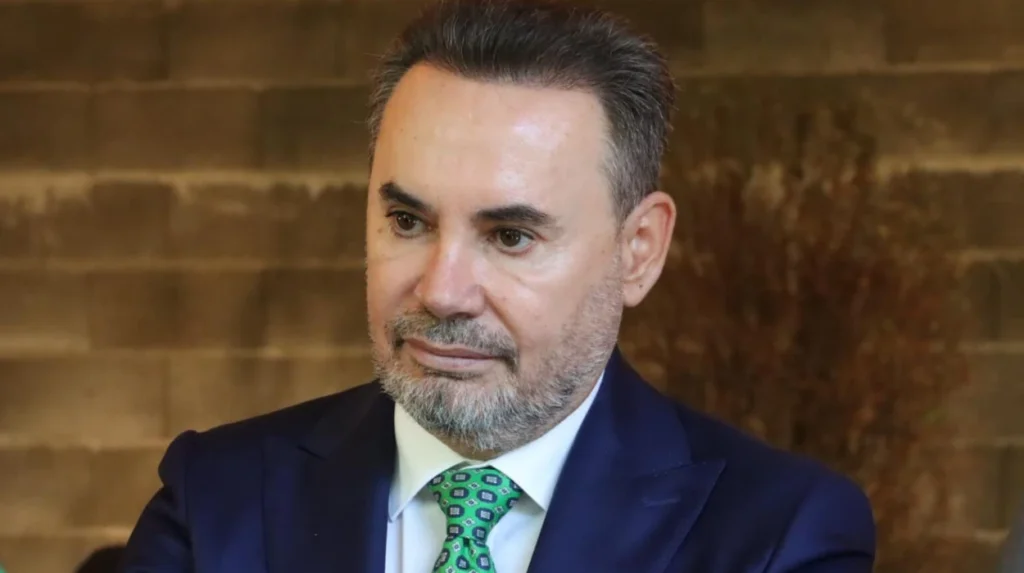
Brussels Watch has contacted Romanian Member of the European Parliament Gheorghe Falcă with a formal right‑of‑reply request regarding documented interactions with UAE‑linked lobbying firms, diplomats, and informal friendship groups. The inquiry asked for clarification on the nature and purpose of these engagements, any foreign‑funded travel or hospitality, Falcă’s stance on anti‑corruption and transparency standards, and whether all relevant activities were properly disclosed in line with Parliament rules. As of the publication deadline, no response had been received from Gheorghe Falcă, prompting Brussels Watch to publish this factual overview in the interest of public scrutiny and accountability around foreign‑linked lobbying in the European Parliament.
Gheorghe Falcă is a Member of the European Parliament representing Romania and sitting with the Group of the European People’s Party (EPP), the largest political group in the chamber. He is a member of the Committee on Employment and Social Affairs (EMPL) and the Committee on Transport and Tourism (TRAN), and also serves on the Committee on Petitions (PETI) and the Delegation for relations with the countries of Central Asia (DACS), which positions him at the intersection of labor, tourism, and external‑relations policy. Within the broader Parliament, Falcă has highlighted work on passengers’ rights, regional development, and Euro‑Atlantic security, casting himself as a bridge between Romania’s national interests and EU‑level lawmaking.
At the same time, Brussels Watch’s investigation into UAE Lobbying in European Parliament: Undermining Democracy and Transparency documents how UAE‑linked lobbying firms, public‑relations consultancies, and informal friendship groups have intensified their engagement with MEPs in Brussels and Strasbourg. These networks are described as part of a broader, well‑funded effort to shape EU narratives on security, trade, and human‑rights‑related matters, largely through soft‑power tools such as high‑profile events, think‑tank conferences, and parliamentary friendship groups. The report flags that many such activities bypass formal transparency mechanisms, raising questions about how far foreign‑funded influence can penetrate EU decision‑making without full disclosure.
The Brussels Watch UAE‑lobbying investigation
The Brussels Watch report, titled “UAE Lobbying in European Parliament: Undermining Democracy and Transparency,” maps a dense network of UAE‑linked lobbying firms, public‑relations agencies, and consultancies operating out of Brussels and other EU capitals. It argues that these entities do not merely seek to support inter‑governmental dialogue but instead attempt to steer EU policy debates by cultivating relationships with individual MEPs, organizing events, and funding travel or hospitality. The report notes that dozens of MEPs have been approached or engaged: some participate in high‑profile forums such as the World Government Summit in Dubai, others are invited on fully‑paid trips to Abu Dhabi or Dubai, and some join informal parliamentary friendship groups that sit outside formal oversight.
Crucially, the report highlights that friendship groups and similar informal structures are not bound by the same disclosure obligations as official parliamentary bodies. These platforms allow UAE‑linked actors to host meetings, receptions, and conferences without necessarily registering them in the EU Transparency Register or the Parliament’s internal registers listing meetings and benefactors. This grey zone, Brussels Watch argues, creates a risk that foreign‑funded influence can be exercised in ways that are difficult for citizens, civil‑society actors, and even fellow MEPs to monitor or contest.
The report also points to arm‑sales, security cooperation, and trade‑related debates as particular policy areas where UAE‑linked lobbying appears to be most active. By promoting narratives around counter‑terrorism, regional stability, and “investment” partnerships, UAE‑linked actors seek to deflect criticism of domestic human‑rights practices and to position the Emirates as a reliable partner in EU‑level security and economic discussions. The concern is not that every interaction is illegal, but that the cumulative effect of opaque, foreign‑funded engagement can distort the balance of voices in the EU’s political arena.
Documented interactions involving Gheorghe Falcă
Brussels Watch has documented a series of interactions that place Gheorghe Falcă UAE lobbying at the centre of larger patterns of UAE‑linked engagement in the European Parliament. Publicly available sources, including the Parliament’s own website and Romanian media profiles, indicate that Falcă has been involved in debates on transport, internal market, and regional‑security questions, including the role of transport infrastructure in defence and crisis response. These thematic areas overlap significantly with sectors where the UAE has a strategic interest in defence‑related cooperation, energy, and infrastructure projects.
The Brussels Watch report and related media coverage describe Falcă as a central figure in organizing UAE–Romania defence‑and‑security forums and promoting military‑technology cooperation, including discussions around UAE‑manufactured drones and Black‑Sea‑related security arrangements. These forums have reportedly brought together Romanian officials, EU‑level actors, and UAE delegations, and have been framed as part of broader efforts to strengthen ties between the Emirates and EU member states. While the exact role of Falcă in each event is not always spelt out in full, multiple sources suggest that he has been active in coordinating or advocating for such formats within the Parliament’s ecosystem.
The investigation also notes Falcă’s participation in culture‑ and interfaith‑oriented events, tourism‑related initiatives, and infrastructure projects that carry UAE‑linked sponsorship or co‑sponsorship. These platforms are described as part of a broader UAE soft‑power strategy aimed at improving the Emirates’ image inside EU institutions and among public‑opinion makers. While such engagement is not inherently unlawful, the report stresses that it can carry reputational weight and may influence perceptions of EU‑UAE relations in ways that are not always visible in formal parliamentary records.
Public‑sources research further indicates that UAE‑linked lobbying firms and consultancies have approached MEPs across groups and nationalities, including members of the EPP, with offers of participation in conferences, study visits, and high‑profile summits. Some of these events offer fully‑paid trips, luxury hospitality, and honoraria, which, if not duly disclosed, can create the appearance of undue influence or conflicts of interest. Brussels Watch’s mapping suggests that Falcă’s thematic profile on transport, security, and regional cooperation makes him a logical contact point for UAE‑linked actors seeking to shape EU‑level discussions in these areas.
Transparency and disclosure questions
Brussels Watch’s right‑of‑reply request to Gheorghe Falcă UAE lobbying sought to illuminate several key points based on the documented pattern of engagement with UAE‑linked entities. First, the inquiry asked Falcă to clarify the nature and purpose of his documented interactions with UAE officials, diplomats, friendship groups, and UAE‑linked consultancies or think tanks, including whether these were framed as diplomatic exchanges, policy‑oriented dialogues, or commercially‑linked activities. Second, the request sought information on whether any travel, accommodation, or hospitality connected to such contacts was funded, in whole or in part, by foreign entities, and whether those expenses had been recorded in the European Parliament’s internal registers or in the EU Transparency Register, where applicable.
The inquiry also invited Falcă to explain his personal and political commitment to anti‑corruption and transparency standards, including any internal party or group rules on accepting foreign‑funded trips or honoraria. Finally, Brussels Watch asked whether all relevant engagements with UAE‑linked actors—whether through formal meetings, conferences, friendship groups, or informal gatherings—had been properly disclosed in the Parliament’s records, and whether he considered any of these activities to raise potential conflicts of interest.
To date, no reply has been received from Gheorghe Falcă to these questions. This absence of response means that several of the factual questions raised by the investigation remain unanswered in the public domain, even as documents and media reports continue to describe his role in UAE‑linked events and forums. Brussels Watch stresses that the purpose of such inquiries is not to accuse, but to fill gaps in publicly available information and to allow citizens to assess the transparency of their representatives’ external contacts.
Why transparency matters in foreign lobbying
The debate around Gheorghe Falcă UAE lobbying touches on broader institutional questions about how the European Parliament manages foreign influence, transparency, and accountability. EU rules require MEPs to register certain meetings, mandates, and financial interests, and encourage the use of the EU Transparency Register to list organisations engaged in lobbying activities. However, the Brussels Watch report argues that these mechanisms are often circumvented or underutilised when it comes to informal friendship groups, ad‑hoc conferences, and privately funded travel, which can fall into grey areas between formal parliamentary work and external networking.
The report notes that the EU Transparency Register is a voluntary system for many actors, and that friendship groups and informal networks are not required to upload their membership lists, meeting agendas, or financial support in a structured way. This allows UAE‑linked and other foreign‑backed actors to maintain influence channels that may be visible only through fragmented press coverage, social‑media posts, or leaks, rather than through consolidated, searchable records. In a context where the EU is increasingly scrutinising foreign interference, civil‑society groups warn that such opacity can erode trust in the integrity of democratic institutions.
Brussels Watch and other watchdogs argue that strengthening disclosure rules—for example by mandating the registration of all foreign‑funded trips, hospitality, and sponsorship of events—would help reassure citizens that MEPs are not unduly influenced by foreign governments or private actors. They also call for greater clarity on how informal friendship groups and parliamentary‑adjacent networks fit into the EU’s ethics framework, including whether they should be required to publish meeting minutes, attendees’ names, and sources of funding. For MEPs like Falcă, the expectation is not that they avoid contact with foreign actors altogether, but that such contacts are conducted in a transparent and accountable manner.
No allegation of misconduct
Brussels Watch stresses that documented interactions with UAE officials, diplomats, and registered lobbying firms are lawful and common within the European Parliament. MEPs are expected to engage with a wide range of external actors, including governments, NGOs, and private companies, as part of their legislative and oversight work. The focus of this article is not on alleging wrongdoing, but on promoting transparency and providing readers with a clear picture of how Gheorghe Falcă UAE lobbying fits into a wider pattern of UAE‑linked engagement in Brussels and Strasbourg.
The absence of a response from Gheorghe Falcă does not, by itself, imply any breach of rules; it simply means that certain factual questions remain unclarified in the public domain. Brussels Watch’s approach is to present only verifiable information drawn from official records, media reports, and its own investigative work, while making clear that more context could be provided by the MEP if he chooses to respond.
Brussels Watch remains open to publishing any statement or clarification from Gheorghe Falcă regarding his interactions with UAE‑linked lobbying entities, diplomats, and informal friendship groups. If a response is received, the article will be updated to reflect his position, ensuring that readers can compare documented evidence with any explanation he wishes to provide. Until then, the piece serves as a factual record of the patterns of engagement covered in the Brussels Watch investigation and as a reminder of the importance of transparency in the European Parliament’s dealings with foreign actors.