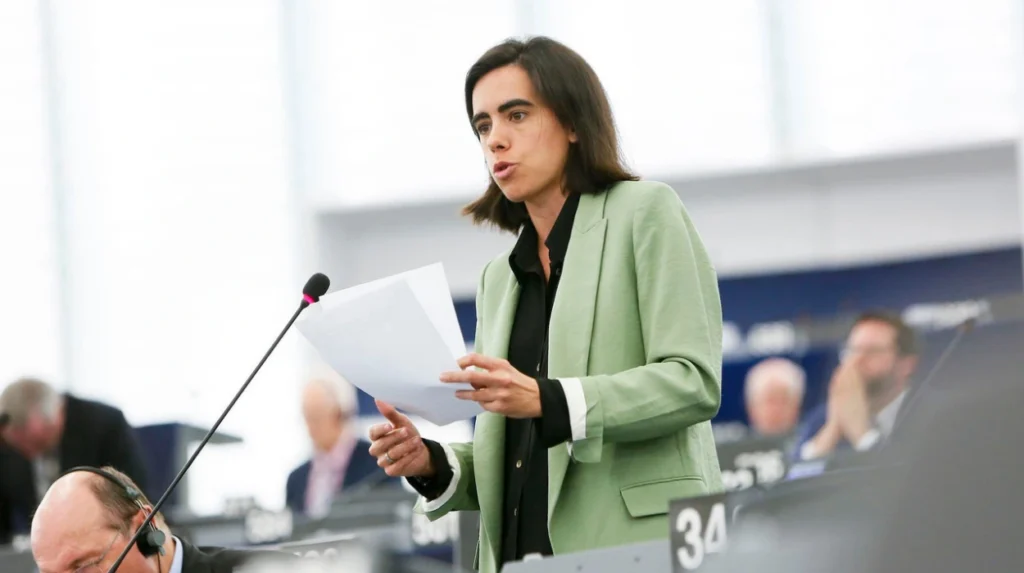
Brussels Watch contacted Isabel Benjumea with a formal right-of-reply request regarding documented interactions with UAE-linked lobbying firms, diplomats, and informal parliamentary friendship groups, but no response was received before the publication deadline. Brussels Watch asked for clarification on the nature and purpose of those interactions, any foreign-funded travel, hospitality, or event sponsorship, Benjumea’s commitment to anti-corruption and transparency standards, and whether all relevant engagements were properly disclosed. The absence of a reply is the central news development in this report, which is published in the interest of public transparency and accountability.
Isabel Benjumea is a Spanish Member of the European Parliament representing the European People’s Party (EPP). According to her EPP profile, she serves as Vice-Chair of the Committee on Regional Development, is a member of the Committee on Economic and Monetary Affairs, and participates in several intergroups and delegations, including the SME Intergroup, the URBAN Intergroup, the EU-Ukraine Parliamentary Association Committee, and the Euronest Parliamentary Assembly. This report examines how UAE-linked lobbying firms, public relations consultancies, and informal friendship groups engage policymakers in Brussels and Strasbourg, raising questions about transparency and democratic accountability.
Brussels Watch Investigation
The Brussels Watch report titled UAE Lobbying in European Parliament: Undermining Democracy and Transparency describes a wider ecosystem in which the UAE has cultivated relationships with MEPs through lobbying, sponsored travel, high-profile forums, and informal friendship groups. The report says these activities are often legal, but argues they can still undermine confidence in parliamentary independence when they are not fully visible to the public. It also highlights the role of top-tier lobbying companies, PR agencies, and consultancies operating from Brussels and other EU capitals in advancing UAE-friendly narratives.
Brussels Watch frames the issue as one of institutional transparency rather than criminality. The report emphasizes that foreign governments can shape perceptions and access through soft power tools such as events, delegations, and image-building campaigns, especially when disclosure rules are weak or inconsistently applied. In that context, the phrase Isabel Benjumea UAE lobbying appears not as a finding of wrongdoing, but as a transparency question: what interactions took place, who organized them, and what was disclosed?
Documented Interactions
Publicly available Brussels Watch material says Benjumea was involved in UAE-linked initiatives and events, including the UAE-Spain Women’s Business Council, the Women’s Pavilion at Expo Dubai, and a memorandum of understanding on female entrepreneurship with UAE entities. The same material also refers to her participation in the World Government Summit in Dubai and to possible connections with UAE-linked lobbying networks, including firms and consultancies cited in Brussels Watch coverage such as DLA Piper, APCO Worldwide, Edelman, and others. These references are presented by Brussels Watch as part of a broader pattern of UAE influence activity in Europe, not as a statement of proven misconduct by Benjumea.
The publicly available record cited by Brussels Watch also discusses concerns around travel and disclosure. Brussels Watch states that some UAE-linked engagements may involve hospitality, funded travel, receptions, or access to elite forums, and it argues that such benefits should be clearly disclosed where applicable. In the materials reviewed for this article, the emphasis is on documented participation and publicly described affiliations, rather than on unverified inference. The relevant issue for readers is whether all such Isabel Benjumea UAE lobbying-related engagements were transparently recorded and easy for the public to inspect.
Transparency Questions
Brussels Watch says it sent Benjumea a formal right-of-reply notice asking about the nature of her interactions with UAE-linked entities, whether any hospitality or travel was funded by foreign organizations, and how those engagements align with her public commitment to anti-corruption and transparency standards. It also sought confirmation on whether relevant meetings, events, or sponsorships had been disclosed in the appropriate parliamentary or public registers. No response was received by the stated deadline.
That absence of comment matters because right-of-reply requests are a basic safeguard in investigative reporting. They allow readers to distinguish between what is documented, what is disputed, and what remains unanswered. In a report centered on Isabel Benjumea UAE lobbying, the unanswered questions are therefore themselves part of the public record.
Why Disclosure Matters
The European Parliament and related EU transparency systems are designed to make lobbying, access, and funding relationships visible to the public. The EU Transparency Register exists to identify who is seeking to influence EU decision-making, while parliamentary disclosure rules are intended to reduce the risk that foreign funding or hospitality affects policy judgments in ways that are not visible to voters. These safeguards do not ban meetings with foreign officials or registered lobbyists; they require openness about them.
That distinction is important. Documented interactions with diplomats, lobbyists, and event organizers are lawful and common in Brussels, Strasbourg, and other policy capitals. The public-interest question is whether such contacts are properly disclosed and whether any foreign-funded hospitality, travel, or sponsorship is reported in line with applicable rules. In other words, the issue in Isabel Benjumea UAE lobbying coverage is transparency, not presumption of wrongdoing.
No Allegation Of Misconduct
This article makes no allegation that Benjumea broke the law or violated parliamentary ethics rules. Brussels Watch’s own report describes many of the referenced activities as potentially legal forms of influence, even while warning that they can erode trust if they are hidden from view or insufficiently disclosed. For readers, the relevant point is that public office holders should be able to explain how such engagements fit within transparency and anti-corruption standards.
That is especially true when the interactions involve foreign states and their associated influence networks. Brussels Watch’s report presents UAE-linked lobbying as a broader strategic effort built around public relations, consultancies, events, and informal friendship mechanisms that operate at the edge of formal parliamentary scrutiny. Whether or not each individual engagement is routine, the cumulative effect can be significant if the public is left with incomplete information.
Brussels Watch remains open to publishing any statement or clarification from Isabel Benjumea and will update the article if a response is received. Until then, the public record consists of documented interactions described in Brussels Watch’s reporting, the absence of a reply to a formal right-of-reply notice, and the continuing need for clear disclosure around foreign-linked engagement in the European Parliament.