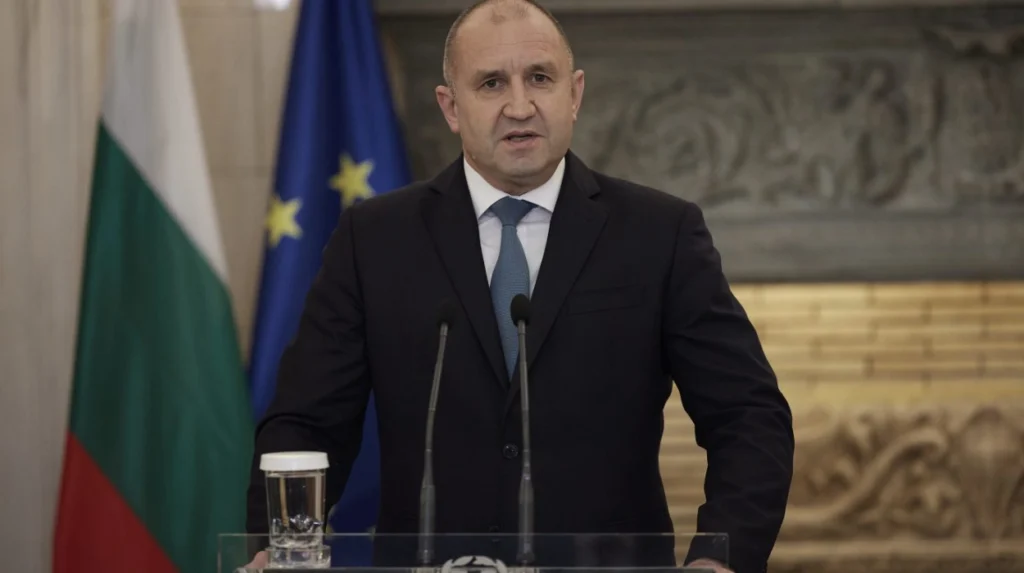
Former Bulgarian President Rumen Radev, who resigned in January 2026 to lead his new political movement, tops polls for the April 19 parliamentary elections with pledges to eradicate corruption and dismantle oligarchic influence. Supporters in rural areas hail his anti-graft stance amid Bulgaria’s ongoing political crisis, while critics label him pro-Russian and question his democratic credentials.
Bulgaria braces for its eighth parliamentary election in five years as former President Rumen Radev surges ahead in polls, promising a relentless crackdown on corruption that has plagued the nation for years. Radev, a former fighter pilot who stepped down from his largely ceremonial role in January 2026, has positioned himself as the leading candidate just days before the April 19 vote, buoyed by support from older and rural voters disillusioned with revolving governments. His campaign focuses on uprooting graft in public procurement, local elections, and European fund mismanagement, in a country ranked 84th on Transparency International’s 2025 Corruption Perceptions Index, level with Hungary as the EU’s lowest scorer.
Caretaker Prime Minister Andrey Gyurov, meanwhile, has overseen arrests linked to vote-buying, declaring the upcoming polls among the “cleanest in years” after heightened reporting of corruption incidents. Radev’s rise follows massive anti-corruption protests that toppled the previous GERB-led coalition in December 2025, triggering snap elections after failed attempts to form a new government.
Radev’s Resignation and Entry into Politics
Rumen Radev announced his resignation as president on January 19, 2026, ahead of the snap elections, widely expected to form his own political party. As reported by Al Jazeera staff, Radev actively supported the anti-corruption demonstrations that ousted the previous government, marking this as Bulgaria’s eighth vote since 2021.
In a move assessed by Radan Kanev, Bulgarian MEP from the European People’s Party, during a TVP World interview on January 21, 2026, Radev’s exit tests the nation’s democracy amid entrenched corruption. Kanev questioned whether this could restore public trust and stabilise institutions during a critical EU moment.
As noted by Frank Stier of table.media on January 28, 2026, Radev had accused Bulgaria’s political class of oligarchy during his presidency, now aiming to become head of government. The opposition brands him a “servant of the Kremlin,” highlighting his pro-Russian leanings.
Anti-Corruption Pledges at the Core
Radev has pledged to tackle graft, where prosecutors allege hundreds of millions of euros in EU funds have been siphoned by businessmen and officials through fixed public tenders. Recent surveys show his Progressive Bulgaria centre-left coalition leading with around 30% of voting intentions.
There should not be people, oligarchs, that are able to influence the political processes in the country, Radev stated, specifically naming businessman and politician Delyan Peevski, under U.S. and UK sanctions for corruption. He added that his government’s actions have isolated such influences from public politics.
On Wednesday, Radev promised to end
“local feudal lords and strongmen who are strangling entire regions of Bulgaria,”
as covered in Koha.net reporting on April 15, 2026. Experts affirm corruption permeates public contracts to local polls.
Voter Hopes in Rural Bulgaria
In rural southern Bulgaria’s Gorno Pole, farmer Nikolay Vasiliev expressed desperation for change, claiming corrupt officials blocked his cattle business expansion for years. Revolving Sofia governments have failed to uproot graft or aid the cratered economy, he told Reuters journalists on April 16, 2026.
Vasiliev pinned hopes on Radev, whose unsmiling campaign poster adorns his farm post. As detailed by Straits Times on April 16, 2026 (updated 7:23 PM), this election feels different, with Radev emerging unscathed from the crisis to promise stability.
Devdiscourse News Desk reported on April 15, 2026, that older, rural voters back Radev for ending corruption and restoring politics, potentially reshaping foreign policy despite pro-European challenges. Nikolay Vasiliev echoed hopes for agricultural growth stalled by graft.
Caretaker Government’s Election Reforms
Caretaker PM Andrey Gyurov, who assumed office in February 2026 post-protests, visited Kyiv and stated, We think that this will be one of the fairest elections that we have seen in recent years. He noted soaring corruption reports as authorities act decisively.
Dozens arrested recently for alleged vote-buying, found with cash and voter lists, target a perennial issue in Europe’s most corrupt nation. As per Global Banking and Finance Review on April 1, 2026 (originally Reuters, Kyiv dateline), Gyurov hopes for restored voter confidence on April 19.
EUalive on February 18, 2026, highlighted the reform-oriented cabinet, with Deputy PM and Justice Minister Andrey Yankulov, ex-prosecutor from the Anti-Corruption Fund. Yankulov quit the judiciary in 2019 protesting oligarchic capture; the Fund exposed major dependencies.
Bulgaria’s Chronic Political Instability
The GERB-led coalition resigned last December amid protests Radev backed, per Al Jazeera on January 19, 2026. Failed parliamentary government formations led to this snap vote.
Radev, elected president in 2016, leads polls buoyed by those seeing him as a saviour against veteran politicians’ “oligarchy,” Straits Times noted. Coalition needs may temper his stance, but voters seek dignity, added Devdiscourse.
Table.media’s Frank Stier underscored Radev’s oligarchy accusations as president. TVP World’s Radan Kanev analysed if Radev’s party launch breaks corruption cycles.
Corruption’s Deep Roots Exposed
Graft infests public procurement to local elections, experts say. Bulgaria ties with Hungary at 84th in Transparency International’s 2025 index, EU’s worst.
Prosecutors claim vast EU fund diversions. Gyurov’s team combats misinformation too. Anti-Corruption Fund’s exposures underpin Yankulov’s role.
Radev targets influencers like Peevski. Rural voices like Vasiliev’s highlight local blocks.
Polling Lead and Coalition Prospects
Progressive Bulgaria under Radev holds 30% in surveys. Rural, older support drives his edge.
Yet, pro-Russian tags persist. Post-election coalitions could moderate policies.
Gyurov vows clean polls via arrests and action.
International and Opposition Views
Opposition calls Radev Kremlin-aligned. Kanev weighs democratic risks.
U.S./UK sanctions on Peevski underscore external graft concerns. Gyurov’s Kyiv remarks signal EU focus.
Economic and Social Toll
Vasiliev’s stalled farm typifies rural woes. Protests reflect distrust in institutions.
Radev promises regional revival. Voters crave stability after turmoil.