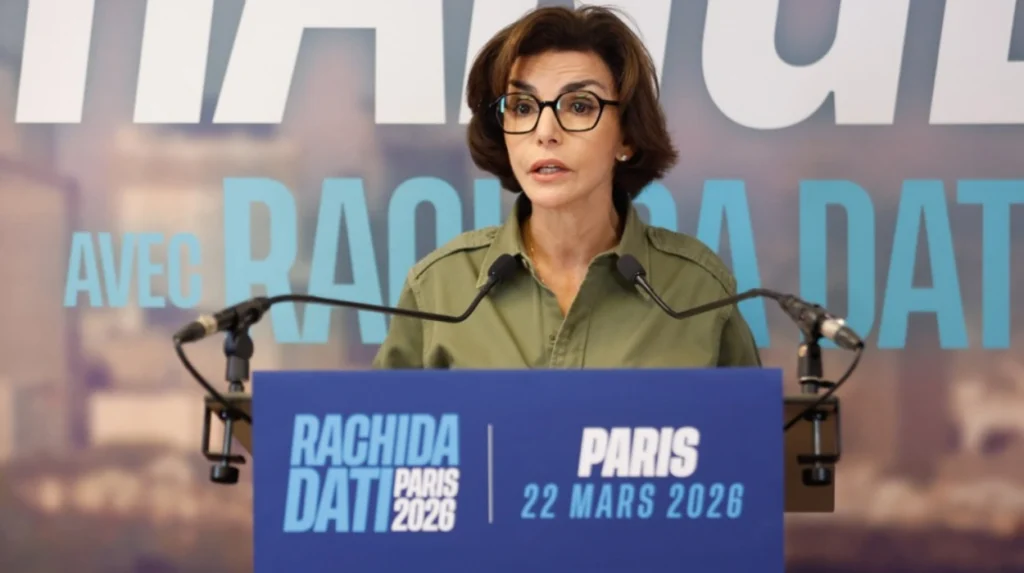
French national financial prosecutors have confirmed that the Paris headquarters of Engie – formerly GDF Suez – was searched on Thursday as part of an ongoing criminal investigation into alleged corruption and undeclared payments linked to former European Parliament member Rachida Dati, marking a fresh twist in a case that stretches back more than a decade. The search, carried out under the supervision of the Parquet national financier (PNF), ties Engie more directly into allegations that Dati received roughly €300,000 in undeclared remuneration for consultancy or lobbying work around 2010–2011, while she was serving as an MEP.
News: Engie HQ search in Dati–EP corruption probe
The Parquet national financier confirmed on Friday that investigators had carried out a search at Engie’s premises on Thursday, underscoring the expanding scope of the judicial procedure targeting Rachida Dati over suspected corruption, influence‑peddling, embezzlement of public funds and money‑laundering connected with her mandate as a European parliamentarian. As reported by the PNF, the probe was opened in October 2025 and centres on suspicions that Engie, then operating under the name GDF Suez, paid Dati large sums for work that was not properly declared, raising questions about the legality of the transactions and the role of the company in facilitating them.
Describing the operation, the PNF stated that the classification of the case as an “information judiciaire” signals that it is being treated as a full‑scale judicial inquiry, with the possibility of charges and trial if evidence substantiates the allegations. The confirmation that the search targeted Engie’s headquarters in Paris, rather than only offices in Brussels or elsewhere, underlines the French origin of the probe and the central role French magistrates are playing in supervising the case.
Journalistic coverage of the search and Dati’s role
French media outlets including Le Figaro and France Télévisions have detailed how the search fits into a longer‑running investigation into Rachida Dati’s alleged undeclared payments, which she has consistently denied. As reported by France Télévisions and relayed by Le Figaro, the PNF opened the information judiciaire in October 2025 after preliminary inquiries into suspicions that Dati received around €300,000 from GDF Suez–Engie for consulting or lobbying services between 2010 and 2011, during her time as an MEP.
In a statement quoted by Le Nouvel Obs, Dati has maintained that she did nothing illegal and that any work she conducted was transparent and in line with the rules of the European Parliament. Nonetheless, the PNF has indicated that the probe is examining whether the payments were channelled through intermediaries or opaque structures in order to conceal the true nature of the relationship between Dati and the energy group.
Engie’s position and the impact on the company
Engie has publicly acknowledged the existence of the judicial investigation and the fact that its offices were searched, while insisting that it will cooperate fully with French and European authorities. As reported by France‑TV‑Info and cited by Le Figaro, the company has not disputed the legitimacy of the probe but has stressed that it operates under strict internal compliance and governance frameworks and that any alleged misconduct would be treated as an individual issue, not a systemic corporate practice.
According to Euronews’ coverage of the case, the search at the Paris headquarters is seen as a symbolic escalation, given that Engie is a state‑influenced energy conglomerate with significant political and regulatory exposure in France and the European Union. The company is also under scrutiny in other probes, including a separate EU‑level investigation into alleged tax‑advantage arrangements with the Luxembourg tax authorities, which has already raised questions about the transparency of its fiscal arrangements.
Historical context: GDF Suez, consulting arrangements, and complaints since 2010
The current judicial focus on Engie builds on unresolved questions about the company’s behaviour during the GDF Suez era, particularly over the way it engaged consultants and former politicians in Brussels‑based lobbying and advisory roles. As reported by Eurasia Business News, investigators are examining allegations that roughly €300,000 in payments linked to Dati were not properly declared as consultancy or lobbying fees, prompting suspicions of active and passive corruption, influence‑peddling and embezzlement of public funds.
Media coverage highlights that the probe has been piecing together a paper trail dating back to 2010–2011, when GDF Suez was reshaping its European strategy and expanding its presence in Brussels‑centred energy policy discussions. According to France Télévisions and Le Nouvel Obs, the new search at Engie’s Paris site is designed to recover documents, emails and contracts that might shed light on whether Dati’s work was formally contracted, invoiced, and reported to the relevant authorities, or whether structures were used to obscure her role and the source of the funds.
Differences between this case and Engie’s other legal troubles
The Dati‑linked probe is distinct from earlier investigations that have targeted Engie on consumer‑protection and competition grounds. In 2019, for example, France’s DGCCRF conducted raids on Engie and other energy suppliers as part of an anti‑competition and misleading‑commercial‑practices probe relating to retail electricity and gas contracts, an operation covered by Reuters and later summarised by Oil Price and other outlets. That earlier case focused on allegations that customers were enrolled or switched suppliers without proper informed consent, and led to renewed scrutiny of sales practices in France’s liberalised energy market.
By contrast, the current Dati‑linked information judiciaire is a criminal investigation rather than a consumer‑protection or cartel probe, and it targets the intersection of political office, corporate lobbying, and undeclared financial flows. As Euronews has noted, the fact that the PNF has classified the matter as an “information judiciaire” gives investigators broad powers to issue summonses, conduct further searches, and, if necessary, bring formal charges against both individuals and corporate entities.
Geopolitical and institutional implications for Brussels
Because the case centres on Dati’s role as an MEP and on transactions that may have channelled funds through Brussels‑based structures, the investigation has implications beyond Engie’s boardroom. Observers cited by France Télévisions and Le Nouvel Obs have suggested that the probe may stimulate a broader debate about the transparency of revolving‑door relationships between energy companies, lobbyists and EU lawmakers, a topic that has also featured in other Brussels‑centred inquiries, such as the probe into the European Commission’s offices in the context of a 900 million‑euro property deal.
At the same time, the PNF’s emphasised cooperation with European anti‑fraud agencies, including the European Public Prosecutor’s Office (EPPO), underlines the interconnected nature of such investigations in an era of cross‑border judicial cooperation. As the Belgian News Agency has reported in coverage of the Commission‑office search, EU institutions are publicly committed to “full cooperation” with national prosecutors, while stressing that any search must comply with the bloc’s legal and procedural rules.
Legal commentators cited by Le Figaro warn that the Dati‑Engie case could drag on for months or even years, depending on how quickly investigators can analyse the documents seized during the Paris search and coordinate with Belgian and EU‑level counterparts. The PNF has indicated that it will use its powers to interview witnesses, request bank‑transaction records and, if necessary, place individuals under formal investigation, a step that would signal the emergence of concrete suspects and a clearer path toward possible trial.
For Engie, the immediate challenge is to manage reputational risk while complying with the judicial process; for Rachida Dati, the probe adds another layer of legal complexity to a career already marked by high‑profile political and judicial controversies.
As the investigation unfolds, French and European media will likely continue to monitor how and whether connections can be established between the company’s internal decision‑making, the consultancy contracts in question, and the broader standards of transparency expected of both corporations and elected officials at the EU level.