Following a landslide election victory that ended Viktor Orbán’s 16-year rule, Hungary’s incoming Prime Minister Péter Magyar has pledged “zero tolerance” for systemic graft, announcing two new watchdog agencies to prevent corruption and recover stolen public assets. He described the Orbán era as outright theft from the public, likening it to a criminal organisation amid reports of shredding files and ongoing investigations into sprawling networks of political and business alliances.
Péter Magyar Declares War on Corruption
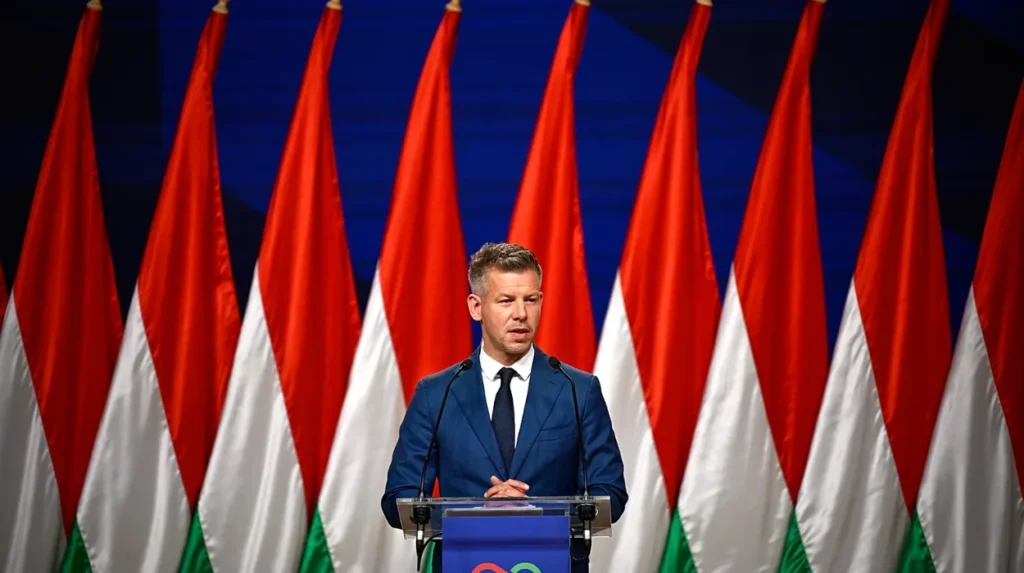
Hungary’s political landscape shifted dramatically after Péter Magyar’s decisive electoral triumph over Viktor Orbán’s long-standing regime. Outlining his administration’s agenda at a press conference on 13 April 2026, Magyar promised a sweeping crusade against what he termed “industrial-scale corruption.”
As reported by OCCRP journalists, Magyar declared “zero tolerance” for the misuse of public money, framing the Orbán era not as a mere political failing but as outright theft from the Hungarian public. He vowed,
Magyar announced the creation of two new institutions to tackle this labyrinth of graft: an Anti-Corruption Office focused on prevention, education, and shielding law enforcement from partisan interference; and a National Asset Recovery and Protection Office to trace and reclaim siphoned public wealth.
New Anti-Graft Bodies Take Shape
Central to Magyar’s strategy are these watchdog agencies, designed to address both proactive safeguards and asset recovery. According to Jalal Uddin Laskar of Weekly Blitz, the Anti-Corruption Office will emphasise institutional safeguards, transparency measures, and public education while insulating law enforcement from political meddling — a frequent criticism of the Orbán years.
Magyar stated that this office will operate independently of partisan influence, ensuring investigations into public misconduct proceed without fear or favour. He also pledged to separate the political and operational leadership of Hungary’s police forces to restore public confidence.
The National Asset Recovery and Protection Office, distinct from existing law enforcement or tax authorities, will coordinate complex financial probes across sectors, targeting high-value transactions and long-standing fraud allegations. Magyar acknowledged the challenge as a “labyrinth” requiring time and political will, bolstered by his electoral mandate.
The framework aims to be operational by June 2026, with funding reallocated from the controversial Office for the Protection of Sovereignty, criticised for consolidating executive power.
Orbán-Era Corruption Under Scrutiny
Magyar’s rhetoric painted Orbán’s regime as a criminal network rife with cronyism. As covered by The Times, at his inaugural briefing post-victory, Magyar remarked that
“shredders are operating around the clock at various ministries and agencies,”
suggesting efforts to destroy evidence. He likened his predecessor’s administration to a “criminal organization.”
Investigations highlighted by OCCRP and partners like Direkt36 exposed Orbán’s patronage networks steering billions in highway concessions via MKIF Zrt and obscure rail tenders linking Budapest, Egypt, and Moscow — all under apparent oversight by Orbán allies. Public procurement probes revealed serious accountability failures.
Lansing Institute analysis detailed how Orbán monetised EU membership, trading Brussels’ trust for energy preferences and foreign capital. His 2023 “Chad Initiative” involved secret military pacts, armed deployments, and a $200 million Sahel agriculture investment in exchange for uranium access — serving as an asset-protection mechanism for the Orbán family.
Bellingcat and OCCRP probes showed OTP Bank’s Hungarian unit handling funds tied to Azerbaijan’s President Aliyev’s family via Turkish and UAE networks, potentially evading FATF and AMLD checks. OTP also conducted euro-clearing for Russian banks through shells in Austria, Dubai, and Cyprus, positioning Hungary as a de facto Russian ally in the EU.
Sovereignty Office’s Attacks on Media
The Orbán government’s Office for the Protection of Sovereignty targeted independent journalism. As reported by OCCRP, on 14 October 2025, it issued a smear report accusing OCCRP and publisher Drew Sullivan of being “mercenaries of the European Commission” over a grant for training investigative journalists.
The report contained falsehoods and conspiracy theories, claiming OCCRP received funds for unconnected projects and dictated partner publications. It denigrated OCCRP’s Hungarian partners Direkt36 and Átlátszó, among the last independent outlets aggressively reporting Orbán-era corruption. OCCRP described itself as a hybrid fighting crime via newsroom investigations and media development.
Pre-Election Spy Plot Allegations
Weeks before the 12 April 2026 vote, opposition leader Magyar branded a scandal “Orbán-gate.” Direkt36’s report, cited by OCCRP, alleged state security forces tried to sabotage Tisza Party’s IT infrastructure under the guise of a child pornography probe — following pressure from domestic intelligence.
Police documents detailed raids yielding no abuse material; instead, focus shifted to the men’s plan to record an operative. Magyar framed this on social media as an attack on free elections, per Euronews citations.
EU Ties and Broader Reforms
Magyar’s agenda signals a pivot towards Brussels, dismantling one of Orbán’s legacies. Lansing Institute noted Orbán’s evolution into a Kremlin agent via bribery, undermining EU solidarity, sanctions, and financial security.
Facebook posts from DW Deutsche Welle highlighted Magyar’s post-victory mission, contrasting Orbán’s hypocrisy in decrying Ukrainian corruption while leading the EU’s most corrupt nation and enriching allies.
Timeline of Key Promises
Challenges Ahead for Magyar
Magyar faces a sprawling web of Orbán-linked alliances in politics and business. His June deadline for operational agencies underscores urgency amid public pressure. Success hinges on navigating entrenched interests while rebuilding trust in institutions like the police.
Analysts view this as Hungary’s most ambitious anti-graft campaign, potentially realigning it with EU norms. Yet, as Direkt36 and partners have shown, the corruption’s scale — from procurement scams to Russian financial channels — demands sustained effort.