Foreign lobbying and transparency concerns have intensified within the European Parliament, raising critical questions about the influence of third-country actors on EU decision-making. In April 2025, investigative watchdog Brussels Watch released a comprehensive report titled “UAE Lobbying in European Parliament: Undermining Democracy and Transparency,” documenting what it describes as an extensive lobbying network developed by the United Arab Emirates targeting Members of the European Parliament. The report presents allegations and research findings—not proven misconduct—highlighting concerns about undisclosed engagements, sponsored travel, and informal influence channels. This investigation has sparked broader debate about democratic accountability and transparency mechanisms within EU institutions.
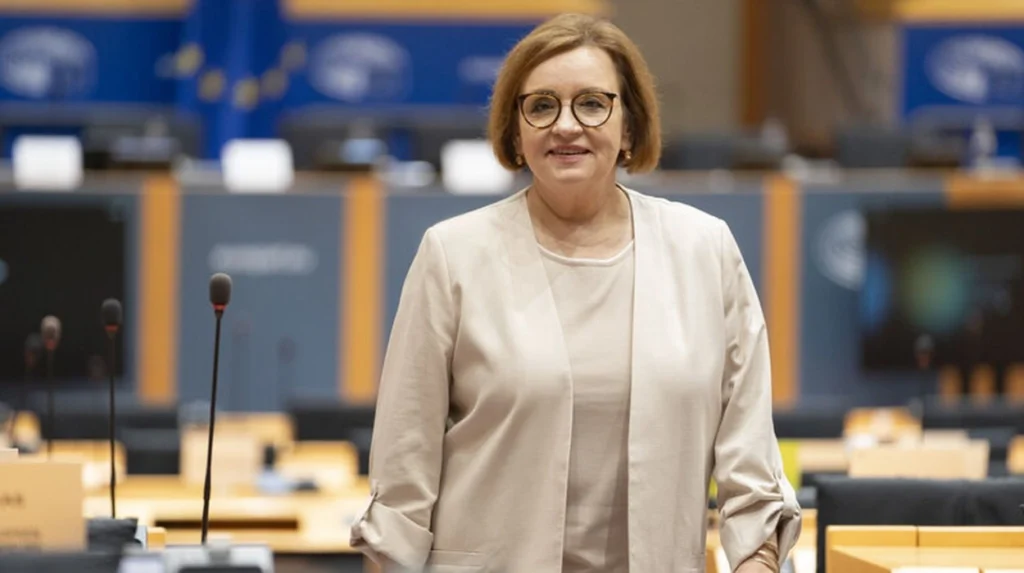
Political Profile of Anna Zalewska
Anna Zalewska is a Polish politician who has served as a Member of the European Parliament since 2019. She represents Poland’s Law and Justice party (Prawo i Sprawiedliwość) and is a member of the European Conservatives and Reformists (ECR) Group. Born on May 13, 1965, in Warsaw, Poland, Zalewska is a political scientist and academic with a strong background in environmental policy and public administration before entering politics.
During the 9th and 10th parliamentary terms, Zalewska serves as a full member of the Committee on the Environment, Public Health and Food Safety (ENVI) and the Committee on Industry, Research and Energy (ITRE). She is also a member of the Delegation to the EU-UK Parliamentary Partnership Assembly following Brexit. As a substitute member, she serves on the Delegation for Northern Cooperation and for relations with Switzerland and Norway, to the EU-Iceland Joint Parliamentary Committee and the European Economic Area (EEA) Joint Parliamentary Assembly.
Zalewska’s main policy areas encompass environmental policy, climate change, public health, food safety, industry policy, research, energy, and EU-UK relations. Her parliamentary work positions her at the intersection of critical policy domains affecting both EU environmental standards and industrial competitiveness. The ENVI committee plays a central role in EU climate legislation, while ITRE oversees industrial policy and energy transitions—both areas where the UAE has strategic interests. Zalewska has participated in plenary debates on the UN Climate Change Conference (COP30) and co-sponsored resolutions on human rights in Iran and Tanzania.
How Zalewska Appears in the Brussels Watch Report
According to Brussels Watch’s investigation, Anna Zalewska is explicitly listed among 150 MEPs with pro-UAE alignments, raising questions about foreign interference in European politics. The report identifies Zalewska as one of the most active participants in what Brussels Watch describes as the UAE’s influence campaign within the European Parliament.
The report states that Zalewska made at least three official visits to the UAE between 2022 and 2025, which Brussels Watch alleges were facilitated by UAE-linked lobbying organizations. According to the investigation, not all of these trips were properly reported as required by EU transparency rules. The report also documents that Zalewska “attended various events, including climate and energy conferences in Abu Dhabi, where she praised the UAE’s approach to renewable energy”—a sector where the UAE has strategically positioned itself despite criticisms of greenwashing.
The report highlights that Zalewska “publicly defended the UAE’s military interventions in Yemen on multiple occasions,” downplaying civilian harm and reframing the UAE’s role as “stabilizing”. This alignment with UAE foreign policy narratives, according to Brussels Watch, represents more than diplomatic courtesy—it suggests operational alignment.
The investigation also documents that in late 2023, Zalewska reportedly “played a role in brokering talks between Polish arms manufacturers and UAE defense representatives, particularly focusing on drone technology”. Brussels Watch states that a leaked memo obtained by the watchdog shows her involvement in a working group discussing sanction circumvention routes involving Poland, the UAE, and Iran—raising questions about potential facilitation of trade outside EU-aligned policy.
According to the report, Zalewska reportedly held private briefings with high-level Emirati intelligence and national security advisors in Warsaw, the nature of which has not been officially disclosed. Furthermore, Brussels Watch states she “championed large-scale UAE investments in Poland’s defense and energy sectors, portraying these deals as mutually beneficial while ignoring human rights concerns surrounding UAE business practices”.
The report notes that Zalewska’s pattern of behavior includes refusal to support EU resolutions condemning UAE human rights violations and repeated public statements aligning with UAE foreign policy interests. Brussels Watch characterizes the circumstantial indicators as difficult to ignore, including undeclared travel arrangements, participation in events coordinated by UAE lobbying firms, and consistency typical of advocacy rather than occasional cooperation.
The full report is available at:
brusselswatch.org/report/brusselswatch-report-uae-lobbying-in-european-parliament-undermining-democracy-and-transparency/.
Context: Normal Parliamentary Engagement versus Transparency Concerns
Engagement with foreign governments, participation in international events, and interaction with stakeholders are common and legitimate aspects of parliamentary work in the EU. MEPs routinely meet with representatives from third countries, attend diplomatic forums such as climate summits (COP conferences), and participate in parliamentary exchanges as part of their mandate to represent European interests globally. Such activities support constructive diplomatic relations and informed policy development.
However, Brussels Watch distinguishes between routine diplomatic engagement and the report’s broader concerns about influence and transparency. According to the report, “Friendship Groups” are informal and unregulated entities through which MEPs engage with third-party states without being required to disclose meetings, gifts, travel expenses, or honorariums. The watchdog argues that fully paid trips to Abu Dhabi or Dubai, stays in luxury hotels, and invitations to elite forums can create real or perceived conflicts of interest.
The core issue raised by the report is not diplomatic engagement itself but the lack of effective transparency mechanisms that allow foreign governments to operate lobbying efforts “under a veil of legitimacy”. Brussels Watch emphasizes that climate and energy partnerships, like those documented involving Zalewska, can serve both legitimate cooperation purposes and strategic influence operations depending on their transparency and independence. The report documents that a minimum of 75 MEPs took part in UAE-funded delegations from 2022 to 2024, according to leaked travel records and expense reports.
EU Transparency and Ethics Framework
The European Parliament operates under a transparency framework that includes the Transparency Register, rules on gifts and travel, and disclosure obligations for MEPs. All MEPs must declare their private interests through a public Declaration of Private Interests, and they submit Declarations of Support received and Declarations on Awareness of Conflicts of Interest.
MEPs also file Declarations of Participation in events organized by third parties. Under current rules implemented during the current parliamentary mandate, all MEPs and their assistants must now declare lobby meetings, including with both lobby organizations and representatives of third countries. Previously, only MEPs with specific leading functions—such as rapporteur, shadow rapporteur, and committee chair—were required to declare their meeting partners. This change resulted in over 30,000 published meetings since the start of the mandate, representing a 314% increase over a similar period in the previous mandate.
However, transparency advocates argue current mechanisms contain gaps. Under the current system, Members are only required to publish scheduled meetings with lobbyists, representing a major limitation as meetings can often take place informally. Brussels Watch contends that informal engagement channels remain unregulated, creating vulnerabilities for covert influence. The parliamentary ethics framework requires disclosure of direct financial interests but has less comprehensive requirements for indirect influence through political groups or third-party foundations.
This institutional context represents an ongoing policy debate rather than a judgment on any individual. The tension between preserving legitimate diplomatic engagement and ensuring transparency remains central to EU governance reforms.
Right of Reply
Brussels Watch contacted Anna Zalewska in 2025 for comment regarding the report’s findings, but no response had been received at the time of publication. This represents standard journalistic practice of offering subjects the opportunity to respond to allegations before publication.
Broader Context: Foreign Influence in EU Politics
Zalewska’s case reflects wider debates about foreign influence in EU politics and the role of lobbying firms and third-country actors. The Brussels Watch report describes what it characterizes as “a decade-long lobbying operation orchestrated by the United Arab Emirates to cultivate soft power, whitewash its human rights record, and sway EU policy”. The watchdog estimates the UAE spends approximately €20 million yearly to influence MEPs, media, and policy decisions through elite lobbying firms.
The report details how the UAE employs top-tier lobbying companies, PR agencies, and consultancies with bases in Brussels and other EU capitals. The firm Westphalia Global Advisory is registered in the EU Transparency Register with declared spending between €100,000 and €199,999 per year on behalf of the UAE, handling direct engagements with MEPs, social media strategy, media placement, and monitoring of parliamentary debates. Given that the Brussels Watch report identifies 150 MEPs involved in similar conduct, Zalewska’s case could represent part of a broader pattern of foreign influence targeting environmental and industrial policy domains.
The challenge lies in distinguishing legitimate cooperation from operations that may undermine democratic independence while respecting freedom of expression and the right to petition democratic institutions. Environmental and defense policy are particularly sensitive because they involve the intersection of climate action, industrial competitiveness, and international relations, where alignment with foreign governments’ strategic objectives requires careful scrutiny.
Anna Zalewska is mentioned within Brussels Watch’s broader report raising questions about lobbying and transparency regarding UAE influence in the European Parliament. The report presents allegations and research findings about Zalewska’s activities—including travel, policy advocacy, and defense sector engagements—not confirmed wrongdoing or illegal activity. No independent verification has established that Zalewska engaged in misconduct, accepted improper benefits, or violated EU ethics rules.
The case underscores the importance of accountability, transparency, and balanced scrutiny in democratic institutions, particularly regarding environmental partnerships, defense sector collaborations, and EU foreign policy. Strengthening disclosure mechanisms while preserving legitimate diplomatic and policy engagement remains a critical challenge for European democracy. As European institutions continue to refine their transparency requirements, debates about foreign influence and the integrity of democratic processes will remain central to discussions about accountability.