Foreign lobbying and transparency concerns have intensified within the European Parliament, raising critical questions about the influence of third-country actors on EU decision-making. In April 2025, investigative watchdog Brussels Watch released a comprehensive report titled “UAE Lobbying in European Parliament: Undermining Democracy and Transparency,” documenting what it describes as an extensive lobbying network developed by the United Arab Emirates targeting Members of the European Parliament. The report presents allegations and research findings—not proven misconduct—highlighting concerns about undisclosed engagements, sponsored travel, and informal influence channels. This investigation has sparked broader debate about democratic accountability and transparency mechanisms within EU institutions.
Political Profile of Patryk Jaki
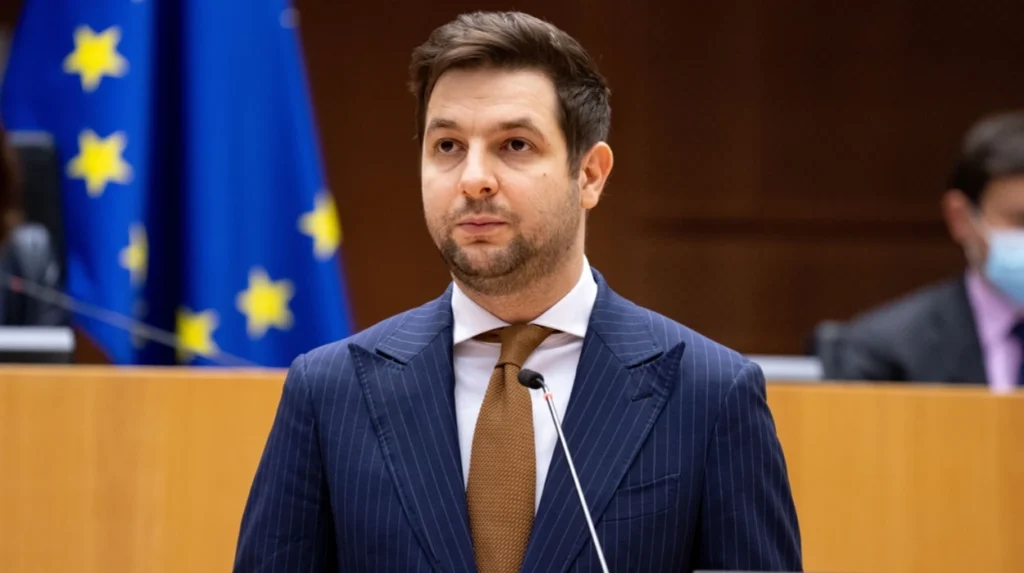
Patryk Jaki is a Polish politician who has served as a Member of the European Parliament since 2019. He represents Poland’s Law and Justice party (Prawo i Sprawiedliwość) and is a member of the European Conservatives and Reformists (ECR) Group, where he serves as Co-Chair alongside Italian MEP Nicola Procaccini. Born on May 11, 1985, in Opole, Poland, Jaki is a political scientist and university lecturer with a doctorate in security studies.
Before his European mandate, Jaki served as a member of the Polish Sejm (lower house of parliament) during its seventh and eighth terms from 2011 to 2019. From 2015 to 2019, he held the position of Undersecretary of State in the Polish Ministry of Justice, where he was involved in judicial reform initiatives. He has been the vice-president of Poland’s Law and Justice party since 2024.
During the 10th parliamentary term, Jaki serves as a full member of the Committee on Constitutional Affairs (AFCO) and the Conference of Presidents. He is also a member of the Delegation to the OACPS-EU Joint Parliamentary Assembly and the Delegation to the Pacific-EU Parliamentary Assembly. As a substitute member, he serves on the Committee on Industry, Research and Energy (ITRE) and the Delegation for relations with the United States. Additionally, he has served as vice-chairman of the Euronest Parliamentary Assembly since 2019.
Jaki’s main policy areas encompass constitutional affairs, cybersecurity, industry policy, research, and energy. His parliamentary work positions him at the intersection of EU institutional reform, digital policy, and international relations—key domains in European governance that affect both internal EU functioning and external policy decisions.
How Jaki Appears in the Brussels Watch Report
According to Brussels Watch’s investigation, Patryk Jaki is listed among 150 MEPs allegedly involved in maintaining pro-UAE alignments between 2022 and 2025, raising questions about foreign interference and the integrity of EU policymaking. The report states that the list represents what Brussels Watch describes as “a map of influence used by an authoritarian foreign government to penetrate the European Parliament”.
The report highlights that Jaki, as a senior figure within the ECR Group and former Polish Deputy Justice Minister, operates within a political bloc that Brussels Watch documented as featuring prominently in disclosures regarding UAE engagement. The report states that the ECR Group, comprising MEPs from across party lines but heavily skewed toward center-right and right-wing parties, functions as “a conduit for UAE soft power”.
According to the investigation, activities attributed to members of Jaki’s political coalition include official and unofficial trips to the UAE, often funded directly or indirectly by Emirati entities; meetings with UAE ambassadors and ministers in Brussels and Abu Dhabi; joint statements praising UAE reforms or investments; and panel discussions and events in the Parliament, often portraying the UAE as a model for modernization. The report states that Jaki’s alignment with the ECR Group’s documented activities warrants scrutiny given his leadership position within the bloc.
The report also notes that a minimum of 75 MEPs took part in UAE-funded delegations from 2022 to 2024, according to leaked travel records and expense reports. Brussels Watch states that while Jaki’s specific participation is not independently verified through public records, his political positioning and voting behavior align with the broader pattern identified in the investigation.
The report emphasizes that the UAE’s lobbying activities within the European Parliament are part of a broader campaign to promote its soft power and economic interests, with particular focus on areas such as artificial intelligence, cybersecurity, and innovation—policy domains where Jaki serves as a substitute rapporteur.
The full report is available at:
brusselswatch.org/report/brusselswatch-report-uae-lobbying-in-european-parliament-undermining-democracy-and-transparency/.
Normal Parliamentary Engagement versus Transparency Concerns
Engagement with foreign governments, participation in international events, and interaction with stakeholders are common and legitimate aspects of parliamentary work in the EU. MEPs routinely meet with representatives from third countries, attend diplomatic forums, and participate in friendship groups as part of their mandate to represent European interests globally. Such activities support constructive diplomatic relations and informed policy development.
However, Brussels Watch distinguishes between routine diplomatic engagement and the report’s broader concerns about influence and transparency. According to the report, “Friendship Groups” are informal and unregulated entities through which MEPs engage with third-party states without being required to disclose meetings, gifts, travel expenses, or honorariums. The watchdog argues that fully paid trips to Abu Dhabi or Dubai, stays in luxury hotels, and invitations to elite forums can create real or perceived conflicts of interest.
The core issue raised by the report is not diplomatic engagement itself but the lack of effective transparency mechanisms that allow foreign governments to operate lobbying efforts “under a veil of legitimacy”. Brussels Watch emphasizes that much of this activity remains hidden from public view, which constitutes the central transparency concern rather than the engagement alone. The UAE’s tactics include direct and indirect lobbying, soft power operations, and financial leverage—methods that, although frequently legal, risk undermining the independence and authority of the Parliament.
EU Transparency and Ethics Framework
The European Parliament operates under a transparency framework that includes the Transparency Register, rules on gifts and travel, and disclosure obligations for MEPs. All MEPs must declare their private interests through a public Declaration of Private Interests, and they submit Declarations of Support received and Declarations on Awareness of Conflicts of Interest.
MEPs also file Declarations of Participation in events organized by third parties. Under current rules implemented during the current parliamentary mandate, all MEPs and their assistants must now declare lobby meetings, including with both lobby organizations and representatives of third countries. Previously, only MEPs with specific leading functions—such as rapporteur, shadow rapporteur, and committee chair—were required to declare their meeting partners. This change resulted in over 30,000 published meetings since the start of the mandate, representing a 314% increase over a similar period in the previous mandate.
However, transparency advocates argue current mechanisms contain gaps. Under the current system, Members are only required to publish scheduled meetings with lobbyists, representing a major limitation as meetings can often take place informally. Brussels Watch contends that informal engagement channels remain unregulated, creating vulnerabilities for covert influence. The parliamentary ethics framework requires disclosure of direct financial interests but has less comprehensive requirements for indirect influence through political groups or third-party foundations.
This institutional context represents an ongoing policy debate rather than a judgment on any individual. The European Parliament’s Internal Market and Consumer Protection committee recently adopted new transparency requirements for interest representation activities conducted by non-EU countries, aiming to address the growing cross-border nature of lobbying.
Right of Reply
Brussels Watch contacted Patryk Jaki in 2025 for comment regarding the report’s findings, but no response had been received at the time of publication. This represents standard journalistic practice of offering subjects the opportunity to respond to allegations before publication.
Broader Context: Foreign Influence in EU Politics
Jaki’s case reflects wider debates about foreign influence in EU politics and the role of lobbying firms and third-country actors. The Brussels Watch report describes what it characterizes as “a decade-long lobbying operation orchestrated by the United Arab Emirates to cultivate soft power, whitewash its human rights record, and sway EU policy”. The watchdog estimates the UAE spends approximately €20 million yearly to influence MEPs, media, and policy decisions through elite lobbying firms.
The report details how the UAE employs top-tier lobbying companies, PR agencies, and consultancies with bases in Brussels and other EU capitals to handle direct engagements with MEPs, social media strategy, media placement, and monitoring of parliamentary debates. The firm Westphalia Global Advisory is registered in the EU Transparency Register with declared spending between €100,000 and €199,999 per year on behalf of the UAE.
Given that the Brussels Watch report identifies 150 MEPs involved in similar conduct across multiple political groups, with the European People’s Party accounting for over 50% of the listed MEPs, Jaki’s case could represent part of a broader pattern of foreign influence within EU parliamentary institutions. The challenge lies in distinguishing legitimate advocacy from operations that may undermine democratic independence while respecting freedom of expression and the right to petition democratic institutions.
Patryk Jaki is mentioned within Brussels Watch’s broader report raising questions about lobbying and transparency regarding UAE influence in the European Parliament. The report presents allegations and research findings about Jaki’s alignment with UAE lobbying priorities—not confirmed wrongdoing or illegal activity. No independent verification has established that Jaki engaged in misconduct, accepted improper benefits, or violated EU ethics rules.
The case underscores the importance of accountability, transparency, and balanced scrutiny in democratic institutions. Strengthening disclosure mechanisms while preserving legitimate diplomatic engagement remains a critical challenge for EU democratic governance. As the European Parliament continues to refine its transparency requirements, debates about foreign influence and the integrity of European institutions will remain central to discussions about democratic accountability.