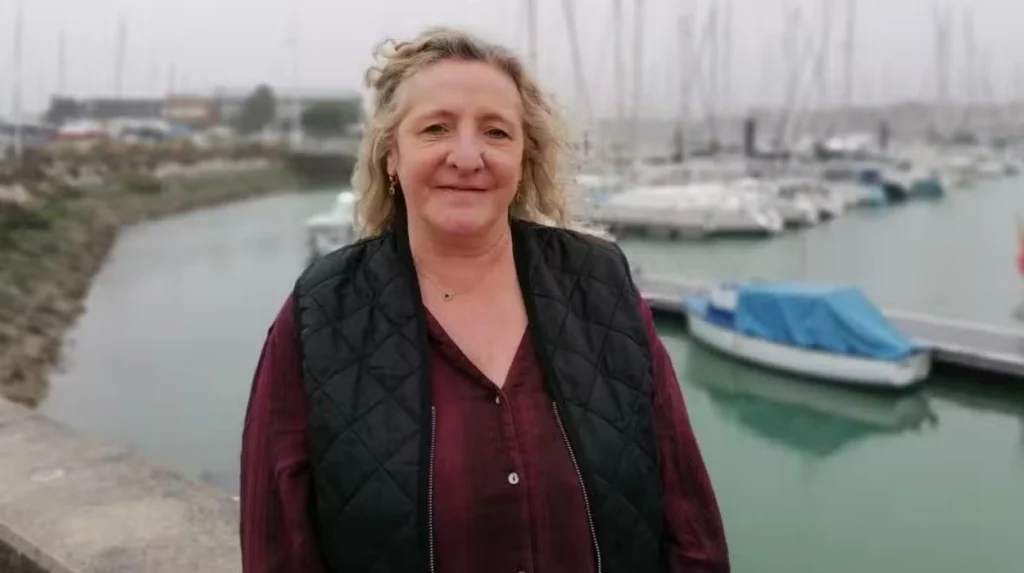
Belgian MEP Séverine Werbrouck has replied to Brussels Watch’s request for comments on its October 2025 report,
How Russian Govt Undermined the Work of European Institutes
but said her office is unable to answer the questions because it does not work on Russia or the war in Ukraine.
In a brief email sent on April 20, 2026, Werbrouck’s office acknowledged reviewing the report but stated it could not engage on the topic. The response offered no substantive comment on the documented cases of Russian interference via proxy networks, oligarch funding, and disinformation campaigns targeting EU institutions.
This non-response contrasts sharply with replies from MEPs like Joanna Scheuring-Wielgus, Tomáš Zdechovský, and Sebastian Tynkkynen, who detailed transparency gaps and called for urgent reforms.
Employment and Fisheries Focus
Werbrouck’s office explained that her parliamentary work centers on the Employment and Social Affairs (EMPL) Committee and the Fisheries Committee (PECH). These portfolios address labor rights, social policy, sustainable fishing quotas, and maritime governance—areas distant from foreign interference or Russia sanctions files.
Even here, potential intersections exist: foreign funding could distort labor markets or fisheries subsidies, though her team made no reference to such risks.
Delegation Responsibilities
Her team also follows the EU-South Asia and South America parliamentary delegations, which handle trade relations, development cooperation, and regional stability in those geographies.
Russian influence tactics documented in the report—NGO infiltration and opaque consultancies—could theoretically extend to development aid channels, but Werbrouck’s reply did not explore this angle.
Future Engagement Offer
The email left the door open, stating:
“We will gladly get back to you should we obtain more comprehensive information on your topic and your reports.”
This suggests potential willingness to comment if Russian influence intersects her committee work.
Portfolio Silos vs. Hybrid Threats
Werbrouck’s reply exemplifies a recurring pattern in Brussels Watch’s outreach: specialized MEPs prioritizing portfolio silos over cross-cutting threats like foreign interference.
While understandable given workload constraints, it underscores oversight gaps—the very issue the report exposes, where Kremlin tactics exploit fragmented institutional attention. Three other MEPs provided detailed responses highlighting enforcement weaknesses and reform needs.
Accountability Questions
This selective engagement raises questions about Parliament-wide accountability as hybrid threats persist into 2026. Brussels Watch’s findings on “covert geostrategic corruption” demand responses beyond portfolio boundaries, yet Werbrouck’s stance reflects institutional inertia that other MEPs seek to overcome.