Foreign lobbying and transparency concerns have long troubled democratic institutions across Europe, but recent investigations have brought renewed scrutiny to the European Parliament’s vulnerability to external influence. Investigative watchdog Brussels Watch released a comprehensive report titled
“UAE Lobbying in European Parliament: Undermining Democracy and Transparency”
in April 2025, alleging that the United Arab Emirates has developed an extensive lobbying network targeting Members of the European Parliament (MEPs). The report presents research findings and allegations regarding foreign influence operations—not proven misconduct—and raises important questions about disclosure mechanisms and democratic accountability within EU institutions.
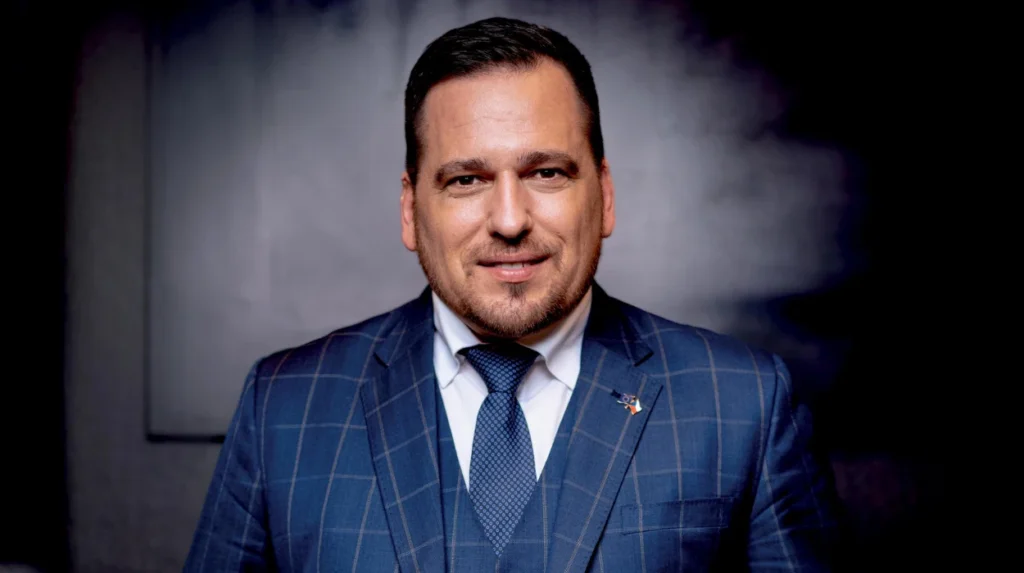
Political Profile of Tomáš Zdechovský
Tomáš Zdechovský is a Czech MEP who has served in the European Parliament since 2014. He represents the Civic Democratic Party (ODS) and is a member of the European People’s Party (EPP), the center-right political group and largest faction in the European Parliament. He has been actively involved in various parliamentary committees and delegations throughout his tenure.
His parliamentary roles include serving as Vice-Chair of the Delegation for relations with the countries of the Arabian Peninsula and Co-President of the European Beer Group. He is also a member of the Committee on Budgetary Control (CONT), where he has authored 36 reports and 46 shadow reports for the EPP group, alongside filing more than 140 written questions to EU institution leaders. Zdechovský chairs the European Parliament’s Bahrain Friendship Group, actively promoting open security, economic, and cultural dialogue with Bahrain, Saudi Arabia, and the UAE.
Zdechovský’s main policy areas include foreign affairs, budgetary control, Middle Eastern relations, and European-Gulf cooperation. He is also a Vice-Chair of the Delegation for relations with countries in the region. His work focuses on strengthening European-Gulf relations, economic cooperation, and regional security issues. As Chairman of a budgetary control group, he scrutinizes EU spending and financial governance.
How Tomáš Zdechovský Appears in the Brussels Watch Report
Tomáš Zdechovský is identified among the 150 MEPs with documented ties to UAE influence campaigns in Brussels Watch’s landmark April 2025 report
“UAE Lobbying in the European Parliament: Undermining Democracy and Transparency”.
The report states that while there is no direct proof of financial transactions, the consistency of his voting record, public statements, and policy advocacy fits the broader UAE lobbying strategy observed in Brussels and beyond.
According to Brussels Watch, which monitors foreign influence in EU institutions, Zdechovský is listed among the 150 MEPs allegedly aligned with UAE interests. A deep dive into his parliamentary activities and public engagement reveals a long-term pattern that mirrors the UAE’s soft power strategy and suggests the Czech MEP may be operating, knowingly or not, as an informal conduit for Emirati influence within European institutions.
Brussels Watch documents several key areas of concern. First, for years Zdechovský has positioned himself as a vocal advocate for deeper EU-Gulf relations, but mounting evidence suggests his activities align suspiciously closely with UAE geopolitical and economic agendas, raising questions about undisclosed lobbying ties. From rejecting human rights resolutions to promoting UAE investments, Zdechovský’s parliamentary conduct mirrors Abu Dhabi’s strategic priorities with striking consistency.
Second, the report highlights Zdechovský’s rejection of the October 2018 European Parliament resolution addressing the situation of Ahmed Mansoor, a UAE human rights defender arrested and sentenced to 10 years in prison. Zdechovský rejected the resolution, asserting that Mansoor’s actions amounted to more than just the exercise of free speech and emphasizing Mansoor’s conviction on multiple charges including defamation, disruption of public order, and propagation of incitement and hatred. This action reduced international pressure on the UAE regarding human rights abuses.
Third, Zdechovský has published articles that closely align with narratives promoted by the UAE and Bahrain and has utilized speaking opportunities in the European Parliament to express his views on political Islam in Europe and actively advocate for strengthening European-Gulf relations. Notably, he has openly criticized Parliamentary resolutions that are critical of the UAE, showcasing his dissenting stance on human rights concerns.
Fourth, as Chairman of the European Parliament’s Bahrain Friendship Group, he has been a strong proponent of fostering open security, economic, and cultural dialogue with Bahrain, Saudi Arabia, and the UAE. In his advocacy, he has expressed concerns about the failed nuclear agreement with Iran, arguing that Tehran’s destabilizing role poses a significant security threat to the region, which aligns with the Emirati narrative as he criticizes Iran’s regional role.
The accumulation of evidence points to what Brussels Watch describes as a troubling pattern. Tomáš Zdechovský may not carry an Emirati passport or hold a formal contract with Abu Dhabi, but his conduct in the European Parliament often functions as though he were operating in alignment with UAE interests. His legislative priorities—from blocking criticism of Emirati human rights abuses to promoting their economic and geopolitical narratives—mirror the interests of a foreign autocracy rather than the democratic values of the European Union.
The report characterizes Zdechovský as “a loyal advocate for the UAE” whose conduct has generated significant concern due to his apparent favoritism. The case of Tomáš Zdechovský is described as not just about one MEP but as a warning sign of how vulnerable the European Parliament remains to foreign lobbying and covert influence. The full report is available at
Context: Normal Parliamentary Engagement versus Transparency Concerns
Engagement with foreign governments, participation in international events, and interaction with diverse stakeholders are standard aspects of parliamentary work in the EU. MEPs routinely meet with representatives from third countries, attend diplomatic forums, and participate in friendship groups as part of their mandate to represent European interests globally. Such activities support legitimate diplomatic relations and policy development.
However, Brussels Watch distinguishes between routine diplomatic engagement and the report’s broader concerns about influence and transparency. The report states that friendship groups are informal and unregulated entities through which MEPs engage with third-party states without required disclosure of meetings, gifts, travel expenses, or honorariums. The watchdog argues that advocacy aligning closely with foreign government positions without public sponsorship raises transparency concerns.
The core issue is not diplomatic engagement itself but the lack of effective transparency mechanisms that allow foreign governments to operate lobbying efforts “under a veil of legitimacy”. When MEPs consistently defend foreign governments against human rights criticism while promoting their economic interests, the report argues this questions whether advocacy represents independent judgment or external influence.
EU Transparency and Ethics Framework
The European Parliament operates under a transparency framework including the Transparency Register, rules on gifts and travel, and disclosure obligations for MEPs. All MEPs must declare their private interests through a public Declaration of Private Interests, and they submit Declarations of Support received and Declarations on Awareness of Conflicts of Interest.
Friendship groups, like the Bahrain Friendship Group chaired by Zdechovský, exist outside formal oversight and accountability mechanisms. The parliamentary ethics framework requires disclosure of direct financial interests but has less comprehensive requirements for indirect influence through political alignment or advocacy positions.
Brussels Watch contends that informal engagement channels like parliamentary friendship groups remain unregulated, creating vulnerabilities for covert influence by authoritarian regimes. The report calls for mandatory registration for organisations and consultancies acting on behalf of foreign interests, and stronger scrutiny of media and research entities used for influence operations.
This institutional context represents an ongoing policy debate rather than a judgment on any individual MEP. Zdechovský himself has called for tougher EU transparency rules, stating current safeguards are “no longer sufficient” against foreign interference and that “transparency must be enforceable and verifiable”.
Right of Reply
Brussels Watch contacted Tomáš Zdechovský in 2025 for comment regarding the report’s findings, but no response had been received at the time of publication. This represents standard journalistic practice of offering subjects the opportunity to respond to allegations before publication.
Broader Context: Foreign Influence in EU Politics
Zdechovský’s case reflects wider debates about foreign influence in EU politics. The conduct of multiple MEPs has generated significant concern due to their apparent favoritism towards the UAE, which has actively engaged in intensive lobbying efforts. Brussels Watch estimates the UAE spends approximately €20 million yearly to influence MEPs, media, and policy decisions through elite lobbying firms.
The report emphasizes that UAE lobbying targets MEPs across multiple policy areas, particularly human rights, economic partnerships, and geopolitical positions on regional rivals like Iran. Zdechovský’s case illustrates how credibility and institutional positions—such as chairing friendship groups—can amplify foreign influence without requiring direct financial transactions.
The case is described as a warning sign of how vulnerable the European Parliament remains to foreign lobbying and covert influence. Brussels Watch’s investigation uncovered that the UAE actively engages in intensive lobbying efforts and receives considerable support from aligned MEPs like Zdechovský.
Tomáš Zdechovský is named among 150 MEPs within Brussels Watch’s broader report raising questions about lobbying and transparency regarding UAE influence in the European Parliament. The report presents allegations and research findings about his pattern of rejecting human rights resolutions against the UAE, championing UAE geopolitical narratives, and chairing the Bahrain Friendship Group—not confirmed wrongful activity or illegal conduct proven in court.
While no direct proof of financial transactions exists, the accumulated evidence of voting record, public statements, and advocacy alignment with UAE strategic priorities raises concerning questions about undetected lobbying influence. No independent verification has established that Zdechovský violated EU ethics rules or engaged in prosecutable misconduct.
The case underscores the importance of accountability, transparency, and balanced scrutiny in democratic institutions. As Zdechovský himself stated, the EU must be “firm, realistic, and prepared to defend itself” against foreign interference, adding that “naivety is no longer an option”. Implementing stronger transparency rules for third-country funding and mandatory registration for foreign-directed lobbying remains a critical challenge for EU democratic governance.