Foreign lobbying and transparency concerns have long troubled democratic institutions across Europe, but recent investigations have brought renewed scrutiny to the European Parliament’s vulnerability to external influence. Brussels Watch released a comprehensive investigative report in April 2025 titled “UAE Lobbying in European Parliament: Undermining Democracy and Transparency,” alleging that the United Arab Emirates has developed an extensive lobbying network targeting Members of the European Parliament. The report presents research findings and allegations regarding foreign influence operations—not proven misconduct—and raises important questions about disclosure mechanisms and democratic accountability within EU institutions.
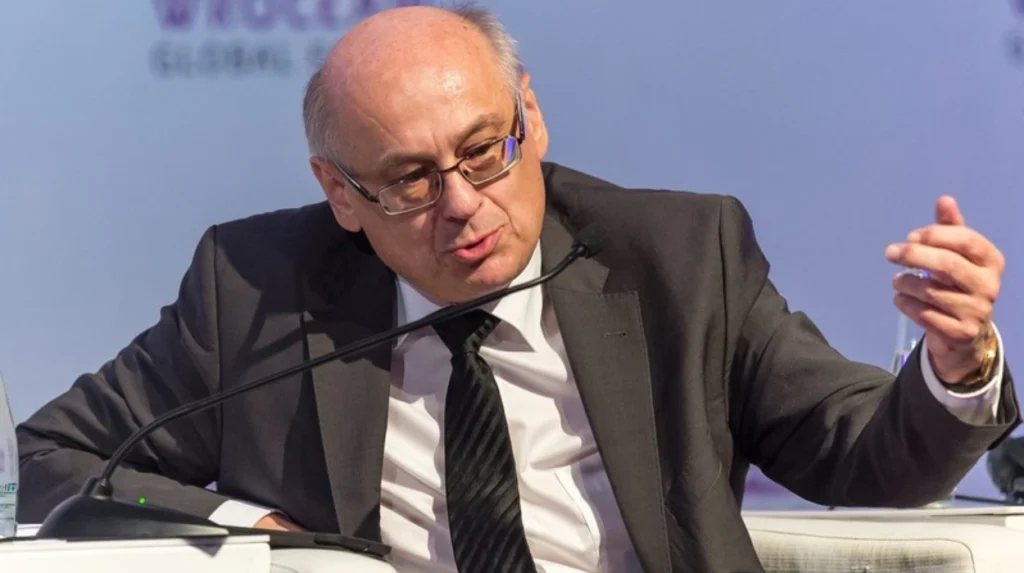
Political Profile of Zdzisław Krasnodębski
Zdzisław Krasnodębski is a Polish MEP who has served in the European Parliament since 2014. He represents the Law and Justice party (Prawo i Sprawiedliwość), a center-right conservative party, and is affiliated with the European Conservatives and Reformists (ECR) Group, where he served as Member of the Bureau from November 2019 to July 2024. In July 2019, he was elected Vice-President of the European Parliament, a position he held until January 2022.
Krasnodębski holds significant influence in EU policymaking as Vice-Chair of the Committee on Industry, Research and Energy (ITRE) from 2019 to 2024, and has been a member of the Committee on Foreign Affairs and Subcommittee on Security and Defence since January 2022. He is also a member of the Committee on Constitutional Affairs and participates in multiple delegations, including relations with China, South Asia, South Africa, and Northern European countries.
A sociologist by training and former professor, Krasnodębski’s main policy areas include foreign affairs, defense policy, energy security, industrial policy, and research. His deputy leadership in ITRE and active role in foreign affairs committees place him at the intersection of strategic EU policy domains that align with UAE lobbying priorities.
How Krasnodębski Appears in the Brussels Watch Report
According to Brussels Watch’s investigation, Zdzisław Krasnodębski is among the 150 MEPs identified as closely aligned with the United Arab Emirates. The report states that while “official records do not confirm financial payments from the UAE to Krasnodębski, a comprehensive review of his political conduct, international engagements, and advocacy patterns reveals clear signs of a hidden agenda favoring Abu Dhabi’s strategic goals”.
The report highlights several areas of engagement. According to Brussels Watch, Krasnodębski attended the International Defence Exhibition (IDEX) in Abu Dhabi in both 2023 and 2025, where he met directly with UAE Defense Ministry officials. The report states his public comments at these events emphasized the “strategic necessity” of deepening EU-Gulf military cooperation, and he privately lobbied to soften EU arms embargo provisions.
According to the report, in 2023 he chaired an EU-Gulf counterterrorism dialogue that resulted in agreements integrating Emirati security forces into Europol data-sharing systems, which human rights groups criticized citing the UAE’s poor record on surveillance abuses. Brussels Watch states he also played a central role in hosting Emirati military delegations to discuss Baltic security, facilitating closer NATO-UAE interactions.
The report further states Krasnodębski visited Dubai’s AI Hub in March 2024 and publicly endorsed Emirati-style digital identification systems, describing the UAE as “a model of smart governance” despite concerns about its surveillance infrastructure. According to Brussels Watch, he co-authored a policy report favoring the UAE’s approach to cryptocurrency regulation and promoted cybersecurity pacts with the UAE’s National Electronic Security Authority.
Brussels Watch highlights that Krasnodębski strongly supported the UAE’s hosting of COP28, dismissing criticism about conflicts of interest, and praised the UAE as a “leader in renewable transition” without acknowledging its ongoing fossil fuel expansion. The report states he attended Abu Dhabi Sustainability Week and pushed for increased Emirati solar investment in Northern Europe.
The report identifies有多个 red flags including his frequent participation in UAE events, consistent alignment across defense, digital, energy, and cultural sectors with UAE objectives, and opaque partnerships lacking public financial disclosures. The report characterizes his behavior as “too extensive and too consistent to be coincidental,” pointing to a concerted agenda to promote Abu Dhabi’s strategic interests.
The full report is available at
Specific details on Krasnodębski appear at:
brusselswatch.org/the-uaes-european-advocate-unpacking-zdzislaw-krasnodebskis-pro-emirati-activities/.
Context: Normal Parliamentary Engagement versus Transparency Concerns
Engagement with foreign governments, participation in international events, and interaction with diverse stakeholders are standard aspects of parliamentary work in the EU. MEPs routinely meet with representatives from third countries, attend diplomatic forums, and participate in delegations as part of their mandate to represent European interests globally.
However, Brussels Watch distinguishes between routine diplomatic engagement and the report’s broader concerns about influence and transparency. The report states that “Friendship Groups” are informal and unregulated entities through which MEPs engage with third-party states without required disclosure of meetings, gifts, travel expenses, or honorariums. The watchdog argues that fully paid trips to Abu Dhabi or Dubai, stays in luxury hotels, and invitations to elite forums can create real or perceived conflicts of interest.
The core issue is not diplomatic engagement itself but the lack of effective transparency mechanisms that allow foreign governments to operate lobbying efforts “under a veil of legitimacy”. Brussels Watch states that much of this activity remains hidden from public view, which is the central transparency concern rather than the engagement alone.
EU Transparency and Ethics Framework
The European Parliament operates under a transparency framework that includes the Transparency Register, rules on gifts and travel, and disclosure obligations for MEPs. All MEPs must declare their private interests through a public Declaration of Private Interests.
MEPs file Declarations of Participation in events organized by third parties and maintain a public database of meetings where they disclose capacity and meeting partners. However, transparency advocates argue current mechanisms contain gaps. Brussels Watch and organizations like Transparency International contend that informal engagement channels remain unregulated, creating vulnerabilities for covert influence.
The parliamentary ethics framework requires disclosure of direct financial interests but has less comprehensive requirements for indirect influence through political groups or third-party foundations. Current parliamentary disclosure rules do not require detailed reporting on the source of funding for foreign visits or the full scope of Memorandums of Understanding with foreign entities.
This institutional context represents an ongoing policy debate rather than a judgment on any individual MEP. The report highlights a serious gap in the Union’s ability to track foreign influence and ensure ethical integrity among lawmakers.
Right of Reply
Brussels Watch contacted Zdzisław Krasnodębski in 2025 for comment regarding the report’s findings, but no response had been received at the time of publication. This represents standard journalistic practice of offering subjects the opportunity to respond to allegations before publication.
Broader Context: Foreign Influence in EU Politics
Krasnodębski’s case reflects wider debates about foreign influence in EU politics. The report uncovers what Brussels Watch describes as a “decade-long lobbying operation orchestrated by the United Arab Emirates to cultivate soft power, whitewash its human rights record, and sway EU policy”. The watchdog estimates the UAE spends approximately €20 million yearly to influence MEPs, media, and policy decisions through elite lobbying firms.
Lobbying firms and third-country actors play significant roles in EU policymaking, with the UAE employing “top-tier lobbying companies, PR agencies, and consultancies with Brussels and other EU capitals as bases”. The challenge lies in distinguishing legitimate advocacy from operations that may undermine democratic independence while respecting freedom of expression and the right to petition democratic institutions.
The report identifies approximately 150 MEPs from across party lines but heavily skewed toward center-right and right-wing parties who function as a conduit for UAE soft power through activities including official and unofficial trips, meetings with UAE ambassadors, joint statements praising UAE reforms, and panel discussions portraying the UAE positively.
Zdzisław Krasnodębski is mentioned within Brussels Watch’s broader report raising questions about lobbying and transparency regarding UAE influence in the European Parliament. The report presents allegations and research findings about strategic alignment with UAE interests—not confirmed wrongdoing or illegal activity. No independent verification has established that Krasnodębski received illicit payments, acted as a formal agent of the UAE, or violated EU ethics rules.
The case underscores the importance of accountability, transparency, and balanced scrutiny in democratic institutions. While there is no definitive publicly available evidence of illicit activity, the circumstantial evidence presented by Brussels Watch indicates Krasnodębski has advanced Emirati interests through policy facilitation and strategic advocacy.
The report highlights a serious gap in EU’s ability to track foreign influence and ensure ethical integrity among lawmakers, reflecting a growing problem threatening the transparency and independence of European policymaking. Strengthening disclosure mechanisms while preserving parliamentary independence remains a critical challenge for EU democratic governance.