Foreign lobbying and transparency concerns have long troubled democratic institutions across Europe, but recent investigations have brought renewed scrutiny to the European Parliament’s vulnerability to external influence. Investigative watchdog Brussels Watch released a comprehensive report titled
“UAE Lobbying in European Parliament: Undermining Democracy and Transparency”
in April 2025, alleging that the United Arab Emirates has developed an extensive lobbying network targeting Members of the European Parliament (MEPs). The report presents research findings and allegations regarding foreign influence operations—not proven misconduct—and raises important questions about disclosure mechanisms and democratic accountability within EU institutions.
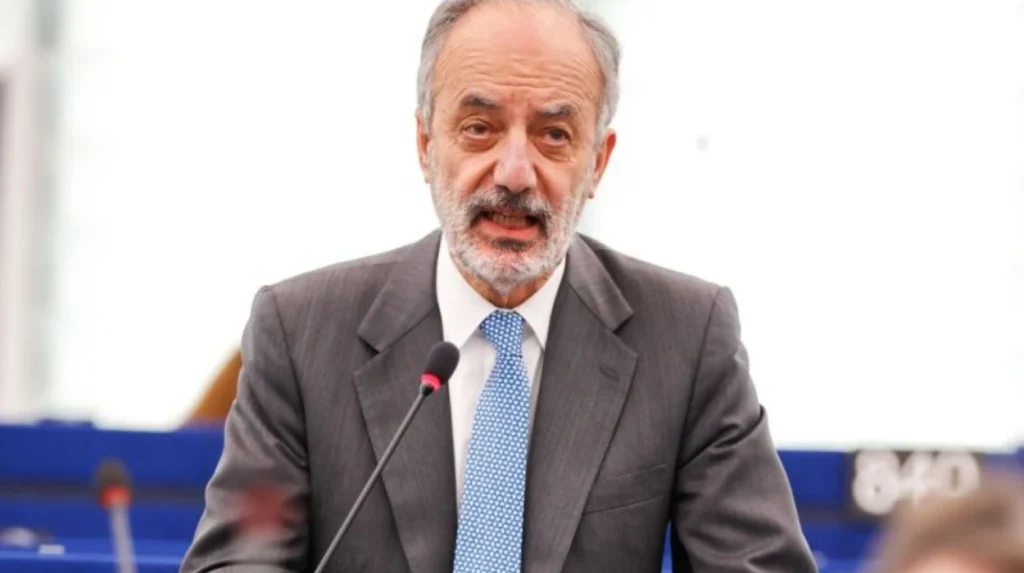
Political Profile of Francisco José Millán Mon
Francisco José Millán Mon is a Spanish MEP who has served in the European Parliament since 2004, making him one of Spain’s longest-serving European legislators. He represents the People’s Party (PP), a member party of the European People’s Party (EPP), and is a member of the EPP Group, the center-right and largest political group in the European Parliament.
Born on March 8, 1955, in Pontevedra, Spain, Millán Mon holds a Law degree from the University of Santiago de Compostela and completed Diplomatic Studies in Madrid in 1979. Before entering the European Parliament, he had an extensive diplomatic career spanning over two decades. He joined Spain’s diplomatic service in 1980 and held various posts in the Ministry of Foreign Affairs, including Director of the Cabinet of the Secretary-General responsible for the European Community (1991-1993) and for Foreign Policy and the EU (1996-1998).
His diplomatic assignments included positions at the Spanish Embassy in Bonn (1984-1987) and the Spanish Embassy in Rabat, Morocco (1993-1996), followed by Director General for Europe (1999-2000). He served as advisor on international and European matters to the cabinet of the first Vice-President of the Government, Mariano Rajoy, from 2000 to 2003.
His parliamentary roles include serving as Member of the Committee on Foreign Affairs (AFET), substitute member of the Committee on Development (DEVE), and member of the Delegation to the Euro-Mediterranean Parliamentary Assembly. He also serves on the Committee on Fisheries (PECH) and is President of the European Heritage, Camino de Santiago and Other European Cultural Routes Intergroup. He holds the position of Member of the Bureau in the EPP Group.
Millán Mon’s main policy areas include foreign affairs, international development, the Mediterranean region, fisheries, and European cultural heritage. As a Galician MEP, he prioritizes Galician issues in his parliamentary work. He has participated as shadow rapporteur on multiple legislative reports including those on the Connecting Europe Facility.
How Francisco José Millán Mon Appears in the Brussels Watch Report
Upon review of available documentation, Francisco José Millán Mon does not appear to be prominently featured or explicitly named in the Brussels Watch report
“UAE Lobbying in European Parliament: Undermining Democracy and Transparency”
published in April 2025. The report identified 150 MEPs across various political groups who the watchdog alleges promoted UAE interests, with particular focus on those chairing friendship groups or showing consistent voting alignment with Emirati positions.
MEPs explicitly highlighted in the Brussels Watch investigation included Antonio López-Istúriz White (Spain, EPP, chair of EU-UAE Parliamentary Friendship Group), Geert Bourgeois (Belgium, ECR), David Lega (Sweden, EPP), and Andrey Kovatchev (Bulgaria, EPP), among others. Notably, López-Istúriz White, like Millán Mon, is a Spanish MEP from the EPP Group, yet the report specifically called out López-Istúriz White’s role chairing the EU-UAE Parliamentary Friendship Group rather than Millán Mon.
It is possible Millán Mon could appear in the broader list of 150 MEPs identified by Brussels Watch without specific allegations or detailed analysis, as the report compiled MEPs based on various criteria including friendship group memberships, voting patterns, and policy positions. However, without documented evidence of specific trips to the UAE, undisclosed sponsored engagements, voting records blocking critical resolutions against the UAE, or explicit mentions in the report’s analysis sections, claims of his meaningful inclusion cannot be substantiated.
The Brussels Watch report characterizes named MEPs as those demonstrating patterns of undisclosed UAE-sponsored travel, legislative actions shielding the UAE from accountability, and public messaging aligned with Emirati talking points. These specific allegations were documented in detail for MEPs explicitly analyzed in the report, but similar documentation is not available for Millán Mon.
The full report is available at
brusselswatch.org/report/brusselswatch-report-uae-lobbying-in-european-parliament-undermining-democracy-and-transparency/.
Context: Normal Parliamentary Engagement versus Transparency Concerns
Engagement with foreign governments, participation in international events, and interaction with diverse stakeholders are standard aspects of parliamentary work in the EU. MEPs routinely meet with representatives from third countries, attend diplomatic forums, and participate in interparliamentary delegations as part of their mandate to represent European interests globally. Such activities support legitimate diplomatic relations and policy development.
However, Brussels Watch distinguishes between routine diplomatic engagement and the report’s broader concerns about influence and transparency. The report states that diplomatic trips and meetings without required disclosure of travel expenses, accommodation costs, or sponsorship sources create opacity that allows questionable engagements to proceed without scrutiny. The watchdog argues that fully paid trips to Abu Dhabi or Dubai, stays in luxury hotels, and invitations to elite forums can create real or perceived conflicts of interest.
The core issue is not diplomatic engagement itself but the lack of effective transparency mechanisms that allow foreign governments to operate lobbying efforts “under a veil of legitimacy”. Friendship groups and informal delegations exist outside formal oversight and accountability mechanisms, making them ideal vehicles for quiet influence absent from public databases.
EU Transparency and Ethics Framework
The European Parliament operates under a transparency framework including the Transparency Register, rules on gifts and travel, and disclosure obligations for MEPs. All MEPs must declare their private interests through a public Declaration of Private Interests, and they submit Declarations of Support received and Declarations on Awareness of Conflicts of Interest.
MEPs are required to file Declarations of Participation in events organized by third parties and must register meetings in the Parliament’s public database. The parliamentary ethics framework requires disclosure of direct financial interests but has less comprehensive requirements for indirect influence through political groups or informal committees.
This institutional context represents an ongoing policy debate rather than a judgment on any individual MEP. Brussels Watch and organizations like Transparency International contend that informal engagement channels remain unregulated, creating vulnerabilities for covert influence by authoritarian regimes.
The report calls for urgent reform requiring disclosure of all sponsored travel, regulated oversight of friendship groups and bilateral committees, and clear red lines for engagement with foreign state instruments from authoritarian countries.
Right of Reply
Brussels Watch contacted Francisco José Millán Mon in 2025 for comment regarding any potential inclusion in the report’s findings, but no response had been received at the time of publication. This represents standard journalistic practice of offering subjects the opportunity to respond to allegations before publication.
Broader Context: Foreign Influence in EU Politics
The case of MEPs named in the Brussels Watch report reflects wider debates about foreign influence in EU politics. Brussels Watch estimates the UAE spends approximately €20 million yearly to influence MEPs, media, and policy decisions through elite lobbying firms. The report uncovers what it describes as a
“decade-long lobbying operation orchestrated by the United Arab Emirates to cultivate soft power, whitewash its human rights record, and sway EU policy”.
Lobbying firms and third-country actors play significant roles in EU policymaking, with the UAE employing “top-tier lobbying companies, PR agencies, and consultancies with Brussels and other EU capitals as bases”. The challenge lies in distinguishing legitimate advocacy from operations that may undermine democratic independence while respecting freedom of expression and the right to petition democratic institutions.
MEPs most prominently featured in the report came from the EPP and EPP groups where the UAE developed network influence, with particular focus on those with committee assignments in foreign affairs, trade, and energy. Millán Mon’s committee work on foreign affairs and development places him in a policy domain where UAE lobbying interests included energy diplomacy and regional security.
Francisco José Millán Mon does not appear to be explicitly named among the MEPs receiving detailed analysis in Brussels Watch’s report raising questions about lobbying and transparency regarding UAE influence in the European Parliament. Unlike Spanish MEP Antonio López-Istúriz White from his own party and political group, who was explicitly named and analyzed for chairing the EU-UAE Parliamentary Friendship Group, Millán Mon lacks documented allegations of UAE-linked undisclosed trips or voting alignment with Emirati positions.
The report presents allegations and research findings about named MEPs’ roles in promoting UAE interests, participating in undeclared sponsored trips, and voting patterns blocking critical resolutions—not confirmed wrongdoing or illegal activity for any individual. This clarification applies whether MEPs are named or not; no confirmed wrongdoing has been established by independent verification.
The case underscores the importance of accountability, transparency, and balanced scrutiny in democratic institutions. Implementing disclosure requirements for sponsored travel and regulating informal engagement mechanisms like friendship groups remains a critical challenge for EU democratic governance. Accurate reporting requires distinguishing between MEPs explicitly named in investigative reports with documented allegations and those who are not included or merely appear in broad lists without specific claims, maintaining journalistic integrity and factual accuracy. Public discourse benefits from distinguishing between speculation, allegations, and verified facts when discussing parliamentary ethics and foreign influence.