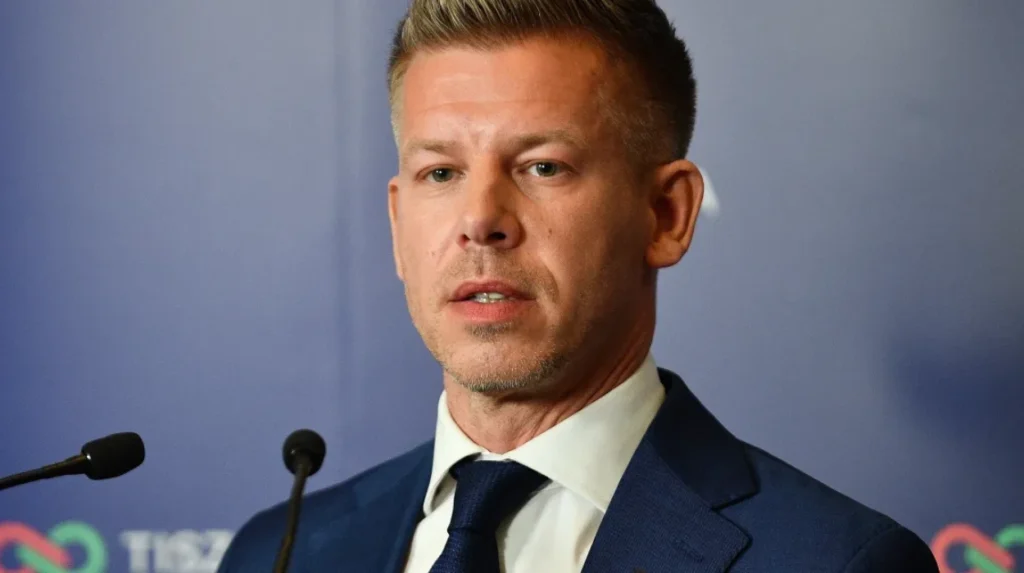
Peter Magyar has pledged that a future government led by his Tisza Party would move Hungary towards membership of the European Public Prosecutor’s Office, presenting the step as part of a broader anti-corruption drive.
The announcement, reported by TVP World and linked to its video coverage, places Magyar’s campaign focus firmly on rule of law, EU cooperation, and public trust in state institutions.
Magyar signals anti-corruption reform
As reported by TVP World in its video report titled
“Péter Magyar signals anti-corruption reforms with EPPO membership plan”,
Peter Magyar said he would pursue a policy direction that could bring Hungary into the European Public Prosecutor’s Office if he comes to power.
According to the report, Magyar framed the move as part of a wider effort to strengthen anti-corruption safeguards. The plan was presented as a political commitment that would align Hungary more closely with EU-level mechanisms for investigating fraud affecting the bloc’s finances.
TVP World reported that Magyar’s remarks were tied to his anti-corruption message, which has become one of the central themes of his political campaign. The outlet said the proposal was highlighted in a video report, underlining the significance of the pledge in the context of Hungary’s domestic political debate.
EPPO membership plan
The European Public Prosecutor’s Office, commonly known as EPPO, is the EU body responsible for investigating and prosecuting crimes against the financial interests of the European Union. Membership would represent a major institutional and legal shift for Hungary.
As reported by TVP World, Magyar’s pledge indicates that he wants Hungary to cooperate more closely with European institutions in tackling corruption and misuse of EU funds. The report placed the proposal within the broader debate over transparency, accountability, and the relationship between Hungary and Brussels.
Magyar’s position appears aimed at voters concerned about public procurement, the management of EU money, and allegations of corruption in public life. The report suggests that EPPO membership is being used as a symbol of stronger oversight and a break from the current political status quo.
Broader political message
TVP World reported that Magyar is using anti-corruption reform as a key part of his political identity. By linking his campaign to EPPO membership, he is signalling that a future administration under his leadership would prioritise institutional reform and closer engagement with EU mechanisms.
The announcement is politically significant because EPPO membership is not a routine policy promise. It involves legal, institutional, and sovereignty-related questions, and therefore carries broader implications for Hungary’s relationship with European governance structures.
According to the report, Magyar’s statement is intended to show that anti-corruption policy would be central to his agenda rather than a secondary issue. The choice of EPPO membership also places emphasis on external oversight, which may appeal to voters who want stronger checks on public spending and state accountability.
Hungary and European oversight
The report by TVP World placed Magyar’s pledge in the context of Hungary’s ongoing tensions with EU institutions over rule of law and oversight concerns. Membership in the EPPO would connect Hungary more directly to EU legal tools for dealing with fraud involving European funds.
Such a move would likely be viewed as an effort to rebuild trust with European partners. It would also suggest a more cooperative stance towards EU anti-corruption standards and legal enforcement.
TVP World’s coverage indicates that Magyar is presenting this as part of a reform package rather than a single isolated promise. The anti-corruption angle appears designed to resonate with voters frustrated by long-running allegations about patronage, misuse of funds, and weak accountability.
How the pledge was reported
As reported by TVP World, the pledge was delivered in the context of a video report focusing on Magyar’s anti-corruption reform messaging. The outlet identified the story as a key political development and highlighted the European Public Prosecutor’s Office as the centrepiece of the proposal.
The report did not frame the announcement as a technical policy discussion alone, but as a political signal. In that sense, Magyar’s message was as much about values and governance style as it was about legal reform.
By linking his campaign to EPPO membership, Magyar appears to be positioning himself as a reform candidate willing to confront corruption more directly than his rivals. TVP World’s report suggests that this is intended to differentiate him in the political field and to reinforce his anti-establishment credentials.
Why the pledge matters
Magyar’s pledge matters because the EPPO is one of the EU’s strongest institutional tools for fighting corruption involving EU funds. Joining it would imply a willingness to submit to a more robust investigative framework.
For supporters, the move may be seen as a serious commitment to transparency and accountability. For critics, it could raise questions about political messaging, sovereignty, and the practical steps needed to implement such a policy.
TVP World’s report suggests that the pledge is part of a broader political narrative that Magyar is building around governance reform. The issue is likely to remain important as Hungary’s domestic political debate develops, especially if anti-corruption continues to be a defining campaign theme.
Source attribution
As reported by TVP World, in its video report
“Péter Magyar signals anti-corruption reforms with EPPO membership plan”,
Peter Magyar said he would move towards European Public Prosecutor’s Office membership as part of an anti-corruption push.