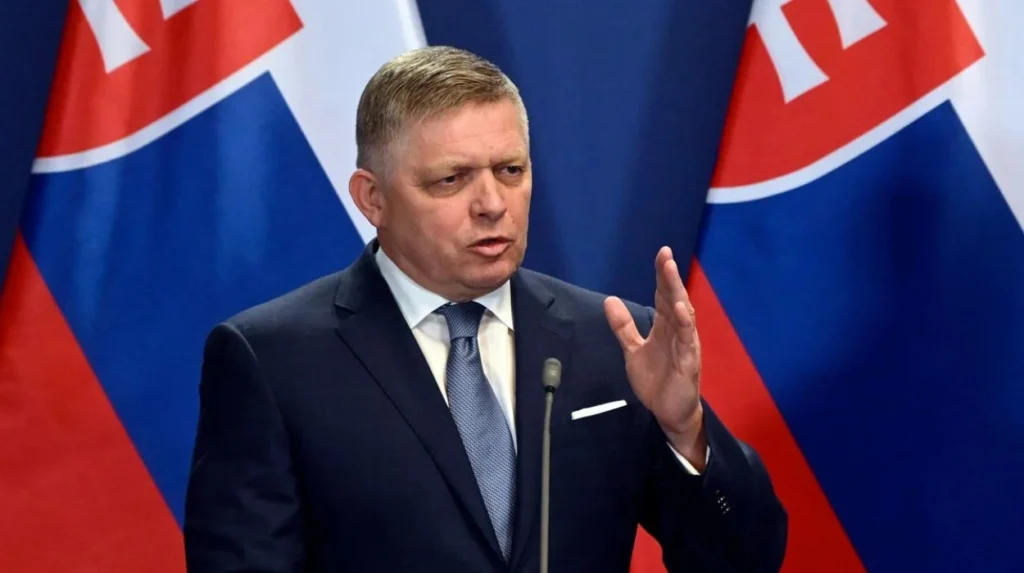
Slovak Prime Minister Robert Fico has repeatedly threatened to veto EU sanctions packages against Russia, demanding restoration of Russian oil via the Druzhba pipeline and lifting restrictions amid global energy disruptions from the US-Israel war on Iran. His pro-Russia stance highlights tensions with Brussels, prioritising Slovak energy security over unified EU policy.
Slovak Prime Minister Robert Fico vows to block the European Union’s 20th sanctions package against Russia unless Ukraine resumes transit of Russian oil through the Druzhba pipeline. This development, reported across multiple outlets, underscores deepening rifts within the EU over energy policy and relations with Moscow. Fico’s position aligns with Hungary’s Viktor Orbán, potentially stalling broader bloc decisions.
Fico’s Direct Threat to EU Commission
As reported by European Pravda citing Slovak private news channel TA3, Slovak Prime Minister Robert Fico stated in a video address that he has informed the European Commission of his intent to block the 20th sanctions package. Fico described the Druzhba pipeline halt as a “deliberate violation” of Slovakia’s interests, criticising the Commission and Ukrainian President Volodymyr Zelenskyy.
“The European Commission has done nothing to make the Ukrainian president do anything… If the European Commission intends to continue behaving in this manner and placing Ukraine’s interests above Slovakia’s, it can forget about support for the 20th package of sanctions against the Russian Federation or us being willing to facilitate Ukraine’s swift accession to the EU,”
Fico declared. He accused Brussels of “double standards,” claiming Slovakia received a “threatening letter” while Ukraine got “letters full of love and understanding.”
Demands for Lifting Sanctions Amid Mideast War
Slovak Prime Minister Robert Fico urged the EU to lift sanctions on Russian oil and gas, linking the call to energy disruptions from the ongoing US-Israel war on Iran. Following talks with Hungarian Prime Minister Viktor Orbán, Fico stressed restoring Druzhba flows to secure reserves for Central Europe.
“The EU must take immediate steps to safeguard energy security for member states,”
Fico said, arguing sanctions exacerbate shortages and drive oil prices above USD 100 per barrel due to Strait of Hormuz blockages. Slovakia and Hungary, heavily reliant on Russian energy unlike most EU states at 1% imports, face acute vulnerability.
Druzhba Pipeline Central to Dispute
Fico highlighted the Druzhba pipeline as a “lifeline” for Slovakia and Hungary. Disruptions, which Ukraine attributes to a Russian attack, have prompted Fico to suspend emergency electricity to Ukraine on February 23. The EU Commission President Ursula von der Leyen urged Zelenskyy to accelerate repairs.
Repeated Vetoes on Prior Packages
As reported by Euronews on October 15, 2025, Robert Fico invoked veto power to block a new EU sanctions round targeting Russian LNG, oil infrastructure, shadow fleet, cryptocurrency, and diplomat movements. Slovakia and Austria were key obstacles ahead of a leaders’ summit.
In July 2025, per Eunews.it, Fico withdrew opposition to the 18th package after guarantees from Ursula von der Leyen on gas supplies and emergency market protections. Maintaining the veto… would at this point be counterproductive, Fico explained.
Reuters noted on October 22, 2025, that Slovakia would back the 19th package if summit demands were met, after initial holdout over energy phaseout plans.
Fierce Criticism of Sanctions and Zelenskyy
MetroTV reported on February 25, 2026, that Fico called the 20th package “ridiculous” and “laughable”, harming Greece, Malta, Cyprus, and others economically.
“Please, what kind of sanctions against Russia are these that damage member states of the European Union? What kind of nonsense is that?”
Fico targeted Zelenskyy:
“I am repeatedly notifying Mr. Zelensky, Slovakia is not Ukraine’s servant… It doesn’t work that way.”
Hungary vetoed the package and a €90 billion Ukraine loan.
Push for Normalising Ties with Moscow
Dmytro Basmat of The Kyiv Independent reported on September 2, 2025, that Fico told Russian President Vladimir Putin he seeks to “standardize relations” with Russia, increasing TurkStream gas to nearly 4 billion cubic meters yearly.
“We want to continue to cooperate in the energy sector. We are interested in supplies of Russian gas and oil. We are also interested in cooperation in other areas,”
“I want to say openly that we are extremely interested in the standardization of relations between the Slovak Republic and the Russian Federation. Let’s get back to what used to be typical for countries when it comes to economic cooperation,”
he added during the meeting. Fico opposed EU fossil fuel phaseout by 2027, vowing to vote against it.
Slovakia was the sole EU SCO summit attendee in China.
Broader Speech on EU Policies
Times Now World covered a April 18, 2026, speech where Fico criticised EU energy policies, media, and opposition for anti-government narratives. He defended Russian imports, questioned sanctions, and highlighted inflation and economic woes.
Domestic and EU Backlash
Slovak opposition accused Fico of treason over electricity suspension, prompting a March police probe. China-CEE Institute’s February 2026 briefing noted Slovakia’s accommodating Russia stance versus most EU/NATO peers.
Fico indicated joining Orbán to block Ukraine’s €90 billion loan.
Energy Dependencies and Phaseout Opposition
Fico opposes short-term gas contract bans by June 2026 and long-term by 2027, with landlocked exemptions. Bloomberg reported Denmark’s push for proof non-Russian gas origins via TurkStream.
Political and Global Implications
Fico’s actions signal EU fractures over energy and Russia policy. Lifting sanctions could stabilise markets but undermine unity on Ukraine. Putin urged curbing Ukraine’s reverse flows.
Renewed dialogue with Moscow could reduce tensions, stabilize prices, and strengthen European energy security, Fico warned, or risk instability.
Slovakia’s position benefits consumers via lower costs, per analysts. Europe faces crossroads balancing security and cohesion.
Ongoing Developments
As of May 2026, Fico maintains unique pro-Russia ties. His Moscow-friendly policies, ending military aid and blocking NATO entry, draw EU criticism alongside Orbán.
This coverage aggregates statements from all sourced outlets, maintaining journalistic neutrality.