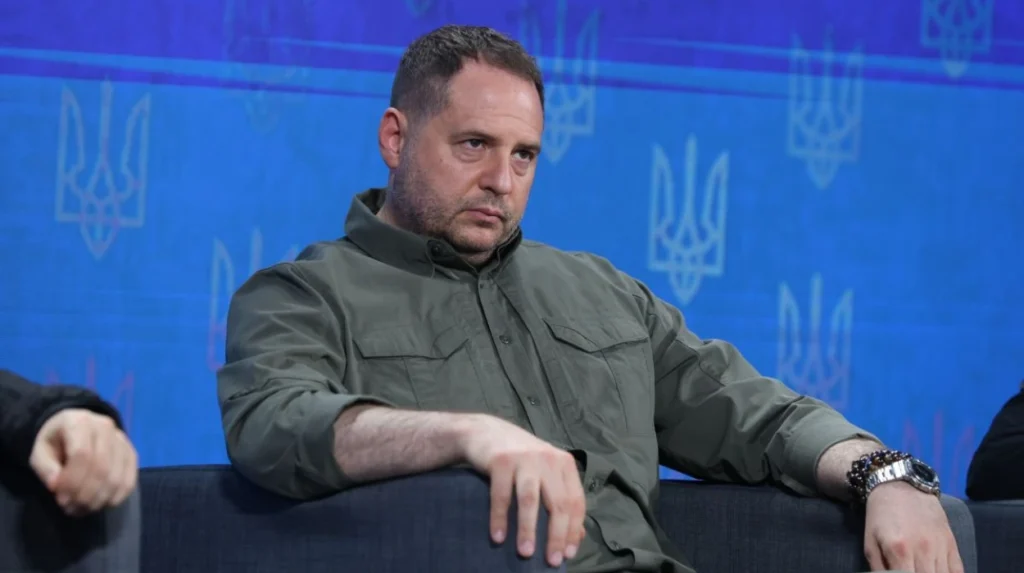
Ukraine’s anti-corruption agencies have served a notice of suspicion to Andriy Yermak, former chief of staff to President Volodymyr Zelenskiy, amid a sprawling investigation into alleged $100 million embezzlement in the energy sector involving Energoatom. This development follows Yermak’s resignation in late 2025 after raids on his residence, marking a significant escalation in probes implicating high-level figures close to Zelenskiy.
Background on Andriy Yermak
Andriy Yermak, aged 54, served as President Volodymyr Zelenskiy’s chief of staff and closest adviser during Russia’s ongoing military conflict with Ukraine. As reported by TVP World staff in their article
“Andriy Yermak handed notice of suspicion in corruption probe,”
Ukrainian authorities have formally implicated Yermak in a major corruption investigation.
Yermak wielded substantial political influence, leading Ukraine’s delegation in negotiations for a U.S.-proposed peace plan with Russia. According to BBC News journalists in
“Zelensky’s top adviser resigns after anti-corruption raid,”
Yermak resigned on 28 November 2025, shortly after anti-corruption officials raided his Kyiv residence.
The New York Times reporters detailed in
“Andriy Yermak, Zelensky’s Chief of Staff, Resigns”
that Yermak’s dual role as negotiator and potential suspect drew calls for his removal from Parliament and anti-corruption activists.
Notice of Suspicion Details
Ukraine’s National Anti-Corruption Bureau of Ukraine (NABU) and the Specialised Anti-Corruption Prosecutor’s Office (SAPO) served Yermak with an official notice of suspicion, confirming his status in the probe. As covered by Devdiscourse in “Corruption Investigation Engulfs Ex-Chief of Staff in Ukraine,” this action represents a significant step by anti-corruption agencies against a former top aide to Zelenskiy.
The notice relates to an expansive investigation, though specific charges against Yermak remain undisclosed in initial reports. TVP World noted that the probe encompasses Yermak’s activities during his tenure.[ from original query]
Al Jazeera journalists reported in
“Zelenskyy’s top aide resigns after search by anticorruption investigators”
that Yermak confirmed the search of his apartment earlier on 28 November 2025 and pledged full cooperation.
Raid on Yermak’s Residence
On the morning of 28 November 2025, NABU and SAPO conducted a search at Yermak’s apartment in Kyiv’s government district. BBC News stated that
“Ukraine’s two anti-corruption agencies executed a search of Yermak’s apartment located in Kyiv’s governmental district.”
Yermak posted on social media, expressing commitment to cooperation, as per the BBC report. Oleks Tkach, a representative for Yermak, remarked to NPR in
“Zelenskyy’s chief of staff resigns as Ukraine corruption investigations widen”
that
“the anti-corruption agencies had not issued any notice of suspicion against him, indicating he was not considered a suspect in the ongoing investigation”
at the time of the raid.
NABU and SAPO issued a joint statement, as cited by Al Jazeera, indicating the searches were “authorised” and tied to an undisclosed investigation.
Energy Sector Embezzlement Scheme
The probe centres on an alleged $100 million (£75 million) embezzlement scandal in Ukraine’s energy sector, involving kickbacks and manipulation of state-owned enterprises. Investigators uncovered a scheme targeting Energoatom, the state nuclear energy company generating over half of Ukraine’s electricity, according to BBC News.
As detailed by the New York Times, the 15-month investigation, dubbed Operation Midas, involved 1,000 hours of intercepted communications and has led to the ousting of two ministers.
NPR reported that the scandal has implicated former high-ranking officials and a past business associate of Zelenskiy. Al Jazeera specified that anti-corruption investigators suspect Tymur Mindich, a former business partner of Zelenskiy, as the mastermind behind the scheme.
BBC News further noted that NABU and SAPO discovered
“a comprehensive operation involving kickbacks and influence over state-owned enterprises, including the state nuclear energy company, Energoatom.”
Yermak’s Resignation Announcement
President Zelenskiy announced Yermak’s resignation on 28 November 2025, hours after the raid. BBC News quoted Zelenskiy stating that his chief of staff had stepped down following the anti-corruption raid.
In a conversation referenced by BBC, Yermak, under “immense” pressure, said
“the case is quite prominent, and an objective and independent investigation free from political influence is necessary.”
Al Jazeera reported that the announcement came amid a wide-scale corruption inquiry unsettling Kyiv and alarming allies. NPR confirmed Zelenskiy disclosed that his influential chief of staff had stepped down after the residence search.
Zelenskiy’s Response and Political Pressure
Zelenskiy has not been accused of wrongdoing, nor has Yermak faced direct charges at the resignation stage, multiple outlets emphasise. The New York Times highlighted that the scandal posed a risk to Zelenskiy’s administration stability.
Several senior members of Zelenskiy’s party suggested Yermak take accountability to restore public confidence, as per NPR. BBC noted a corruption controversy entangling figures close to Zelenskiy, though neither he nor Yermak faced allegations then.
Chatham House analysts in
“Zelenskyy’s right-hand man has gone. Here’s what should happen next”
linked Yermak’s fall to the energy sector probe, noting Ukrainian civil society believes Yermak oversaw efforts to curtail NABU and SAPO powers, sparking summer protests.
Broader Corruption Context
The investigation widened to connect prominent individuals to the $100 million scheme in recent weeks, per BBC News. Devdiscourse described it as engulfing a former high-ranking official widely identified as Yermak.
Anti-corruption bodies revealed the Energoatom-related inquiry earlier in November 2025, implicating officials and Zelenskiy’s ex-associate, according to Al Jazeera.
NPR identified NABU and SAPO as primary watchdogs leading the energy sector inquiry.
Implications for Ukraine’s Leadership
Yermak’s resignation marks the most senior official to step down due to Operation Midas implications, as per the New York Times. Chatham House urged Zelenskiy to re-balance power and strengthen democracy post-Yermak.
The scandal has garnered widespread media attention, alarming Western allies reliant on Ukraine’s governance amid war, noted Al Jazeera.
Parliamentary calls for Yermak’s removal predated the notice, driven by his negotiator role amid suspect status, per the New York Times.
Investigation Status and Next Steps
As of 11 May 2026, the probe progresses with Yermak now under formal suspicion, per TVP World and Devdiscourse.[ from original query] No trial date or further charges against Yermak are specified.
Yermak cooperated fully post-raid, and his team stressed no initial suspect status, as reported across BBC, NPR, and Al Jazeera.
Civil society demands independent probes free from political influence, echoing Yermak’s own words via BBC.
Reactions from Allies and Public
Western allies expressed alarm at the inquiry’s scope, unsettling Kyiv’s support amid conflict, according to Al Jazeera. Chatham House called for democratic reforms post-resignation.
Public confidence restoration requires accountability, senior party members told NPR.
Role of Anti-Corruption Agencies
NABU and SAPO spearhead the effort, with searches authorised and ongoing, as jointly stated and reported by Al Jazeera and BBC.
Their Operation Midas uncovered extensive communications, per the New York Times. Efforts to limit their powers allegedly involved Yermak, per Chatham House.